
CNI News
June 19, 2026
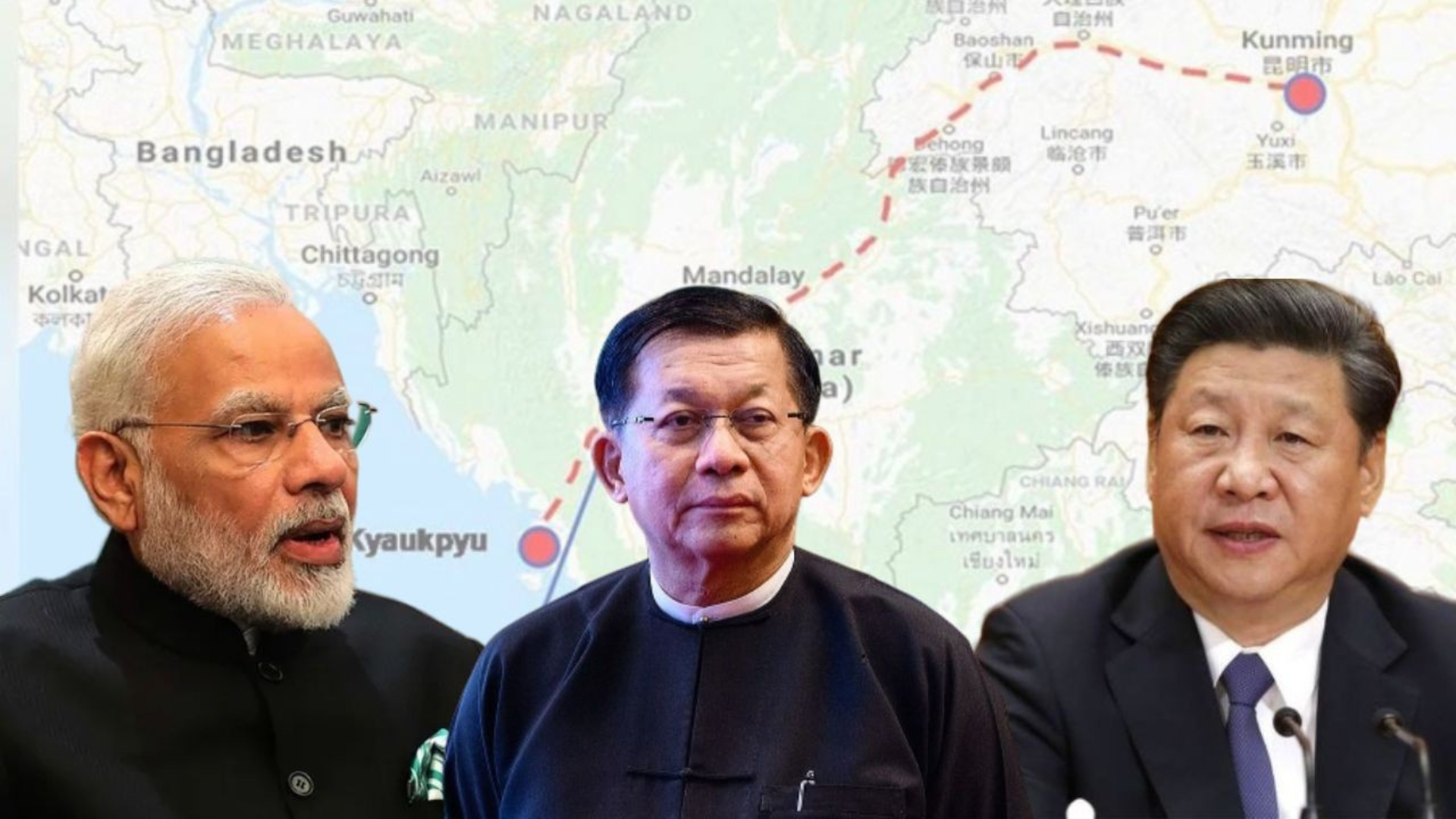
Military and political analysts are closely watching how the government will handle the situation to successfully implement the development projects invested in Myanmar by its powerful neighbors, China and India.
China's strategic projects in the country include the Kyaukphyu deep-sea port—which will grant it access to the Indian Ocean—and oil and gas pipelines. Additionally, to facilitate smooth bilateral border trade between China and Myanmar, projects like the Muse-Mandalay trade route, a railway line, and the Shweli-Mandalay-Kyaukphyu expressway are also underway.
Similarly, India is implementing its "Act East Policy" through projects that pass through western Myanmar to connect with Northeast India, such as the Kaladan Multi-Modal Transit Transport Project and the construction of the India-Myanmar-Thailand Trilateral Highway.
Political observers point out that a scenario could emerge where the government negotiates with the ethnic armed organizations (EAOs) operating in these project areas. They also suggest that interventions and pressure from the Chinese government on the respective organizations might be witnessed.
Political analyst U Myo Set Thway told CNI News Agency that given the current political landscape, the military is likely to apply more military pressure before entering into negotiations between the government, the Tatmadaw (military), and ethnic armed organizations.
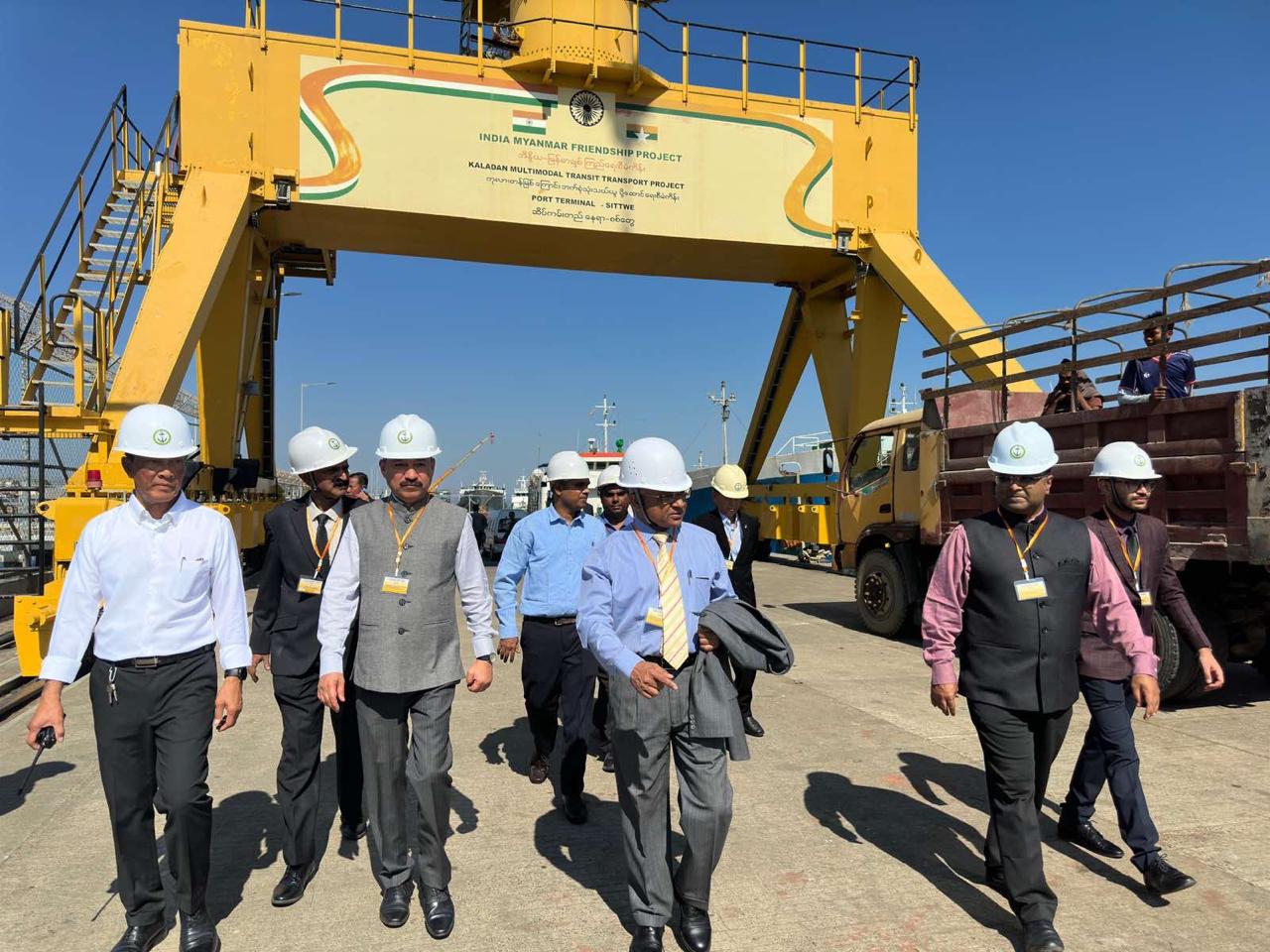
The Indian Ambassador observing the Kaladan River Project.
"On one hand, they might apply more military pressure to establish a balance of power. It’s like bargaining by using military pressure to drive a harder bargain when talking to the ethnic armed organizations. I think this is bound to happen. This is the method they will have to use, as relying solely on compromises will not work. I believe they will have to exert a certain amount of military pressure, but it shouldn't be done excessively. Specifically regarding a group like the AA, the Tatmadaw needs to recapture some of the territories they have seized. Only then will the government side prevent the AA from gaining too much leverage during talks. I think it will proceed in that manner, and negotiations will ultimately be the final resort," U Myo Set Thway said.
Observers of China-Myanmar affairs point out that the Chinese government is likely to aim for the completion of its Belt and Road Initiative (BRI) projects and the Kyaukphyu deep-sea port project within Myanmar over the next five years.
A political analyst told CNI News Agency that to ensure the continuous implementation of these projects, it remains to be seen how the Chinese government will mediate and negotiate between the government-military and the AA. It is also uncertain whether the AA will accept China's mediation.
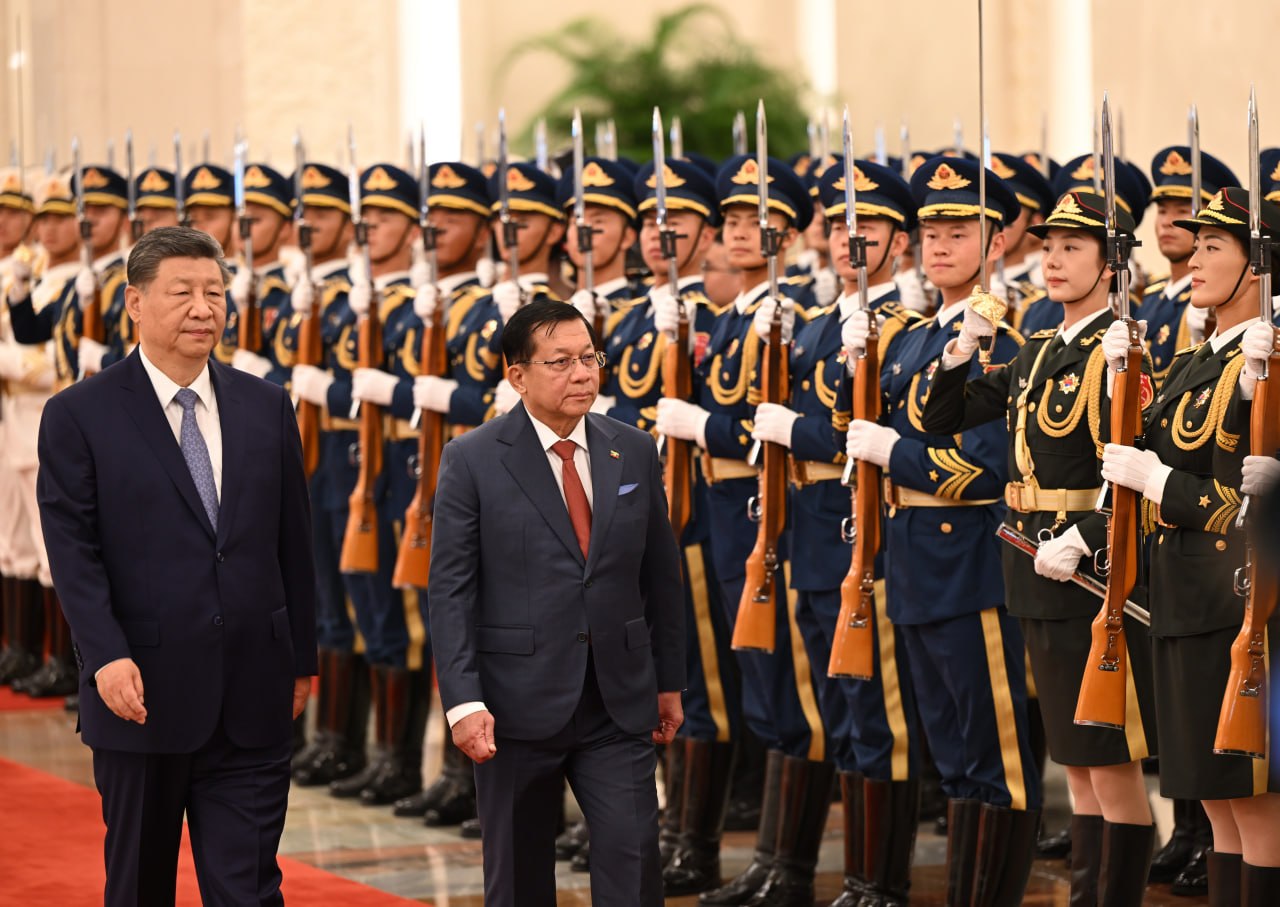
Chinese President Xi Jinping and Myanmar President U Min Aung Hlaing seen together.
"When it comes to large-scale operations under the China-Myanmar Economic Corridor (CMEC), neither side will dare to disrupt them. Because of this, China is not overly worried about those projects. However, looking at the Rakhine region, the AA has managed to control almost the entire Rakhine State, leaving only Kyaukphyu, Sittwe, and Ramree. Since the AA has stated that they will make a decisive move by 2027, it remains to be seen if they will try to capture the remaining three towns by 2027. They seem to intend to capture the entire designated area of Rakhine State. Regarding this matter, how will China intervene? And will the AA listen to the negotiations mediated by China? That is not very clear. In other words, if China tells the AA not to attack their capital Sittwe or not to seize Kyaukphyu, it is highly uncertain whether the AA will comply," the analyst said.
During a meeting between Myanmar President U Min Aung Hlaing and Indian Prime Minister Narendra Modi on June 1, 2026, in New Delhi, India, the leaders discussed the implementation of the Kaladan Multi-Modal Project, the India-Myanmar-Thailand Trilateral Highway project, and the suppression of rebels operating within both India and Myanmar.
Currently, President U Min Aung Hlaing is visiting China from June 15 to 19, 2026, at the invitation of Chinese President Xi Jinping. Political analysts point out that numerous economic agreements are likely to be secured during this trip.