
CNI News
June 19, 2026
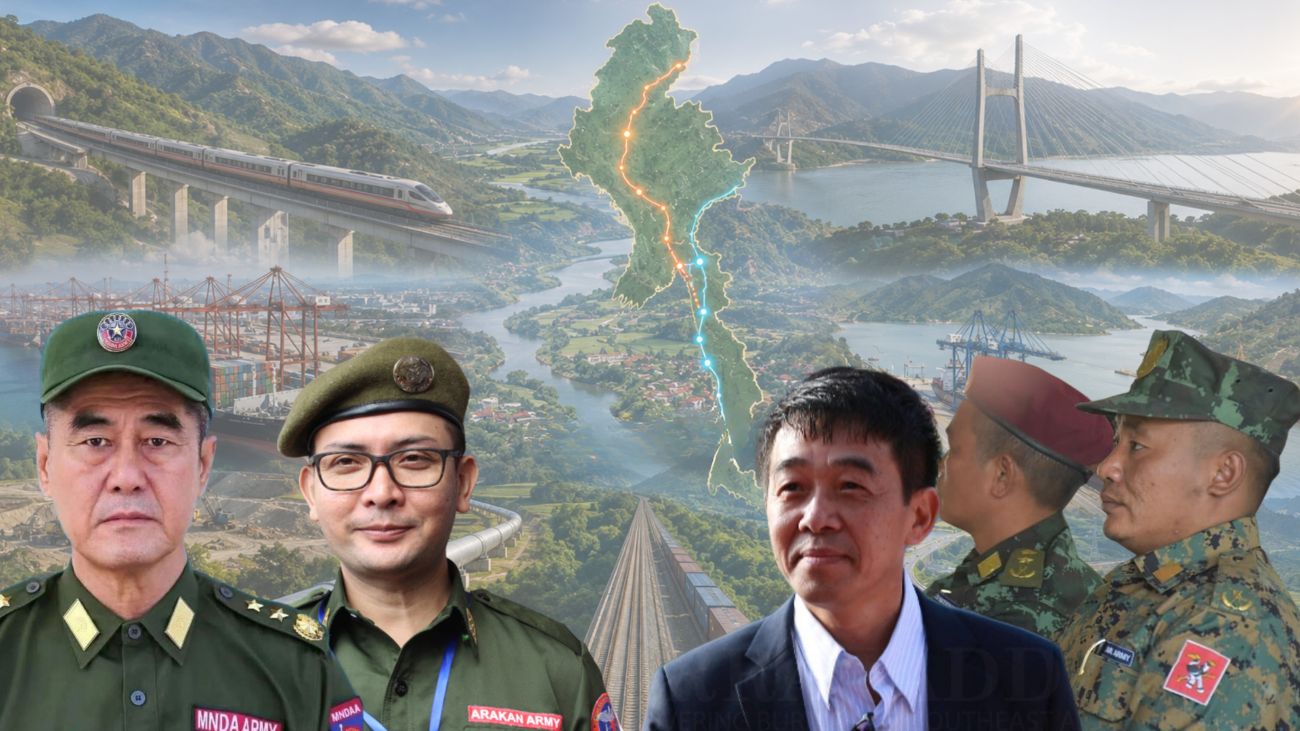
Military and political analysts are offering varying assessments on how China, India, and Myanmar can cooperate to manage the various Ethnic Armed Organizations (EAOs) operating in regions where Chinese and Indian development projects are being implemented.
In Myanmar, China’s major strategic projects pass through Rakhine State, Magway Region, Mandalay Region, Shan State, and Kachin State. Along these routes, groups such as the UWSA, MNDAA, TNLA, SSPP, KIA, PDF, and AA are actively operating and controlling territories.
Meanwhile, India’s projects—such as the Kaladan Multi-Modal Transit Transport Project and the India-Myanmar-Thailand Trilateral Highway project—traverse Rakhine State, Chin State, and Sagaing Region. In these areas, the AA, CNF, CDF, and SNA, alongside Naga and Kathe (Manipuri) armed groups, maintain territorial control and presence.
A political analyst told CNI News Agency that most EAOs in Myanmar’s northeastern region are under China's sphere of influence, and their ability to sustain combat operations relies on China's support, creating a relationship of mutual obligation and leverage.
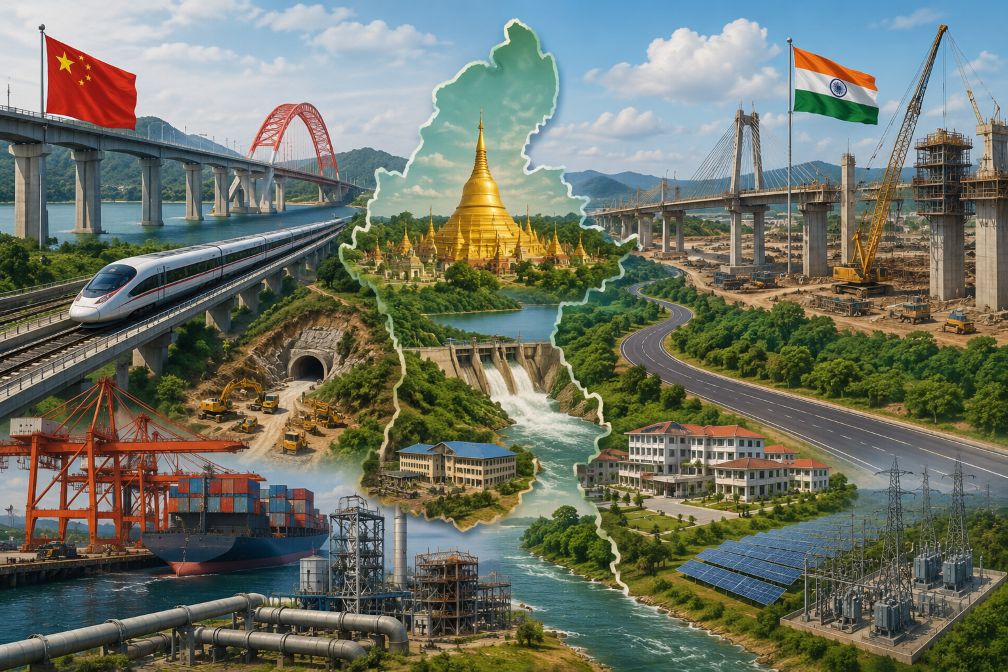
Map/Graphic showing China and India's development projects inside Myanmar.
"If they didn't share a relationship of mutual obligation and leverage, or if they could fight without China's support, why would these armed groups listen to what China says? The fact that they comply and that China’s interventions yield results indicates that they function as China’s proxies. Therefore, for China, it doesn't matter whether EAOs or the government military control those areas. The government just needs to actively implement the projects.
On the western side with India, while New Delhi is on good terms with the Myanmar government, the actual ground territory is controlled by the AA, CNA, and various Chin armed groups. Since the government cannot provide security guarantees on the ground, inviting India to invest is essentially telling them, 'Manage things on your own on the ground to make it work.' It implies that the government will officially signal approval from the top, but the investors must figure out local ground realities themselves.
The AA has previously stated it would protect Indian projects, which suggests there might be some quid-pro-quo behind the scenes. Knowing this, U Min Aung Hlaing still went to invite them, which signals that it's fine for India to manage ground-level arrangements. As for the northeastern theater, it goes without saying. China doesn't care who controls the ground. As long as the government shows a green light, China is fully prepared to step in and work. That is why I believe China will push for and discuss practical implementation during this trip," the analyst said.
Military and political observers point out that the AA currently dominates the entire route of India’s Kaladan project, while Chin revolutionary groups hold the overland border sections. Consequently, they emphasize that engaging with these local groups is unavoidable if India wants to ensure the smooth and secure execution of its projects.
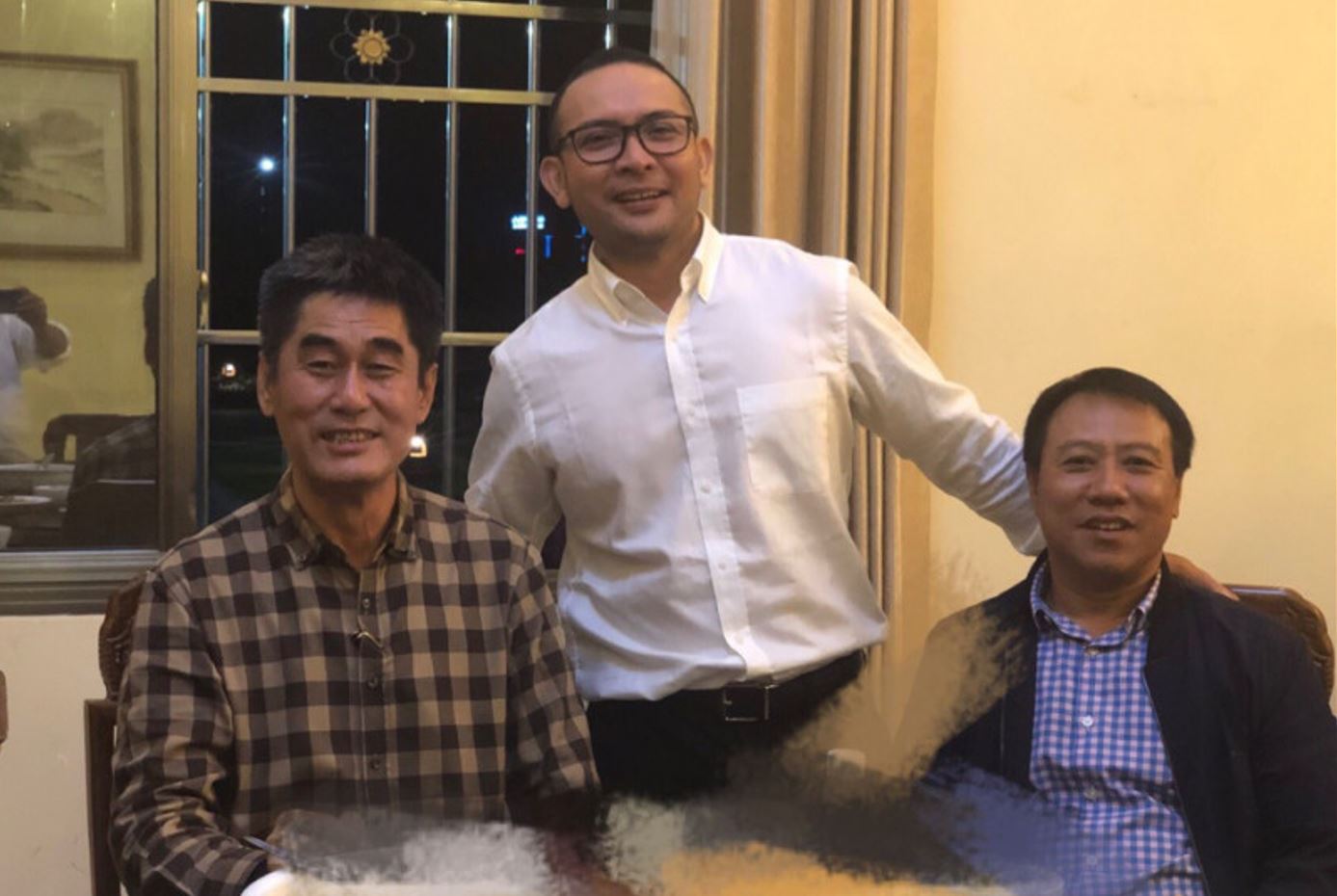
Ethnic armed forces pictured in a territorial area.
U Nyo Ohn Myint, an advisor to the Myanmar Narrative Think Tank, told CNI News Agency that neighboring countries must respect Myanmar's sovereignty, and the Indian government must critically weigh whether to bring the AA to the negotiating table or work to weaken its strength.
"Furthermore, India currently needs to utilize the Kaladan River basin and the Sittwe deep seaport. Because of this necessity, the Indian government must decide whether to facilitate talks with the AA or attempt to weaken its power. This is not about love or hatred; it is strictly about their national interest. For instance, if armed forces control Paletwa in the Kaladan basin, that route becomes impassable. On the other hand, as close neighbors, mutual sovereignty must be respected. Neither China nor India has the right to officially and directly engage with armed rebel groups," U Nyo Ohn Myint said.
Currently, both China and India are actively negotiating with the Myanmar government to expedite the implementation of their key projects.
Military and political analysts conclude that while China can coerce and manage northeastern EAOs using economic sanctions and border pressure, India is more likely to secure cooperation from western EAOs through good-neighbor diplomacy, border asylum considerations, and negotiated project-sharing terms.
Recently, President U Min Aung Hlaing visited India from May 30 to June 3, 2026, and China from June 15 to 19, 2026, holding bilateral talks with Indian Prime Minister Narendra Modi and Chinese President Xi Jinping respectively.