
CNI News
June 17, 2026
In Myanmar’s current political landscape, President U Min Aung Hlaing might handle diplomatic affairs, while General Ye Win Oo, the Commander-in-Chief of the Defense Services, could take charge of military operations, according to U Nyo Ohn Myint, an advisor to the Myanmar Narrative Think Tank, who spoke to CNI News.
He stated: "I think this government will move forward in two tracks. The President will handle diplomacy. As for the new Commander-in-Chief, General Ye Win Oo, if the armed conflicts stop, they stop; if not, he will use force to fight back. Instead of using proportional or minimum force like in the past, he is currently fighting in northern Chin State and parts of Shan State, where sovereignty and territories were previously lost. Furthermore, I believe a new form of peace will emerge based on economic trade driven by the self-interests of neighboring India and China."
Following his return from India, which marked his first official foreign trip, President U Min Aung Hlaing is currently visiting China on June 15 at the invitation of Chinese President Xi Jinping.
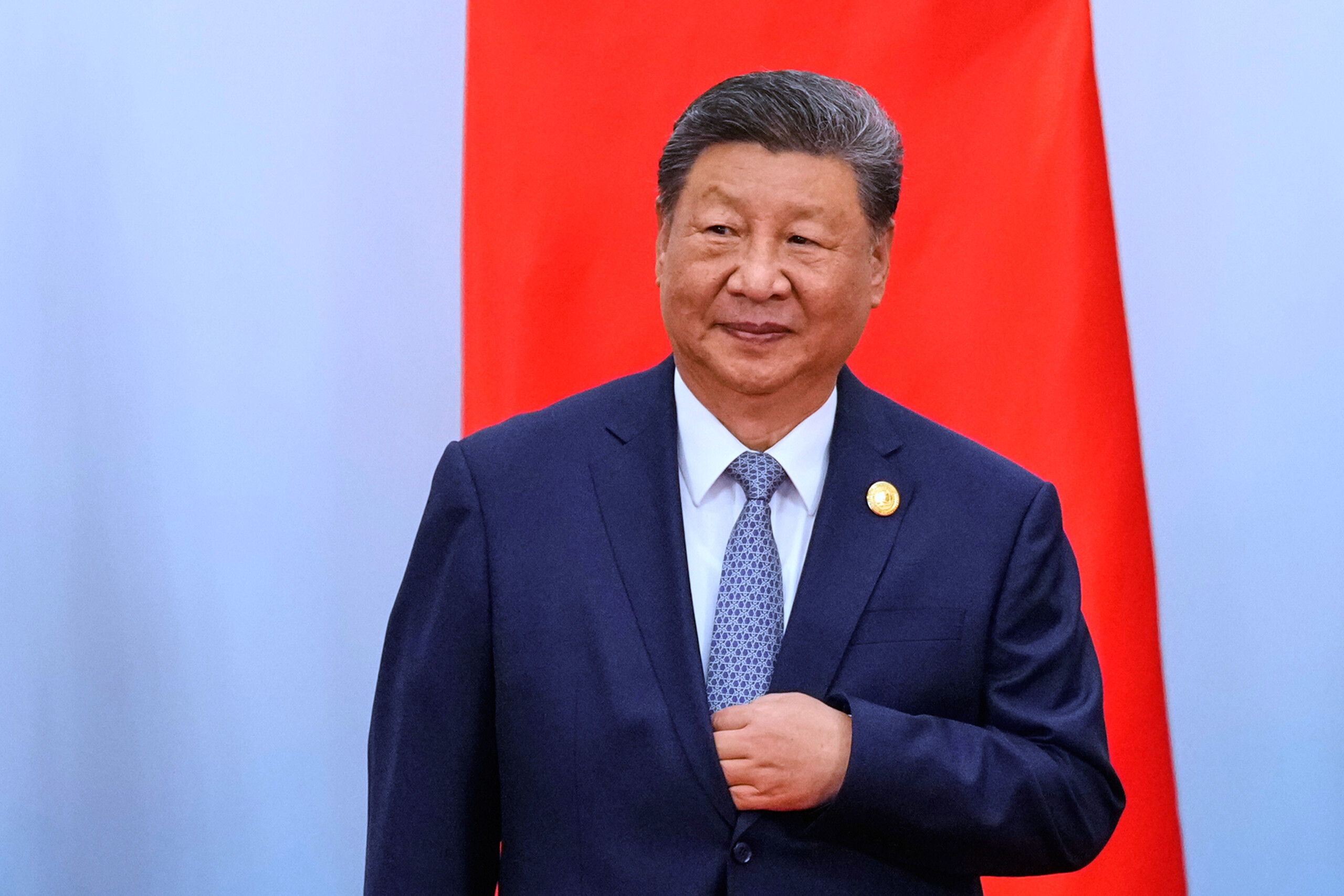
Chinese President Xi Jinping.
Military and political analysts review these visits as significant international and regional diplomatic turning points. They suggest that at a time when the government is facing political and military pressures, these trips serve as a diplomatic strategy to balance relations between two powerful neighbors while seeking legitimacy.
Analysts point out that India’s decision to receive him could be aimed at countering Chinese influence in Myanmar and ensuring border security. On the other hand, China is likely strengthening relations to secure its strategic gateway to the Bay of Bengal and protect its economic interests.
They further analyzed that due to these two trips, Ethnic Armed Organizations (EAOs) controlling border areas could face significant pressure regarding their military operations, as well as their supply and weapon logistics routes.
However, a political analyst told CNI News that looking at these developments, one cannot yet say the outlook for Myanmar's politics is positive.
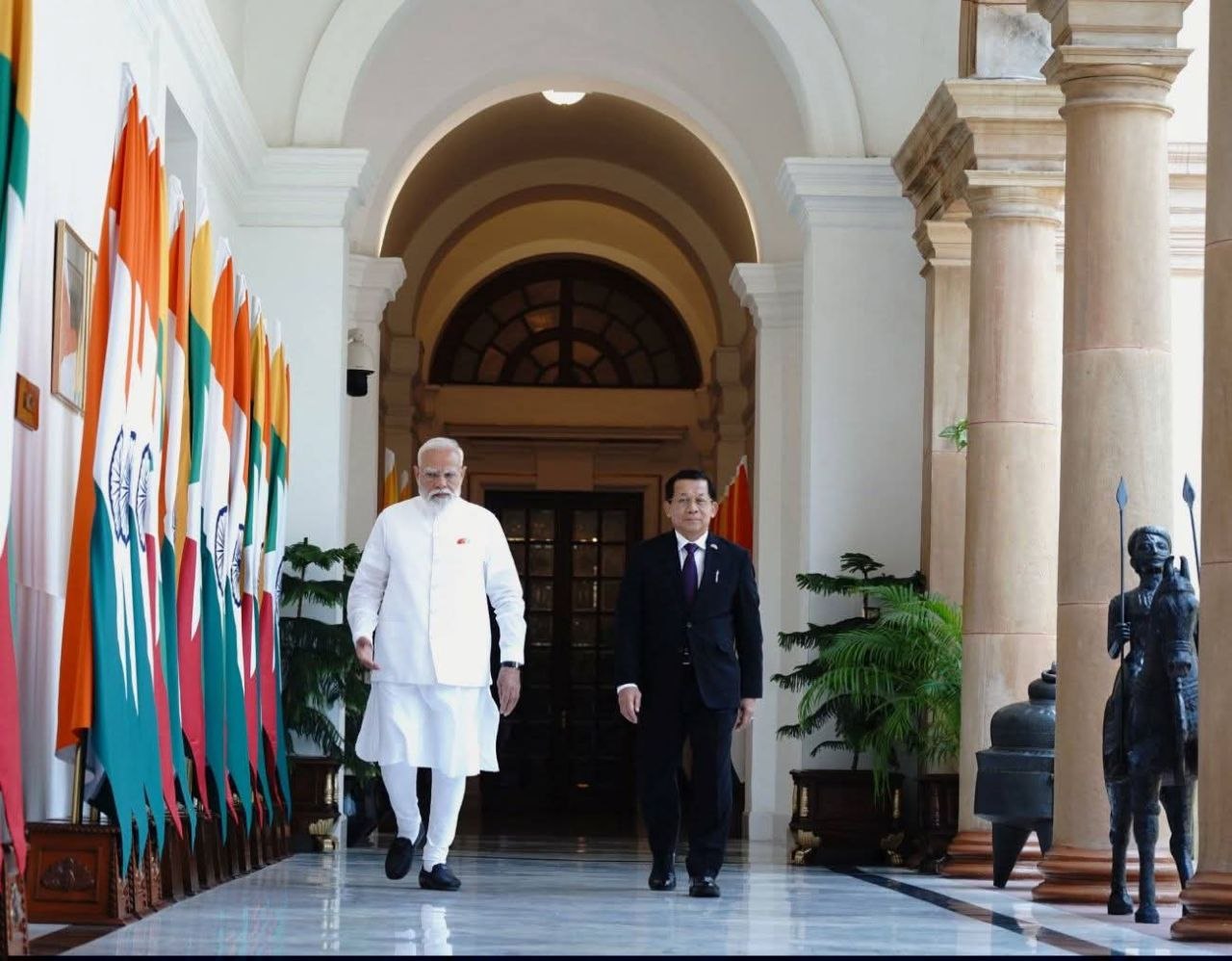
President U Min Aung Hlaing and Indian Prime Minister Modi.
He noted: "We can't say the prospects are good. The armed conflict situation is spinning out of control. In reality, China and India do not genuinely have good relations with each other; they are interacting with Myanmar based solely on their own self-interests. In terms of military strategy, it won't be about total annihilation anymore. Instead of trying to eliminate an entire organization like before, they will likely push to continue discussions in accordance with the signed Nationwide Ceasefire Agreement (NCA). Therefore, the demands of various organizations will have to be renegotiated among themselves. This is because the original signatories of the NCA aimed to move toward a federal system and amend the current 2008 Constitution to align with it. However, groups like the Arakan Army (AA) are different now. They are demanding a confederation status, which is a higher and more independent level than a federal state."
Military and political analysts assess that both of President U Min Aung Hlaing's trips represent a new diplomatic approach aimed at overcoming domestic economic and border security crises by gaining the support and legitimacy of neighboring countries during this period of political transition.
There are assessments that the visits to both powerful neighboring nations could be strategic moves to diplomatically encircle and blockade resistance forces, helping the Myanmar military regain a military advantage or control the conflict fronts.
Nevertheless, analysts point out that the military momentum of EAOs and People's Defense Forces (PDFs) on the ground remains intense. Therefore, whether the assistance from China and India can decisively change the outcome of the war on the ground, or if it will simply prolong the duration of the conflict, remains an situation that needs to be closely monitored.