
CNI News
June 16, 2026
Political analyst Dr. M Kawn La told CNI News that Myanmar could see a situation where it re-emerges and bounces back while positioned among its powerful neighboring countries.
Myanmar has been plagued by internal conflict since March 1948, shortly after gaining independence on January 4, 1948, and the civil war continues to this day. Following the political crisis after February 1, 2021, and the subsequent administration by the military (Tatmadaw), intense armed conflicts broke out across Myanmar.
Political observers point out that the current situation in Myanmar has changed significantly compared to the armed conflicts, political instability, and pressure from ASEAN and some Western nations resulting from the political crisis between 2021 and 2025.
Dr. M Kawn La stated to CNI News that if Myanmar continues on its current trajectory, peace processes could gain strong momentum after 2027, potentially allowing Myanmar to bounce back among powerful nations.
"These developments are moving toward resolving our political and economic crises—it's like the beginning of the story's first five years. If this momentum can be sustained, our peace process is certain to regain strength. From our perspective, the peace processes will make significant progress after 2027. Furthermore, since the parliament (Hluttaw) is currently in session to make constitutional amendments, the peace process across all sectors will strengthen in the first and second years following the initial 100 days. According to our forecast, this is essentially a starting point of struggling to stand back up for a change. Those who just stay down after falling usually fail. Only those who get back up can take steps forward. Within five years, a certain level of peace will be achieved, and that stability could become substantial," he said.
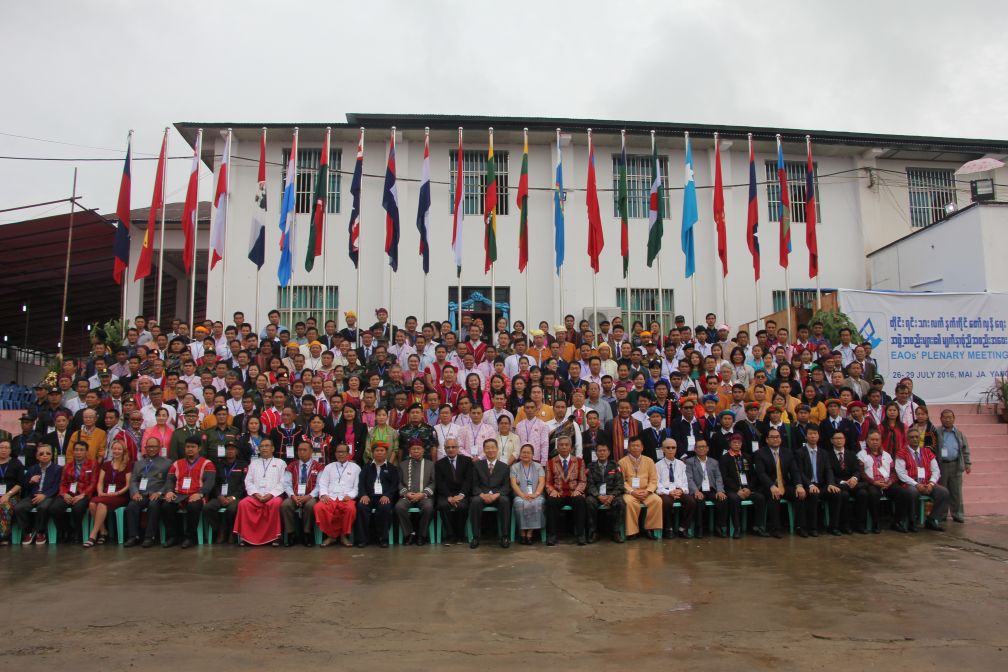
Attendees seen at the meeting of Ethnic Armed Organization leaders.
He further commented on the neighboring dynamics: "Myanmar shares border checkpoints with five countries: Bangladesh, Thailand, Laos, India, and China. We are seeing indications that all these powerful neighbors intend to use their influence to drive the peace process. If things continue like this, Thailand is also likely to follow suit. If that happens, the Ethnic Armed Organizations (EAOs) along our borders will face a 'do or die' situation. I think they will face a dilemma in their decision-making—whether to fight to the death like Thakin Than Tun and the Communist Party of Burma, or to choose the path of peace. I see this situation unfolding within five years."
Additionally, he noted that it remains to be seen how Western nations will implement their monitoring and containment policy toward Myanmar.
"Once the peace process is somewhat successful and the political conflict stabilizes, the following five years—making it ten years in total—will bring real momentum. This is looking at it from a positive view. From a negative view, we have to see how much the Western bloc will intervene and implement their containment policy. In our case, the 'Kyat Hpant' (online scam/cyber fraud) operations were carried out in southern Myanmar, and the Rohingya (Bengali) issues were implemented in the west. How much they can pull off depends on how well we and our neighboring countries can defend against it. In my view, while there will be some actions taken under the containment policy, I don't think they can completely crush us. It won't be easy to break us. The conclusion that Myanmar can bounce back between five to ten years along its current path is quite realistic," Dr. M Kawn La said.
Currently, the administration led by President U Min Aung Hlaing includes dialogue for peace as part of the agendas to be implemented within its 100-day plan. However, political analysts point out that Ethnic Armed Organizations still have very weak trust in the current government's peace process, and it can be assumed that no definitive incentives have been offered yet to bring them to the peace path.
Economic analyst U Htay Aung Kyi told CNI News that the primary issue to be resolved in Myanmar is the ethnic armed conflict; unless this issue is successfully resolved, it is unrealistic to expect other sectors to go smoothly.
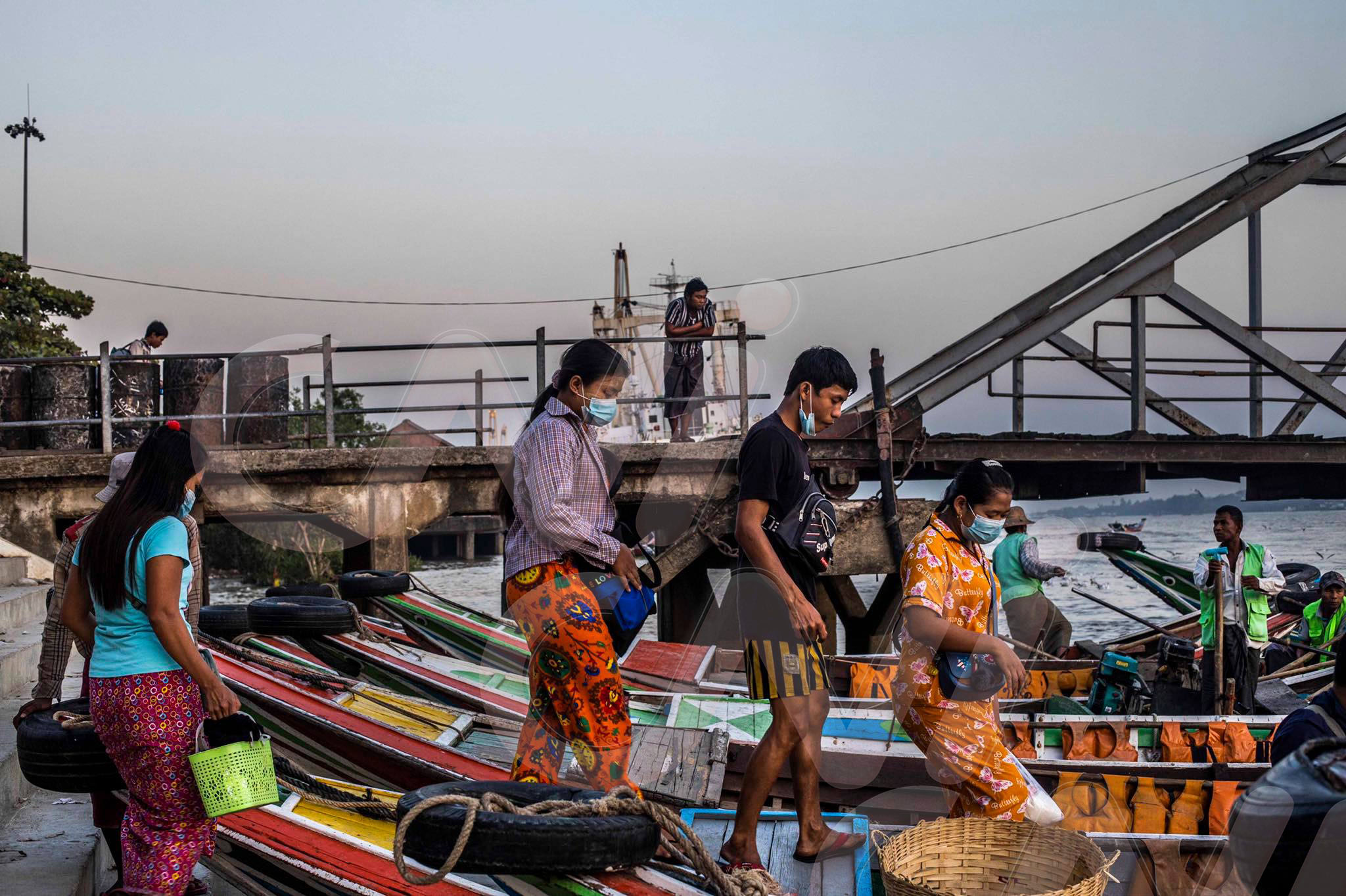
Working-class citizens seen
"I'm not saying it's impossible, but from my point of view, it’s not realistic. The most important thing is this ethnic problem. If this isn’t resolved, it won’t be easy for other things to succeed. First, regarding a political system—in my view, it must be a democratic federalism. This is because going into federalism without the practice of democracy is highly dangerous. To put it briefly, how to set up the structure of the Union of Myanmar is the number one priority. Second, only when this setting is correct will the economic system be right. And only with a proper economic system can there be progress. The main thing is, how do we first establish a setting for the ethnic problem that incorporates vision and wisdom? That needs to be done first. What I mean is, the first setting requires firmly establishing the political system, especially regarding federalism. The second step is that the economic system will only become correct if the political system is right. However, to state the current situation briefly and to the point, legitimacy will gradually develop. Once that happens, the main problem is controlling the economic decline and practicing a market economy. Unless the international community believes that a proper market economy is in place, foreign investment will not come at all. I want these points to be considered. However, the foundation for this setting already exists—which is the 2008 Constitution. As far as I understand, the 2008 Constitution is democratic federalism. One thing is, we need a mindset that is dedicated to implementing the 2008 Constitution properly and effectively," he said.
Economic analysts also point out that the current economic difficulties in Myanmar stem from the inability to firmly build the entire economic system. Since politics and the economy are intertwined, if the economy is not doing well, perspectives and mindsets can change as well.
President U Min Aung Hlaing visited India from May 30 to June 3, 2026, and is visiting China from June 15 to 19, 2026, to discuss political, economic, diplomatic, and peace matters.