
CNI News
June 16, 2026
Businessmen and politicians point out that it will be difficult to eradicate bribery and corruption in Myanmar unless the country's political and socioeconomic conditions can be stabilized.
Politicians and the public highlight that the difficulty in eliminating bribery and corruption in Myanmar stems from deep-rooted corrupt systems spanning decades, abuse of power, and weaknesses in the rule of law.
Political analyst Dr. Aung Myo told CNI News that Myanmar is currently experiencing a civil war, and inflation is inevitable due to military expenditures. He noted that while bribery and corruption can be reduced, they cannot be entirely eradicated.
"These [acts of bribery] are just the branches and leaves. In reality, there is a main taproot. Corruption will only be eradicated when that main taproot is cut. We have been fighting corruption for ages, but it cannot be totally suppressed. In fact, it has only worsened. It depends on how well a government can control this inflation. Corruption will only decrease when inflation is controlled and a civil servant's salary holds value and is sustainable.
The challenge is that during the current civil war, inflation is unavoidable due to military spending. The state government would have to handle things very cleverly and tactfully to control this inflation. It is difficult to control inflation with military expenses during wartime. If money has no value, corruption will persist. We should also look at how lower-level civil servants are surviving. Therefore, they will find ways to get money, by hook or by crook. Essentially, I want to say that it depends on how the government's budget and monetary policies work. No [anti-corruption] organization is needed. People will just bribe the scrutiny committee so they won't investigate. Those committees are useless. It's pointless to form them. First of all, bribery will never disappear; it is difficult for Myanmar to eradicate it completely. We can only reduce it. How can this government revive a state machinery that is heavily dysfunctional?" Dr. Aung Myo said.
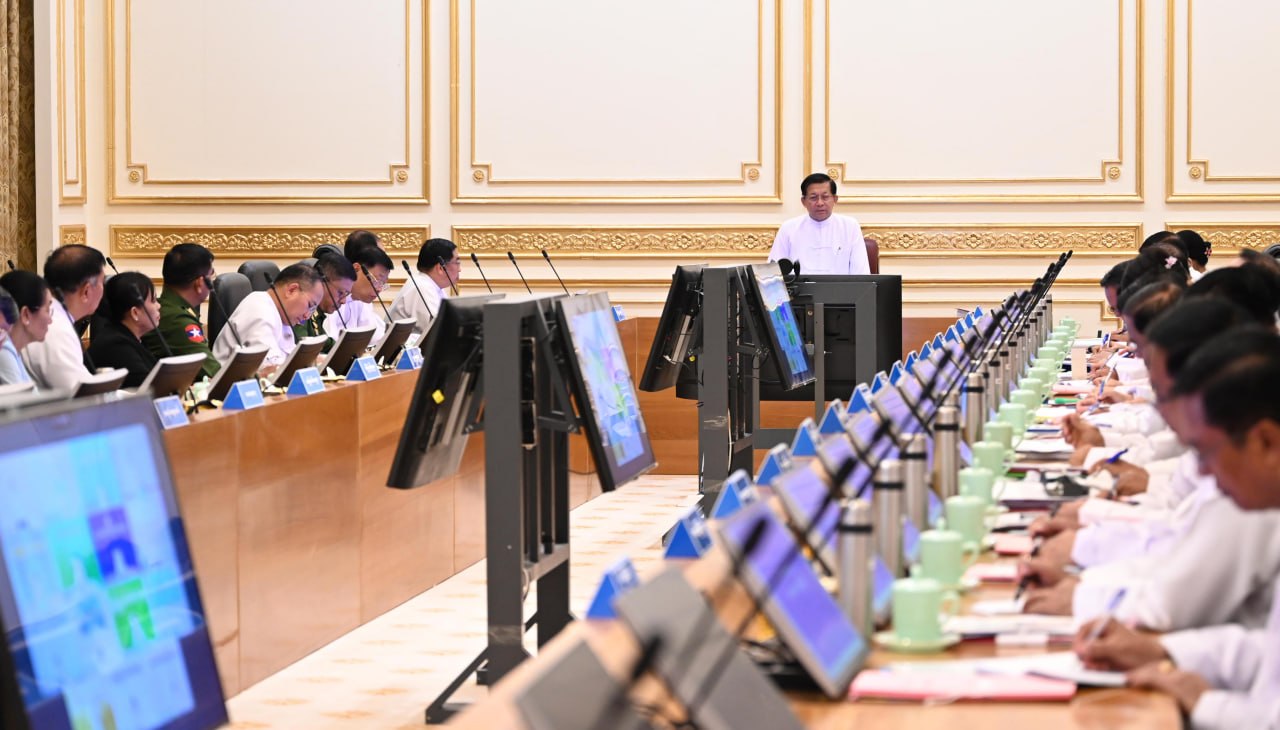
During the Union Government meeting.
Political analysts also point out that corruption has grown because bribing has become normalized as a mundane matter to ensure tasks run smoothly and quickly in government offices. Additionally, those with power and authority have opportunities to use their positions for personal gain.
Furthermore, it is pointed out that although Bribery Eradication Laws and Anti-Corruption Laws exist, their implementation lacks effectiveness in practice. It is also difficult to open cases and take action if complaints lack solid evidence.
Political analyst U Htet Aung Kyaw told CNI News that because Myanmar enforces tens of thousands of rules and regulations, the public cannot tolerate the resulting delays. Wanting their matters resolved quickly, they resort to paying bribes.
"When additional regulatory bodies are formed to control bribery, people end up bribing those regulatory bodies as well. Managing the group that is supposed to manage others becomes a compounding problem. Regarding why corruption happens, some cases involve taking small bribes of 5,000 or 10,000 Kyats just for survival. The government itself must solve these issues. What I mean is, the government must ensure that civil servants' salaries align with the current era, allowing them to live with dignity—not just to barely eat and drink, but to reach a comfortable living standard. Only then will the factors driving corruption be eliminated. True high-level corruption that amasses immense wealth can only be done by those with executive authority. Therefore, taking action against those who actually hold high ranks and power would create better momentum [for anti-corruption efforts]," he said.
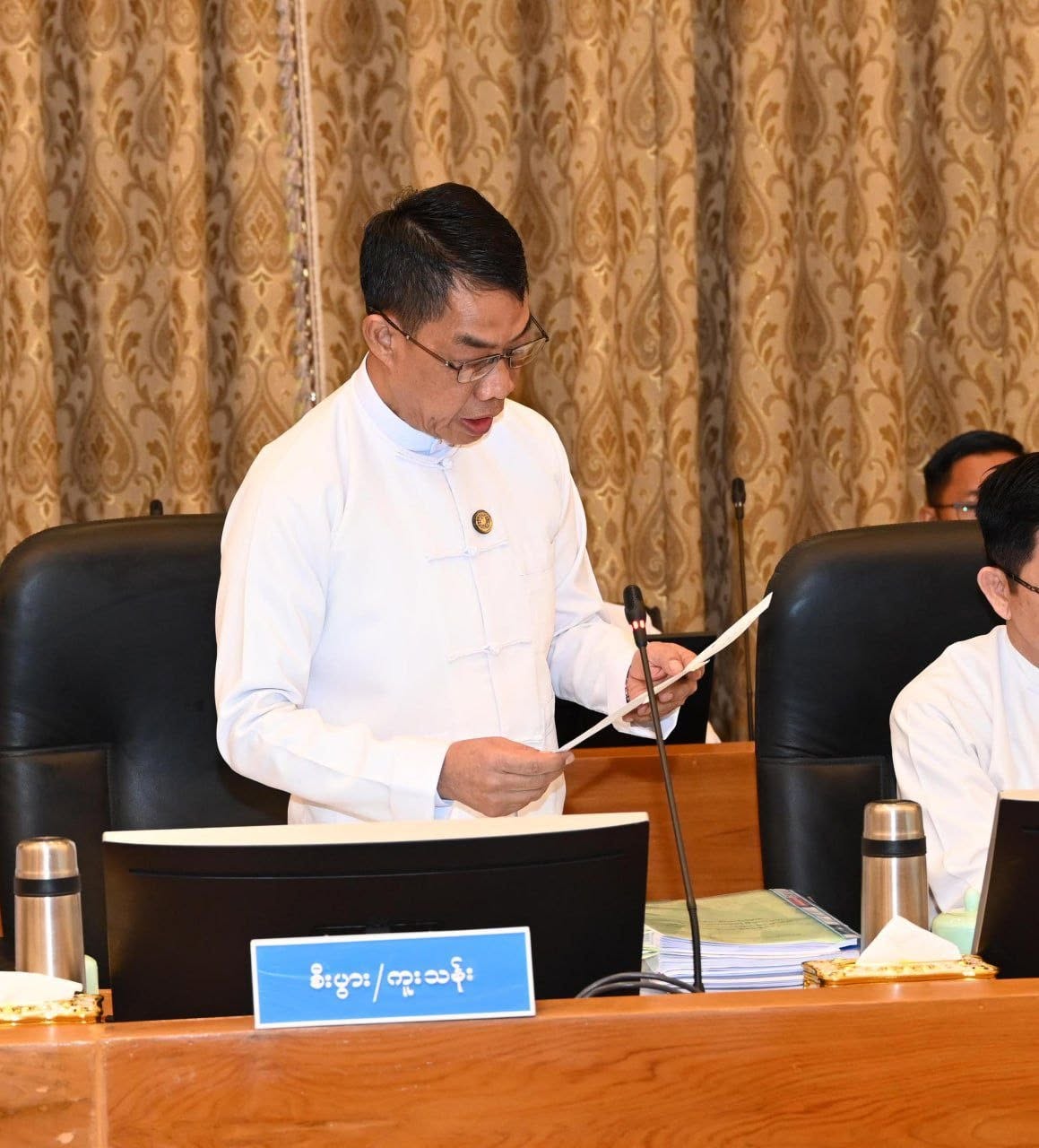
Minister for Commerce U Tun Ohn.
U Htet Aung Kyaw further suggested that instead of telling businessmen not to give bribes, the government should eliminate bribery by making business procedures easy and fast.
"Instead of telling businessmen 'Do not give bribes,' we must look at whether an environment has been created where their business operations can be carried out easily, smoothly, and quickly. When tens of thousands of rules and regulations are imposed, forcing people to get signatures at this desk and that desk, it wastes time. Unable to bear the delays, they pay money to speed things up. These are issues that have been happening for a lifetime," he added.
President U Min Aung Hlaing stated during a Union Government meeting held on June 9, 2026, that business people should not ruin security personnel and civil servants by offering them bribes for their own business interests.