
CNI News
June 10, 2026
Although the government and political parties have agreed on 43 points regarding the amendment of the 2008 Constitution, it is learned that an agreement to amend Section 261 has not yet been reached.
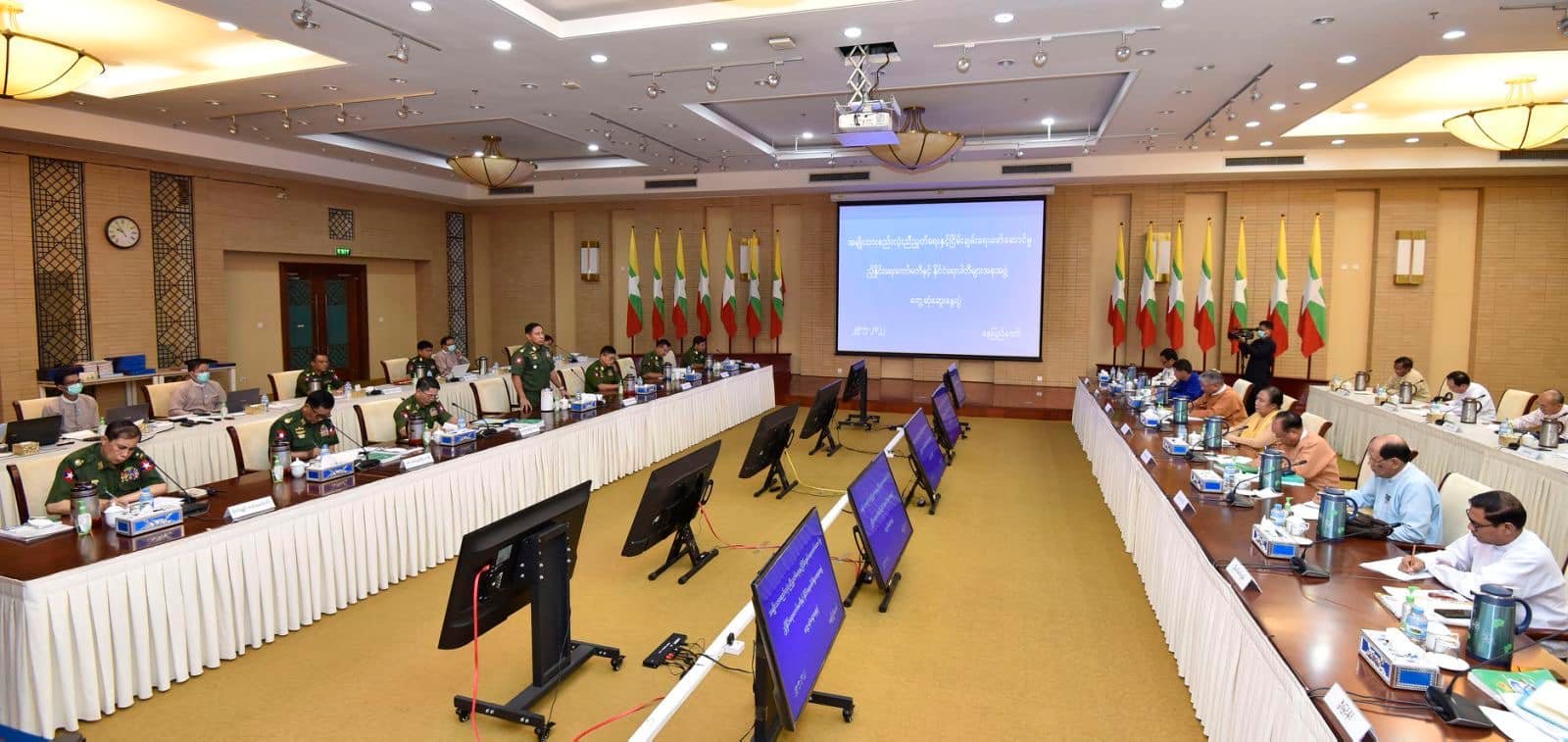
Following a meeting in January 2025 between the National Solidarity and Peacemaking Negotiation Committee (NSPNC) and the working group of the political parties bloc, both sides stated that they had reached an agreement on 43 points to amend the 2008 Constitution.
However, political analyst U Htet Aung Kyaw told CNI News that vital provisions are still missing from those 43 agreed points, and no precise agreement has been reached yet regarding the amendment of Section 261.
"Although we keep calling it '43 points,' what is actually being amended does not really amount to 43 significant changes," U Htet Aung Kyaw said. "Furthermore, some of those points are just minor wording adjustments. Major or critical laws are mostly absent from the current amendment list. There were discussions to amend all clauses related to the highly critical Section 261. It was agreed that they would amend all of them after thoroughly discussing the interrelated sections that need to be addressed. However, the discussions on this matter have not yet concluded. Because of that, it was not included in the 43 points. In reality, these 43 points are not enough. We need amendments that align with the current era and system, as well as adjustments based on what has already been tested in our administrative framework. The most important thing is to ensure that our operations always stay relevant and compatible with the changing times and systems."
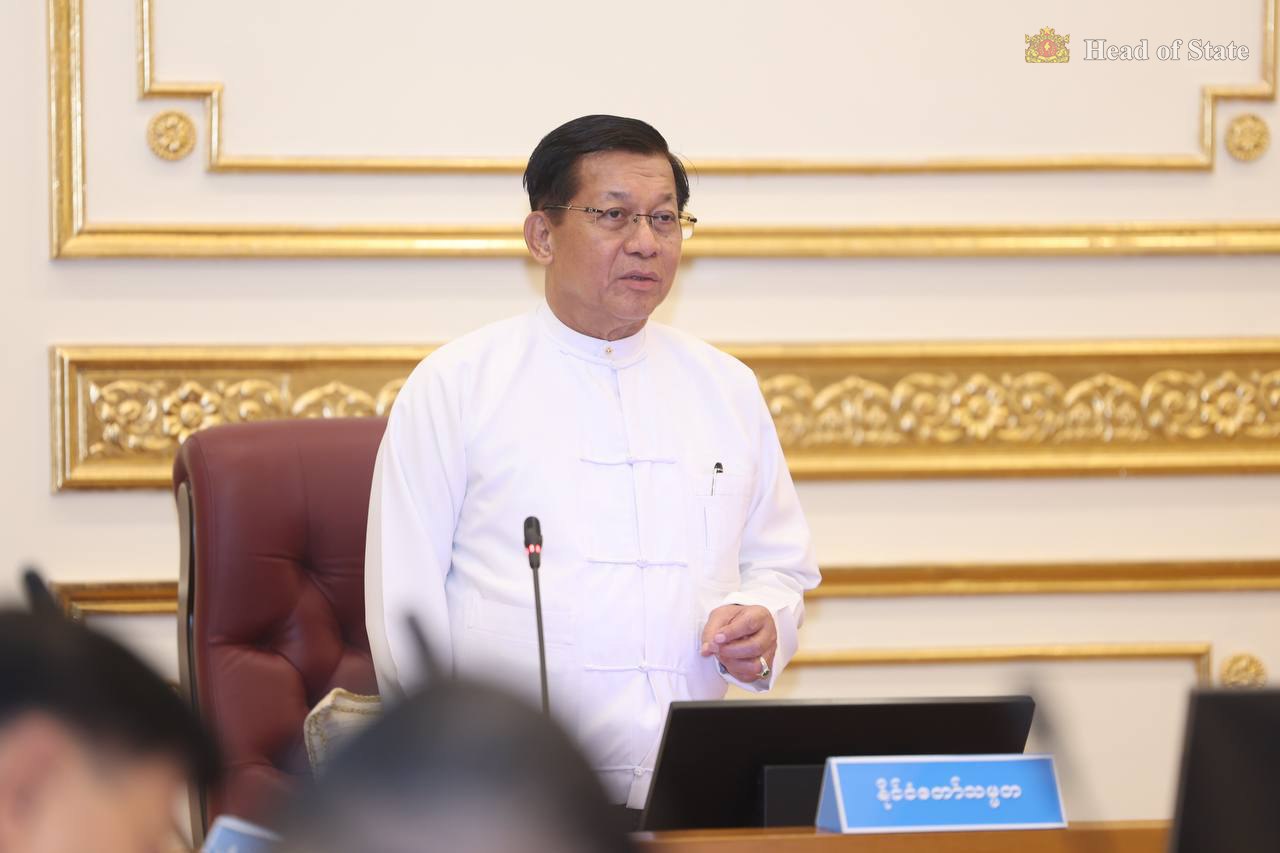
President U Min Aung Hlaing seen during an event.
On March 10, 2026, before stepping down as Commander-in-Chief of the Defense Services, current President U Min Aung Hlaing stated that the demands of Ethnic Armed Organizations (EAOs), matters concerning constitutional amendment, and necessary agreements and discussions for the region and the country would be re-evaluated in the parliament that will emerge in the near future.
President U Min Aung Hlaing has subsequently stated that discussions are underway to make amendments to Myanmar's 2008 Constitution to make it compatible with the present era, adding that measures must also be taken to protect the country from matters that could bring harm.
Dr. Aye Maung, Chairman of the Arakan Front Party (AFP), told CNI News that while an agreement has been reached on 43 points to amend the 2008 Constitution, it is still unknown whether the NSPNC has submitted them to the President, and the status of the tripartite approval remains unclear.
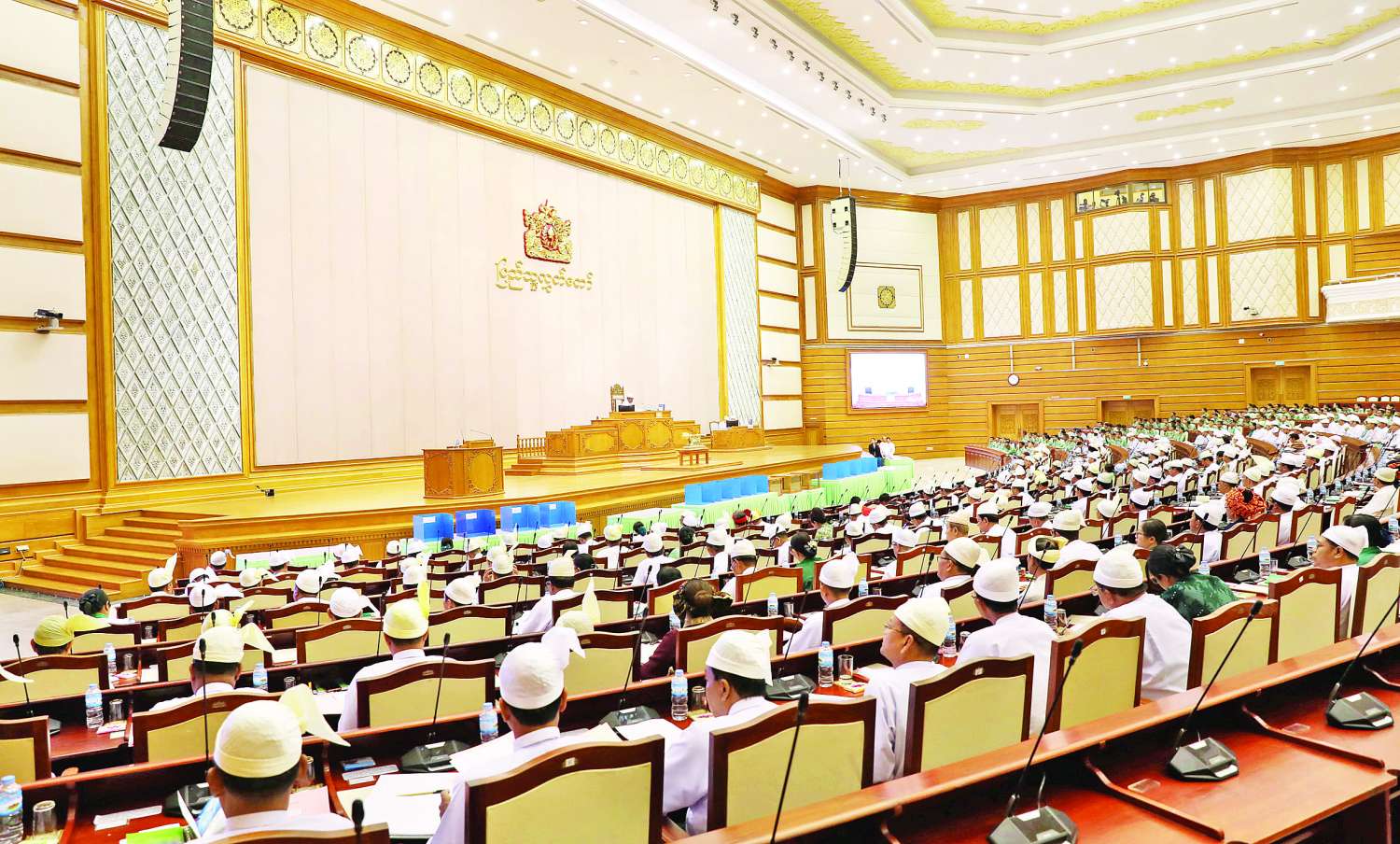
A parliamentary session in progress.
"There is what the President himself has said. He mentioned that these 43 agreed points, along with the agreements from the peace conferences, will be combined and submitted to parliament to amend the constitution and move toward a federal democracy," Dr. Aye Maung said. "Therefore, the constitution will still contain provisions that do not yet need to be amended alongside those that do. However, these 43 points were discussed based on the stance that they *must* be amended given the current political and military situation. So, agreements have been reached on 43 points, while just over 10 points remain. Both sides have reached a mutual understanding and recorded it, but I cannot say whether the NSPNC has yet to submit it to the President, if it is currently being submitted, if approval has been granted, or if it is stalled because tripartite confirmation cannot be achieved yet. There are over 14 points [left to resolve]."
On April 10, when he was selected as President, U Min Aung Hlaing stated that the 43 constitutional amendment points agreed upon between the NSPNC and the political parties bloc working group would be submitted and discussed in the Pyidaungsu Hluttaw (Union Parliament).
Political analysts point out that amending the 2008 Constitution is a massive political process. Amending the majority of the legal sections requires a nationwide referendum, and depending on the nature of the sections to be amended, it involves successive stages requiring both parliamentary approval and the decision of the public.