
CNI News
June 5, 2026
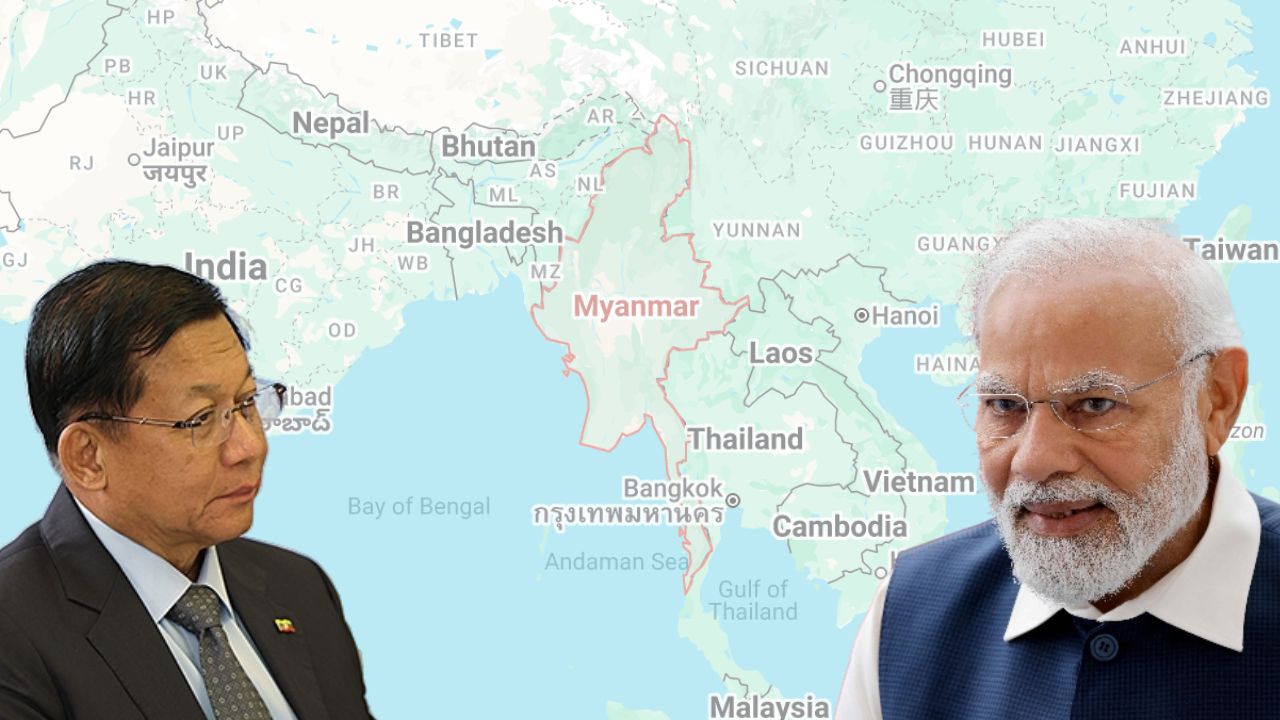
Political analysts are evaluating and discussing the potential sectors in which neighboring India might become involved regarding Myanmar.
On June 1, 2026, Indian Prime Minister Narendra Modi and Myanmar President U Min Aung Hlaing met in New Delhi to discuss rare earth metals, trade, and security issues.
Political analyst Dr. M Kawn La told CNI News that under India's "Look East" policy, engaging with Myanmar is indispensable, and India’s ability to trade with ASEAN relies heavily on Myanmar’s geopolitical position.
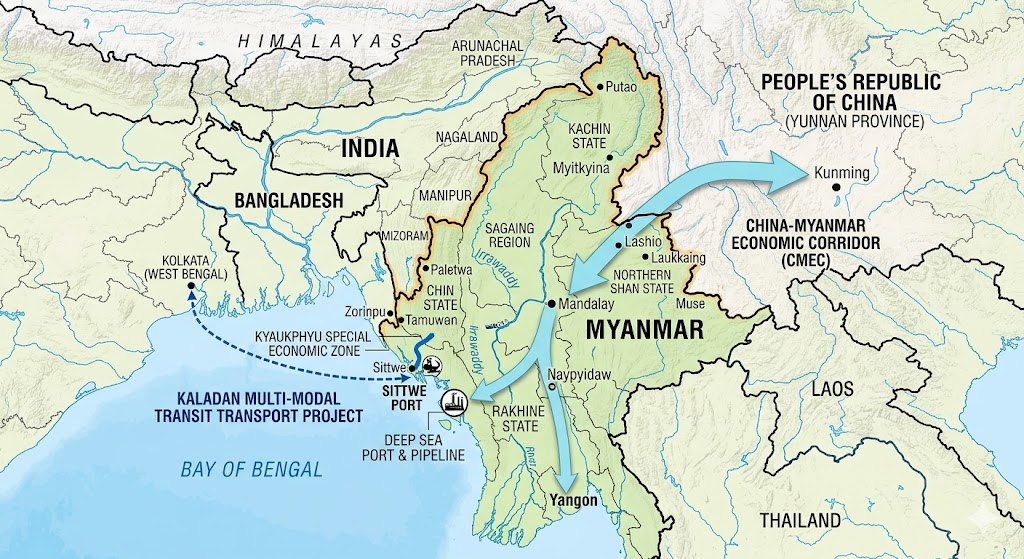
He stated, "It depends on Myanmar's geopolitical positioning. Myanmar's location acts as a land bridge between South Asia and ASEAN. India can trade with ASEAN only by passing through Myanmar. According to India’s Look East policy, they absolutely must engage with Myanmar. That is why they have brought up implementing the Myanmar-India-Thailand trade route. The Kaladan Multi-Modal Project routes from Tamu to Monywa, Kalay to Monywa, Monywa to Mandalay, Mandalay to Yangon, and Mawlamyine before entering the ASEAN highway. This is what is being planned. Since Myanmar's geopolitical position serves as a land bridge, India must inevitably engage with us; they need Myanmar. Another point is in the Bay of Bengal. In the Indian Ocean, apart from the Malacca Strait, we have the Andaman Sea and the Bay of Bengal. Myanmar is the only country that shares a coastline with both. Furthermore, including India, there are three main countries around the Bay of Bengal: India, Bangladesh, and Myanmar. The relationship between India and Bangladesh is good. Therefore, India would naturally want to counterbalance Myanmar's potential shift closer to China. In this regard, Myanmar is important both diplomatically and geopolitically to keep the three Bay of Bengal nations united. From their perspective, Myanmar cannot be left out."
Rare earth metals
Military and political analysts point out that just as India is important to Myanmar, Myanmar is also a crucial neighboring country for India, as there are mutually beneficial sectors in bilateral trade.
President U Min Aung Hlaing stated that India currently ranks as the 11th largest investor in Myanmar, with 39 investment projects totaling US$ 782.385 million.
In addition, India is implementing the Kaladan Multi-Modal Transit Transport Project and the development of the India-Myanmar-Thailand trilateral highway.
During his opening speech at the Myanmar-India Business Forum held in Mumbai, India, on June 3, President U Min Aung Hlaing mentioned that if Myanmar, with its emerging political stability, cooperates with India, it will open up many opportunities for India.
Political analyst U Htet Aung Kyaw told CNI News that while the role of neighboring countries is vital for Myanmar, it is equally necessary to make efforts to reintegrate into the global community.
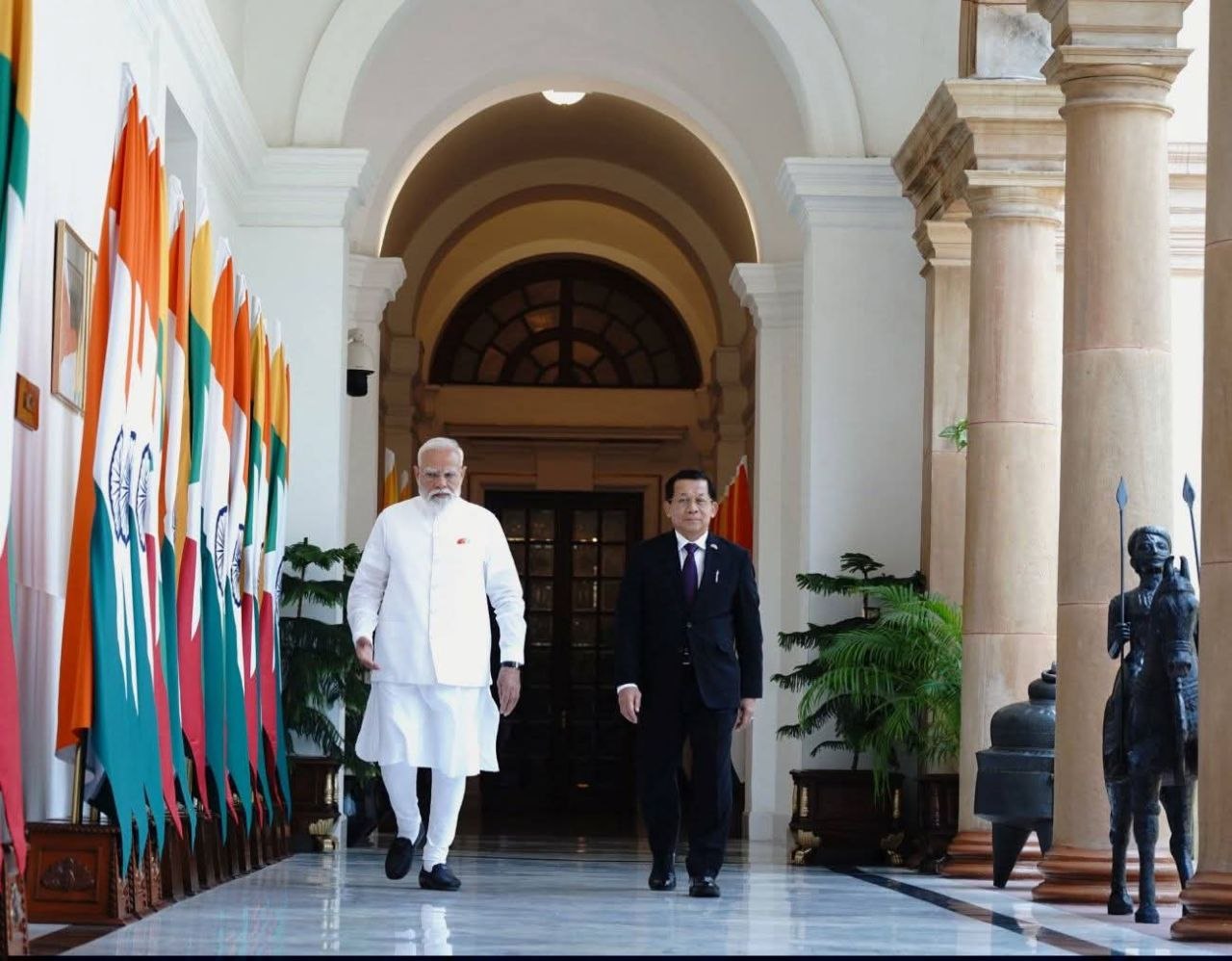
Indian Prime Minister Modi and the Myanmar President
He said, "There are political and diplomatic systems in the world, and Myanmar needs to fully re-enter them. Otherwise, we will just be moving along solely with our strategic friends like neighboring Thailand, India, and China. Therefore, I view the current situation as a temporary stopgap before achieving full integration. In reality, we need to fully return to the international community. If not, we have to operate under a condition where India, China, and Thailand say, 'It’s fine if you haven't reached the global stage yet, as long as things are good between us.' First and foremost, things need to return to normal. Before reaching normalcy, relations with these neighboring countries are vital. This is what we have right now, so we cannot afford to have poor relations with them. While this current approach is good, it would be even better if our country takes the necessary steps to fully reintegrate into the global community."
At the invitation of Indian Prime Minister Modi, Myanmar President U Min Aung Hlaing visited India from May 30 to June 3, 2026.
This trip marks U Min Aung Hlaing's first foreign visit during his tenure as President, during which economic, political, and other bilateral matters were reportedly discussed.