
CNI News
May 27, 2026
President U Min Aung Hlaing stated that political conflicts in Myanmar escalated significantly due to weaknesses in the 1947 Constitution, which allowed states the right to secede.
The President made these remarks during the Union Government Meeting of the Republic of the Union of Myanmar held at the President's Office in Nay Pyi Taw on May 26, 2026.
He said that "after gaining independence, the country had to address and resolve internal armed conflicts, instability, and foreign invasions, alongside the emergence of factions within the ruling party, as evidenced by the political stability of that time and the population and housing censuses collected."
U Thein Tun Oo, Executive Director of the Thayninga Institute for Strategic Studies, told CNI News that while Myanmar is currently unified in terms of borders, there are internal issues that remain unresolved, but many possibilities exist if they are tackled through political means.
He said: "It can be said that most of the ongoing internal armed conflicts are rooted in this issue. The main point is that compared to the time when the nation was established in unity, we are now only unified geographically by borders, while having irreconcilable internal problems. If we resolve this aspect through political means, there are many possibilities. So, it comes down to how we approach a workable path. There are viable paths forward for Myanmar today. It is important that we learn lessons from past events and focus on how to unite and coexist within a single territory at this time. The situation back then was what it was, but we have to consider whether maintaining those same flaws suits the present times or not."
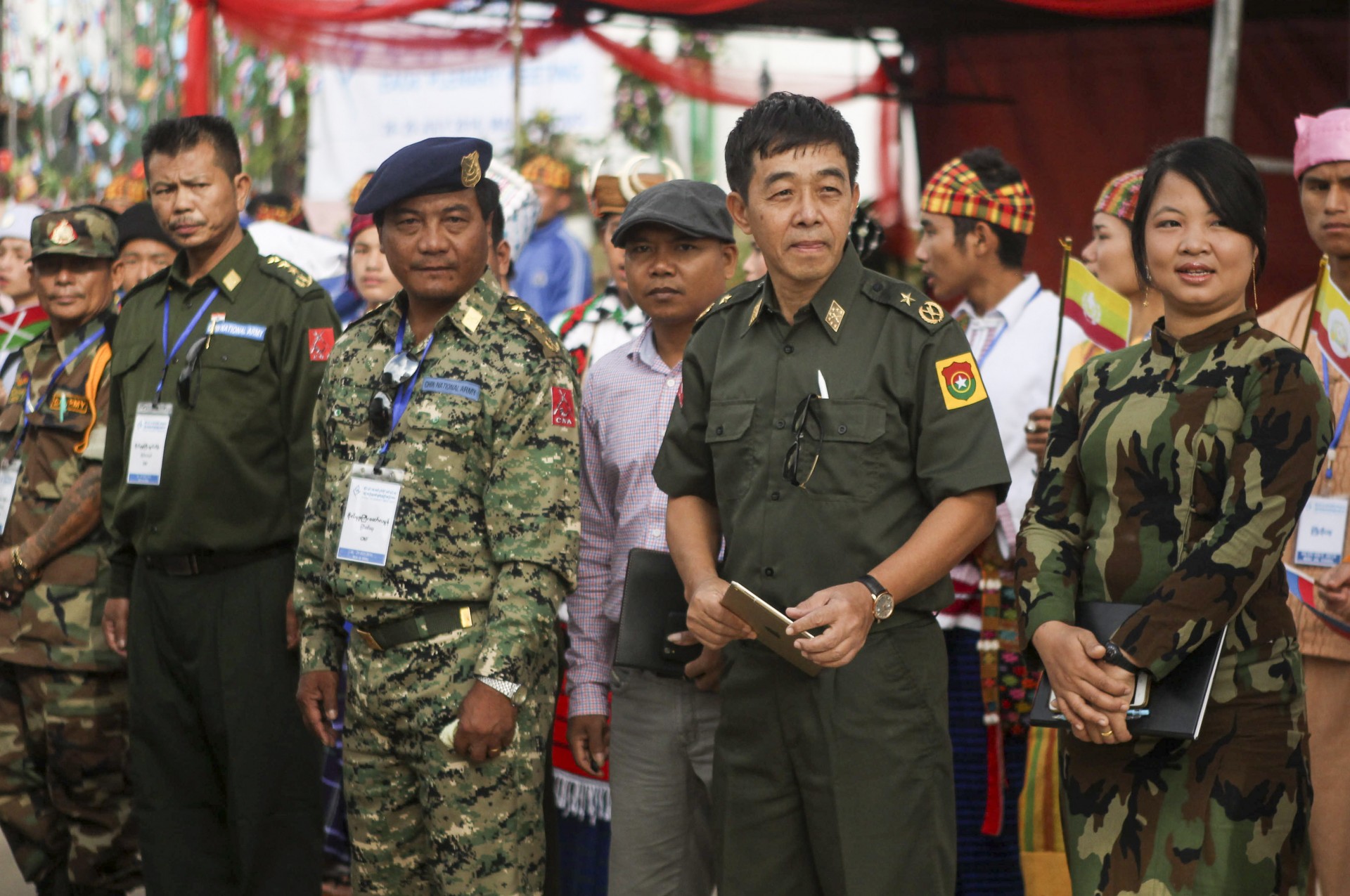
Ethnic Armed Organizations.
President U Min Aung Hlaing also noted that reviewing the historical events experienced by the state requires assessing and balancing domestic political situations and international relations from the post-independence era up to the present day.
Political analysts point out that the flaws of the 1947 Constitution lay in the over-centralization of power rather than granting genuine self-determination and full equal rights to the states, as well as restricting equal representation for ethnic groups in the Chamber of Nationalities (the Upper House).
They further noted that these flaws caused discord and dissatisfaction among ethnic groups, leading to attempts to secede from the Union and the breakout of armed conflicts.
A spokesperson for the Ta'ang Women's Organization (TWO) told CNI News that if ethnic equal rights had been granted and justice delivered as previously agreed, she does not believe the conflicts would have reached this current level.
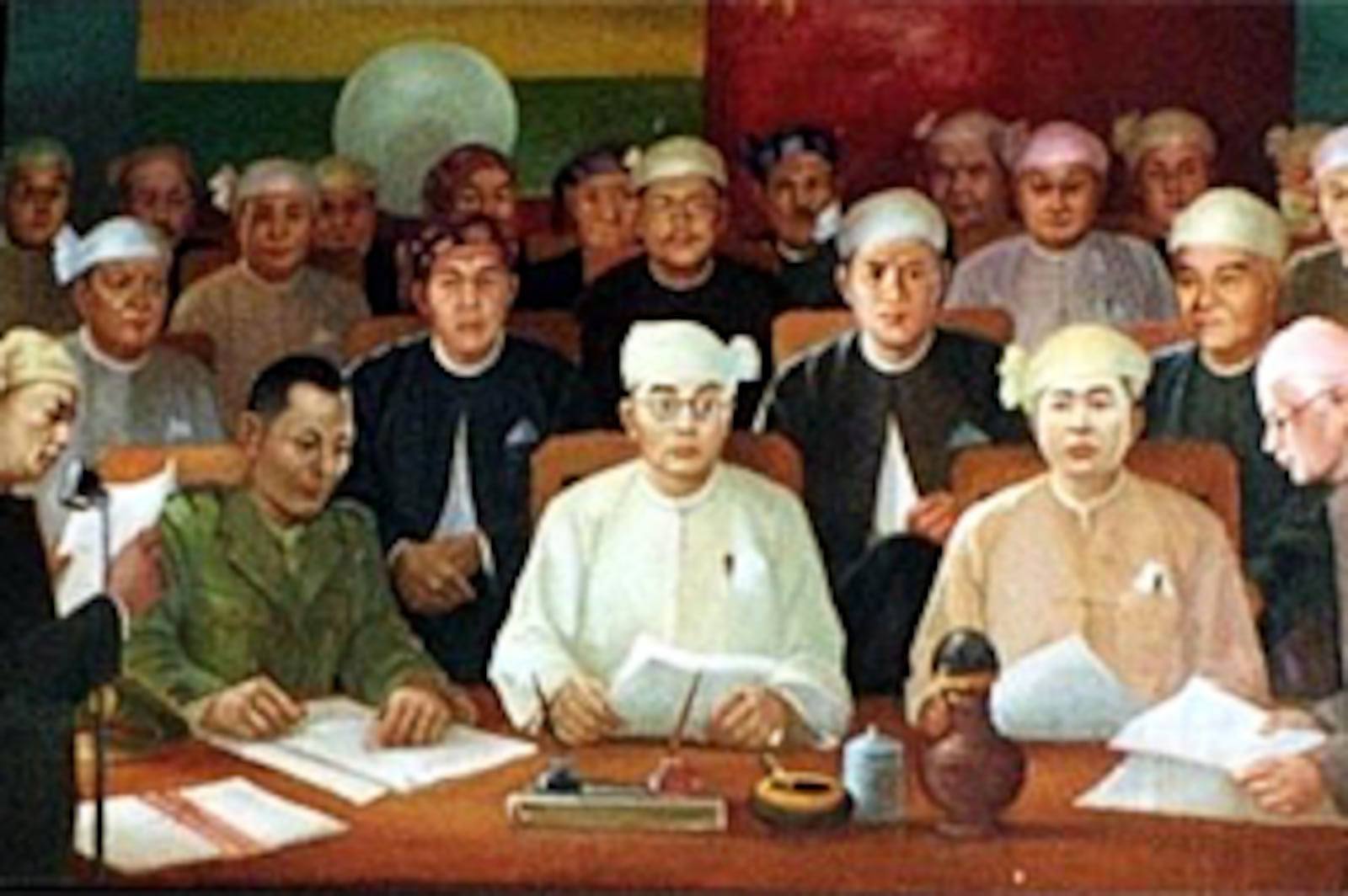
An illustrative painting depicting the signing of the Panglong Agreement.
She said: "I assess that the root cause of these conflicts largely depends on the fact that ethnic people did not achieve national equality and self-determination. When the public does not receive their rightful opportunities, freedoms, and the right to shape their own destiny, they naturally oppose the policies and provisions handed down by the center. Since this is a legal matter, rather than looking at any single cause, I see it as depending heavily on the rules and policies imposed on the public by the center. The Panglong commitments and the 1947 issues are topics still being discussed today. If ethnic equality had been created from the start in accordance with what was agreed, and if the right to shape one's destiny, self-determination, freedom, and justice had been given, I don't think the conflicts would have gotten this severe today."
Chapter 10 (Sections 201 to 206) of the 1947 Constitution prescribed the right to secession, with Section 202 stating that the right of secession should not be exercised within ten years from the date on which the Constitution came into operation.
Military and political observers point out that this implied secession was permissible after the ten-year period; however, in practice, ethnic nationals never received that right.
The reason they did not receive it was that in 1958, nearing the ten-year mark, instead of attempting to secede, ethnic groups proposed and demanded amendments for a genuine federal system. However, General Ne Win led a coup d'état in 1962 and abolished the 1947 Constitution, rendering the right to secession practically null and void.