
CNI News
May 25, 2026
U Thar Tun Hla, Chairman of the Arakan National Party (ANP), told CNI News that he does not believe a peace dialogue based solely on the Nationwide Ceasefire Agreement (NCA) will lead to a comprehensive and complete peace.
He stated: "I understand that when efforts were made to bring about the NCA ceasefire agreement, over 10 Ethnic Armed Organizations (EAOs) were involved. However, when it neared the time to sign, only about 8 EAOs signed it initially, followed by 2 more later. From its inception, it wasn't a treaty where all ethnic armed groups fully participated and signed. Following the military's takeover of state power in 2021, we have also seen significant differences of opinion emerge among the EAOs that signed the NCA. Therefore, if the peace invitation is based solely on holding onto the NCA, I see difficulties in fostering a peace process where all organizations can participate. That is why I believe peace invitations in this country need to be structured around discussing how the future Federal Union will be built. Thus, I don't see a comprehensive peace dialogue emerging through the NCA alone."
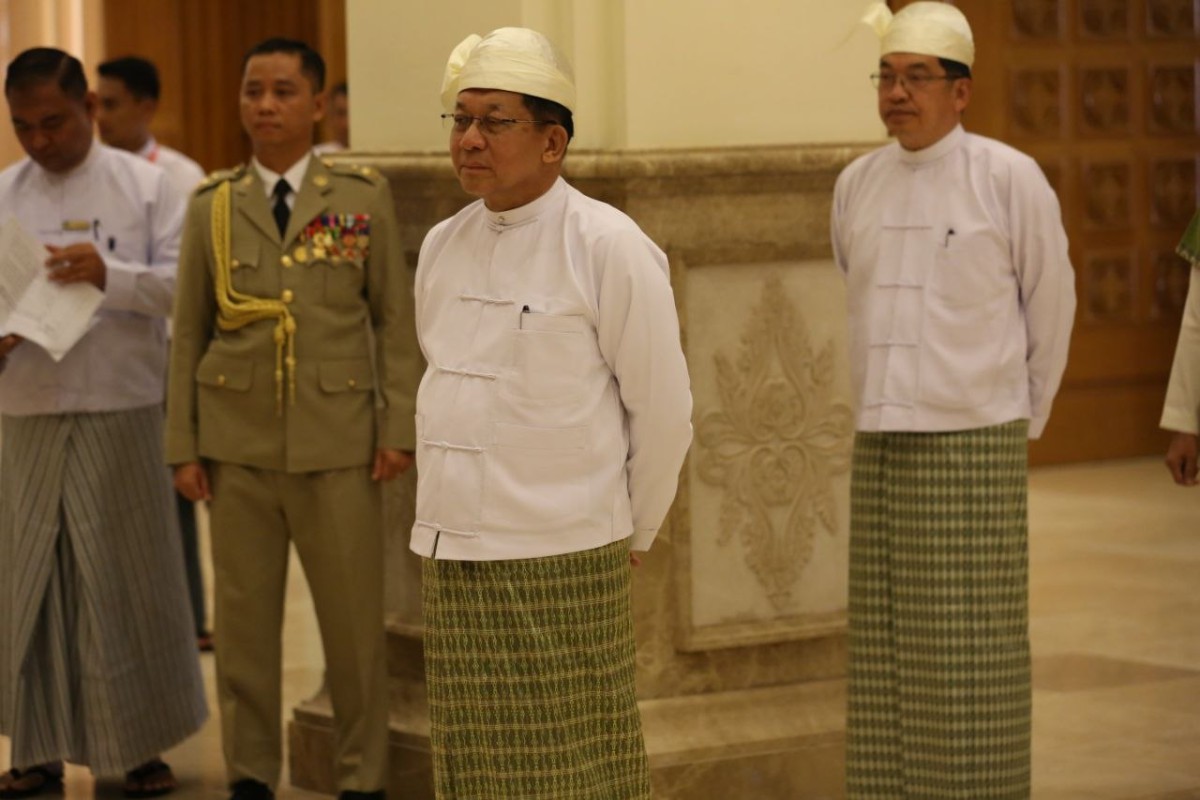
President Min Aung Hlaing.
Currently, the transitional government led by President Min Aung Hlaing has invited 10 NCA-signatory EAOs, as well as non-signatory EAOs, to meet for peace talks.
This peace invitation is valid for a 100-day period only, from April 20, 2026, to July 31, 2026, and they have been urged to come forward before the July 31 deadline.
Dr. Aye Maung, Chairman of the Arakan Front Party (AFP), also told CNI News that if the government considers its duty fulfilled simply by issuing a peace invitation, it will be difficult to move forward. He questioned how the elected government plans to resolve the 80-year-long armed conflict during its 5-year term.
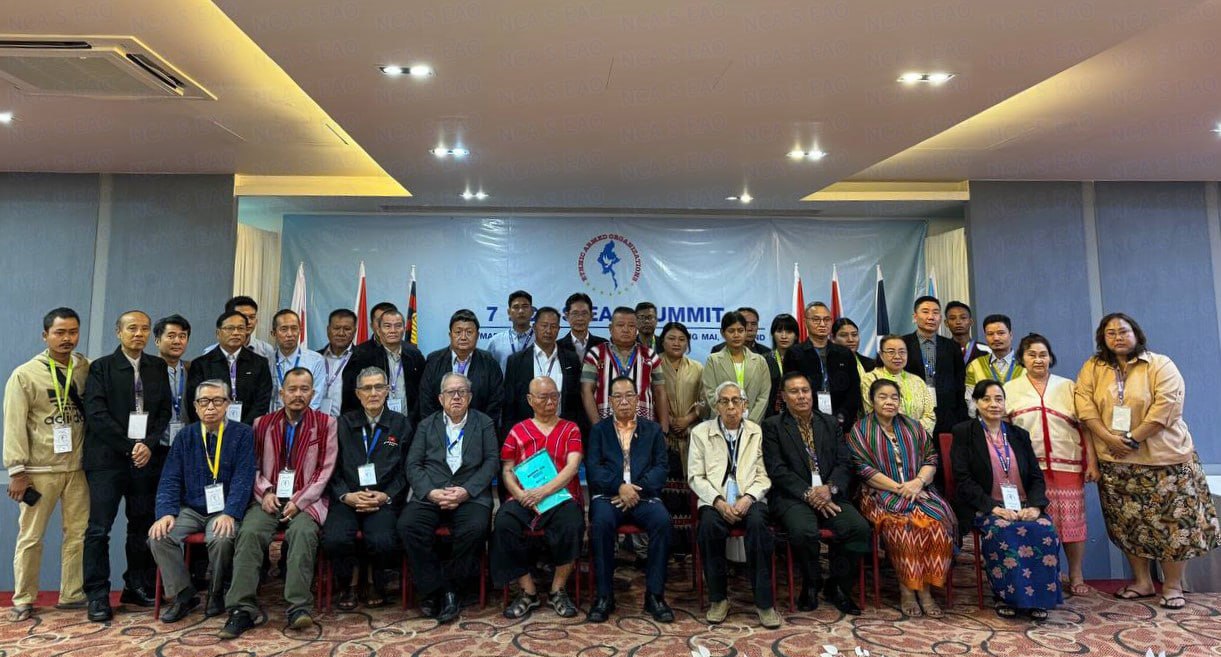
Ethnic Armed Organization leaders.
He stated: "A first step of transition has moved forward—an election was held and an elected government has emerged. How will this elected government end the armed conflict that has persisted since the early days of independence in 1948? How will the elected government implement this objective within its 5-year term? Through what kind of compromise will they build a stable and developed new nation over these five years? We are anticipating this as well. So, is it going to be 80 years plus another 5 years (meaning, will the conflict continue over the next 5 years)? We are asking this question. Or will it be a new step forward for a new nation during this 5-year period? We hope so. To find answers through dialogue, we also need mediators who can bridge the talks through shuttle diplomacy to pave the way for mutual trust. They might need to run back and forth between the armed groups and the government—conveying what is agreed on this side to that side, and vice versa—to achieve results, build mutual trust, and ensure a balanced approach that satisfies both parties. If the government thinks, 'I have done my duty just by inviting them to talk; they will either come or they won't, and that's it,' it will be difficult to move forward."
During the government led by U Thein Sein between 2011 and 2012, bilateral ceasefire agreements were signed at the state and union levels with 14 ethnic armed groups. Discussions for the NCA began in 2013, and the draft agreement was finalized in August 2015.
Subsequently, on October 15, 2015, the KNU, RCSS, ALP, DKBA, KNU/KNLA-PC, PNLO, CNF, and ABSDF signed the agreement, followed by the NMSP and LDU on February 13, 2018.
However, after 2021, differences of opinion emerged among the NCA signatories. The KNU, CNF, and ABSDF withdrew from the NCA and are currently engaged in fighting with the Myanmar military.