
CNI News
May 20, 2026
Because the Naga Self-Administered Zone in Myanmar relies heavily on the Indian side, leaders from Naga organizations stated that the livelihoods and businesses of local people could face severe hardships if the trade gates are closed.
Transportation from the Myanmar mainland to the Naga region is extremely difficult and costly; therefore, the region primarily imports goods from the Indian states of Assam and Arunachal Pradesh.
The towns of Leshi (Lahe), Nanyun, and Pansaung in the Myanmar-Naga region mainly carry out the flow of goods by opening trade gates with the Indian side.
Regarding the development of the Naga region, U Chin Maung, Chairman of the Peace Procurement Committee of the NSCN-K/AM, told CNI News that because they rely primarily on India, they plan to hold state-level discussions concerning the India routes to negotiate and turn them back into official channels.
He stated, "For regional development, we rely mainly on India. Therefore, we have plans to speak at the state level regarding the India routes to negotiate and make them official channels again. Currently, since the Indian routes are closed, the people are suffering. When the Pansaung route was closed, Nanyun and Pansaung fell into deep trouble. These livelihood matters are on routes where we move while relying mainly on the Indian side. For that reason, we will coordinate and negotiate to achieve the best outcome for these matters. For the time being, they are prioritizing and traveling via the Nagaland border in Leshi Township. That route is working fine up to the present, except for the poor road conditions. The trade flow there is moving normally and smoothly."
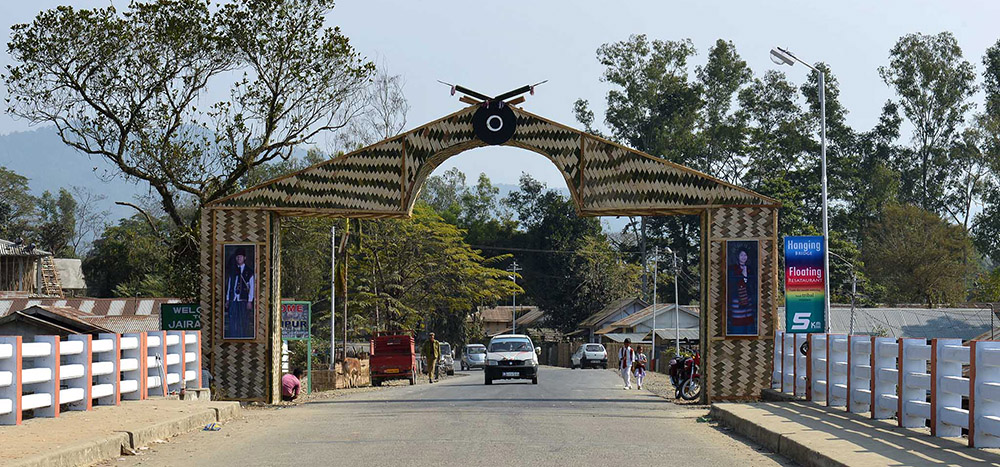
A view of the Naga–India border trade gate.
The Pansaung Pass route connecting the Naga region and India is a major border trade route, and authorities have currently closed the Pansaung border trade gate.
Furthermore, transportation via the Monywa–Homalin–Khamti waterway—which is the river route from mainland Myanmar—is also difficult due to the narrowing of the river channel and dominance by the PDF, causing a disruption in the flow of goods.
U Shan Maw, Chairman of the Naga Traditional Culture Association in Khamti Township, told CNI News that regarding trade, the Naga region is in a position where it has to rely on Nagaland to survive.
He said, "We don't know the details about the closure of the Pansaung gate yet. We understand that they are negotiating. Currently, we are in a situation where we have to rely only on Nagaland to survive. This is because everything from rice, oil, salt, gasoline, and diesel is being imported from Nagaland."
It is learned that in the past, when border gates (such as the Pansaung gate) were closed by the Indian government due to frequent clashes between the Naga armed group (NSCN-K) and the Indian military, the Naga region immediately faced food shortages.
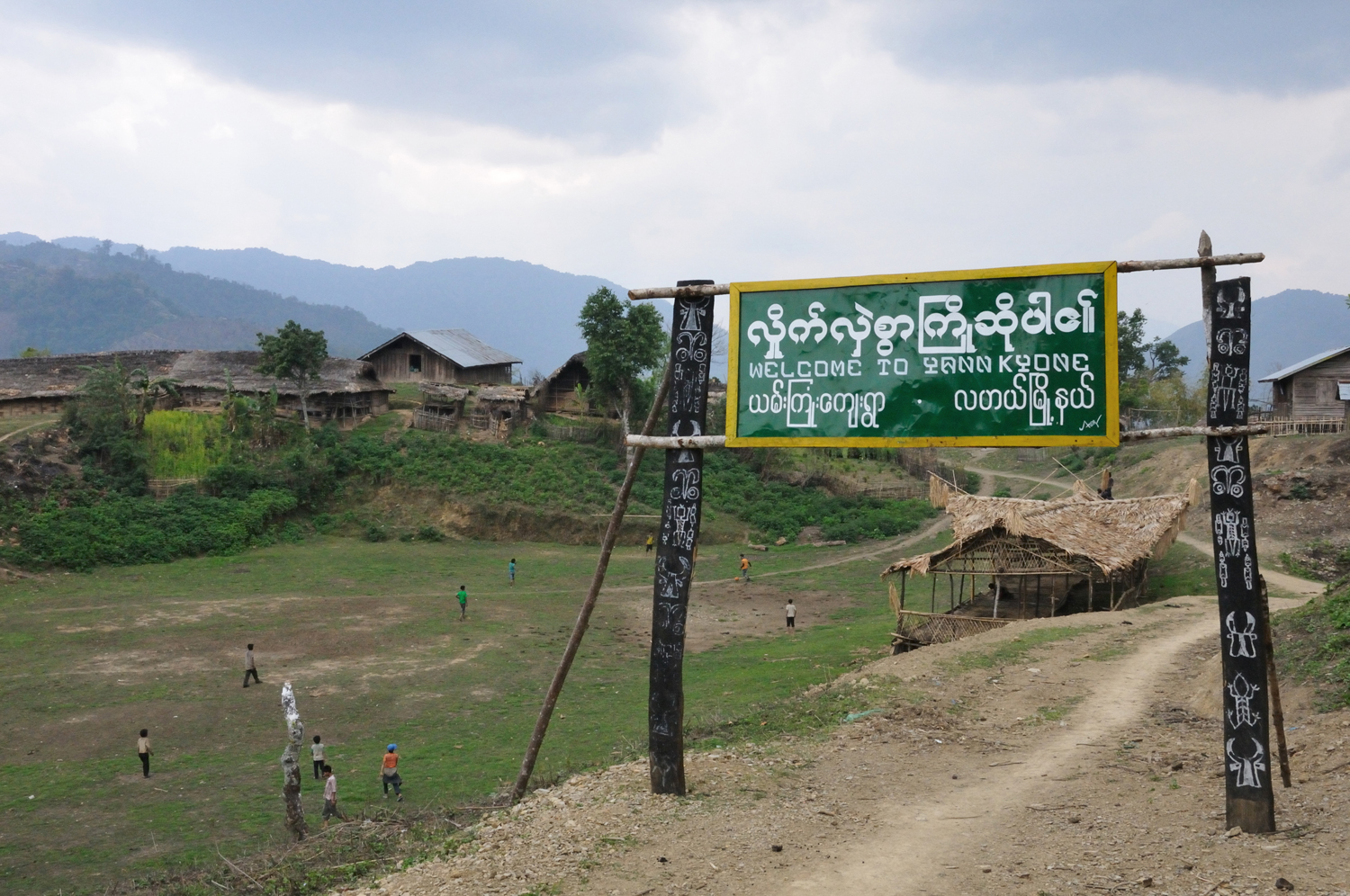
A view of a Naga village in Leshi Township.
U Mazoe Laung Wee, a member of the Pyithu Hluttaw (House of Representatives) from the Naga National Party (NNP), told CNI News that because the Pansaung gate is currently closed, the public in Nanyun could face crises and difficulties, and commerce and the flow of goods could encounter extreme hardships.
He stated, "The Naga Self-Administered Zone does have a connection with this border. However, the closure of the Pansaung gate alone can lead to hardships and crises for the public in Nanyun. Yet, the exact reason why the gates on the Leshi side have not closed is not thoroughly known. They are moving with a plan to erect fences. As for us, there are our fellow Nagas on that side, and there are our fellow Nagas on this side as well. If those big gates are closed and fences are built, the social interactions and flow of goods between the Nagas on that side and the Nagas on this side could face extreme difficulties."
It is reported that the Pansaung border gate on the India–Myanmar border in the Naga Self-Administered Zone of Sagaing Region, Myanmar, has been closed indefinitely under the arrangement of both the Indian and Myanmar governments due to regional instability and clashes.