
CNI News
May 16, 2026
Political observers and civil society organizations are raising concerns and discussing the significant rise in drug production, trafficking, and consumption in Myanmar.
In the aftermath of February 2021, amidst intensifying political and military conflicts, instability in Myanmar has been exploited for large-scale smuggling of narcotics and ammunition. Furthermore, the decline in the rule of law has led to an increasing number of citizens becoming victims of drug abuse, resulting in significant losses for the nation.
Dr. Nyo Nyo Thin, founder of the Yangon Watch group, told CNI News that in some townships within Yangon, drug distribution is being carried out extensively in collaboration with certain authorities, noting that these issues are directly proportional to the country's instability.
"I want to say this is happening because there is no rule of law. Additionally, this business is a way to make easy money. In some townships, we see these activities expanding through collaboration with some lower-level law enforcement authorities. It is quite severe in certain areas. We hear that trade is being conducted under the protection of authorities," she said.
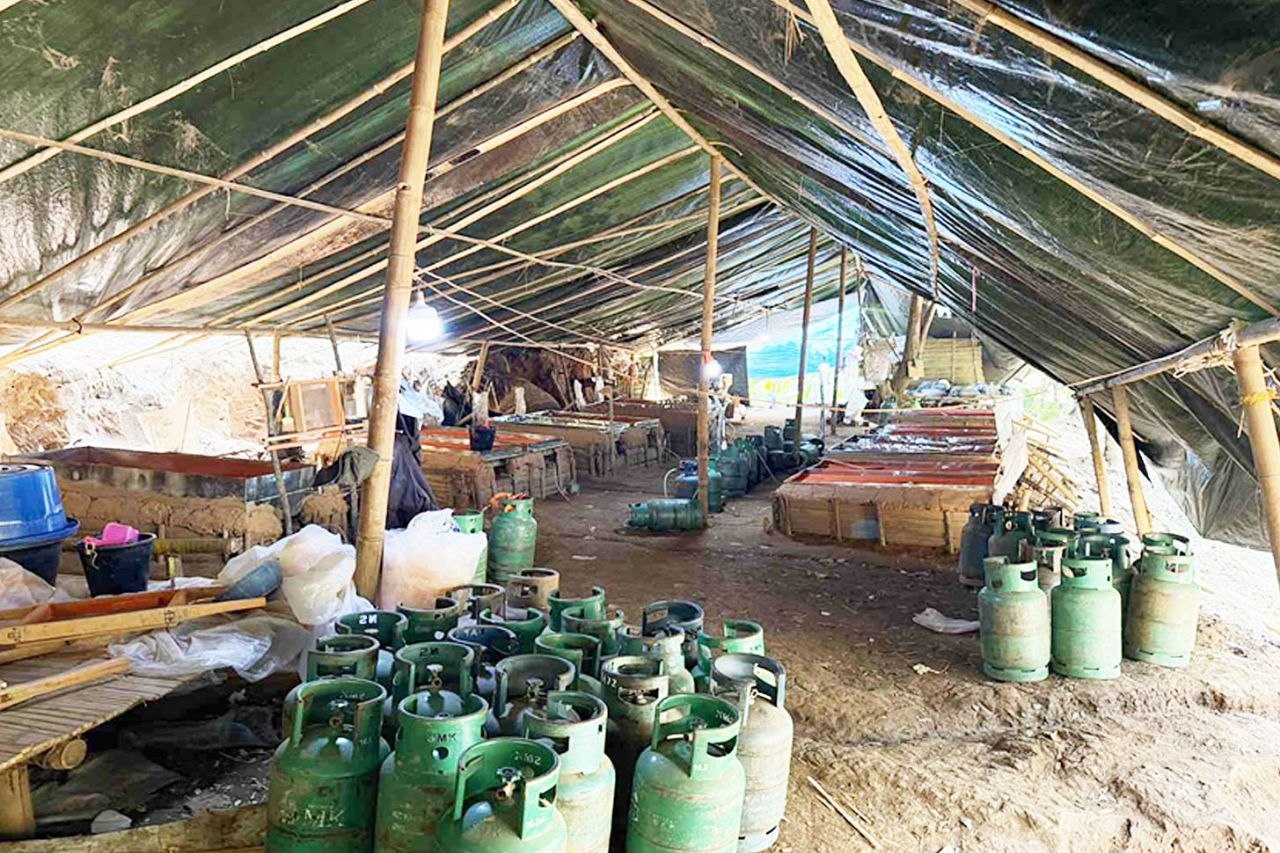
A seized drug production factory.
She continued, "These trades are spreading not only among the youth but now among adults as well. As the majority of the public faces general hardships, they turn to drug use as a psychological outlet because drugs are easily accessible and cheap. It’s reached a point where they can be bought with ease. In some neighborhoods, they are being sold in abundance. It’s quite shocking. If you ask about a house because of suspicious frequent visitors, people simply say, 'Oh, that house sells drugs.' If ordinary citizens know this, there is no reason for certain authorities not to know. Therefore, it is clear to us that there are certain classes of people and some in authority who are profiting through collaboration. We believe law enforcement authorities, especially in Yangon, should take strict action against the distribution and sale of drugs."
In 2026, narcotics and related manufacturing equipment valued at 20.2 billion Kyats were seized in Tachileik Township, Eastern Shan State. Additionally, between January 16 and 22, 2026, drug production factories and chemical precursors were seized near Hsipaw and Mongyai in Northern Shan State. These seizures represent only a fraction of the trade, as numerous other seizures occur while the drug trafficking network remains vast and expansive.
Dr. Nyo Nyo Thin urged the relevant authorities closest to the public to take effective action free from corruption.
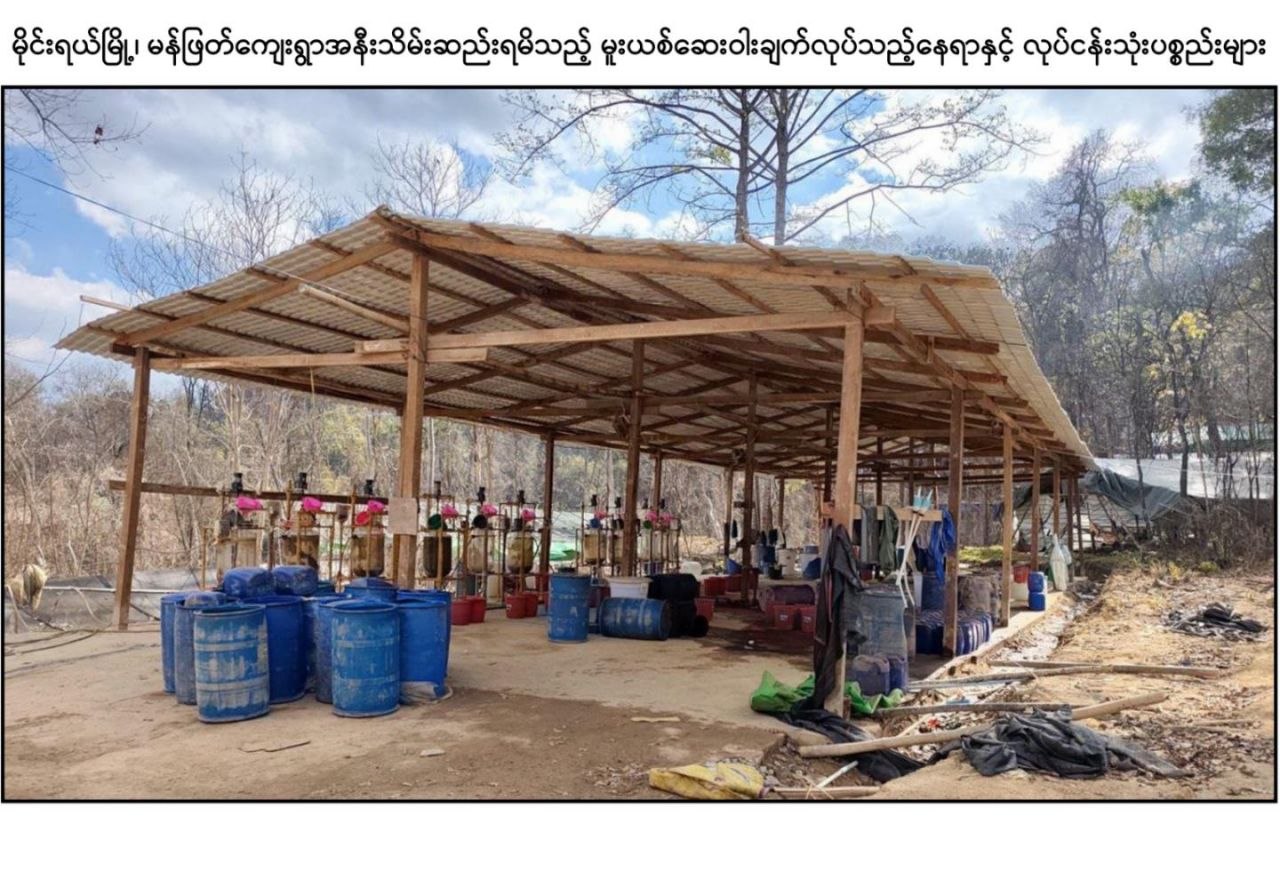
A seized drug production factory.
"The authorities closest to the ground know that drug sales are spreading among the grassroots public. Ward administrators know; beat officers know. If ward administrators and beat officers are managed strictly and made to perform their duties without corruption, we believe these issues will decrease significantly. The problem isn't that there are no authorities who act with integrity—there are—but they are very rare. Because it is an easy-money business, unscrupulous businessmen and groups profiting from this trade are in a position where they can 'keep some authorities in their pockets,'" she explained.
"This process is destroying the future youth of the country and sacrificing the lives of the people for a dishonest trade. It has reached a point where almost every household has someone addicted. Therefore, I roughly view that authorities, particularly township and regional officials, must cooperate with ward and beat officers to arrest and take action against this drug trafficking trade with integrity," she added.
According to news releases from Naypyidaw, narcotics and chemical precursors valued at over 1,761 billion Kyats were seized in Myanmar during 2025.
The drug networks in Myanmar are operated through the collaboration of armed groups, businesspeople, corrupt authorities, and drug gangs from neighboring countries. These illegal products are then exported to neighboring Thailand, India, Laos, and Bangladesh.