
CNI News
May 11, 2026
If a framework for dialogue emerges between the government, the military, and ethnic armed organizations (EAOs), priority should be given to discussing how the peace process can be restarted, Comrade Myo Win, coordinator of the 7 EAO Alliance, told CNI News.
The armed conflict in Myanmar has expanded significantly following the political shifts after February 1, 2021, leading to a proliferation of armed groups. Amidst these political and military conflicts, civilians have been forced to abandon their homes and property to flee to safer areas, while also facing life-threatening risks.
Comrade Myo Win stated that in the current situation, rather than focusing on specific topics for negotiation, the priority should be discussing how to bring relevant organizations into the peace process.
"In this period, more than the subject matter itself, we first need to discuss how to restart the peace process under the current foundation—where, whether one likes it or not, a new government and parliament have emerged from the past five years of conflict. We need to figure out how to include the organizations involved in this armed conflict within that process. The ability to start the process is what’s necessary; we have to start there first. What topics we will discuss is still a long way off. To reduce the intensity of the current armed conflict, the priority is getting the process restarted and ensuring the participation of those who should be involved. This must be the starting point. We need to talk and negotiate informally to get this process moving again. Therefore, both sides must begin speaking about how to restart and implement the stalled process. While one side might base it on the NCA and the other might say the NCA no longer exists or speak in various other terms, they will have to choose which method is most compatible and feasible under this foundation. That is what must be done first," he said.
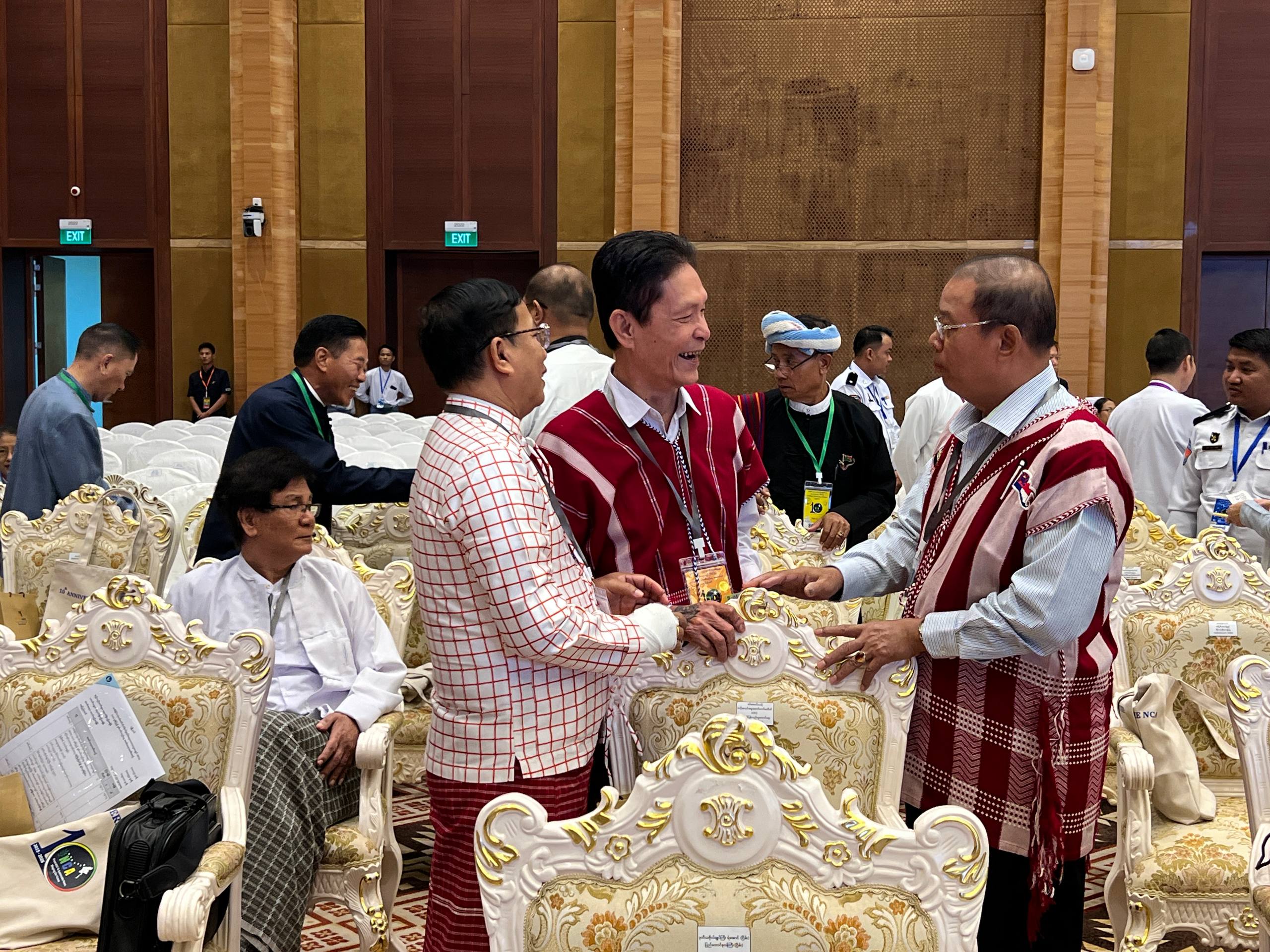
Colonel Saw Kyaw Nyunt and Naing Aung Ma Ngay.
Military and political analysts pointed out that while new ideologies and assumptions may arise under the current unconventional political landscape, solutions can be found through negotiation if interactions are guided by the interests of the Union.
Regarding the peace invitation from President U Min Aung Hlaing's government, the 7 EAO Alliance—composed of seven ethnic armed organizations that signed the Nationwide Ceasefire Agreement (NCA)—held a leadership meeting on May 5, 2026.
Colonel Saw Kyaw Nyunt, spokesperson for the 7 EAO Alliance, told CNI News that the meeting reviewed peace processes and that the seven groups have made preparations to revive a "culture of dialogue" for the peace process.
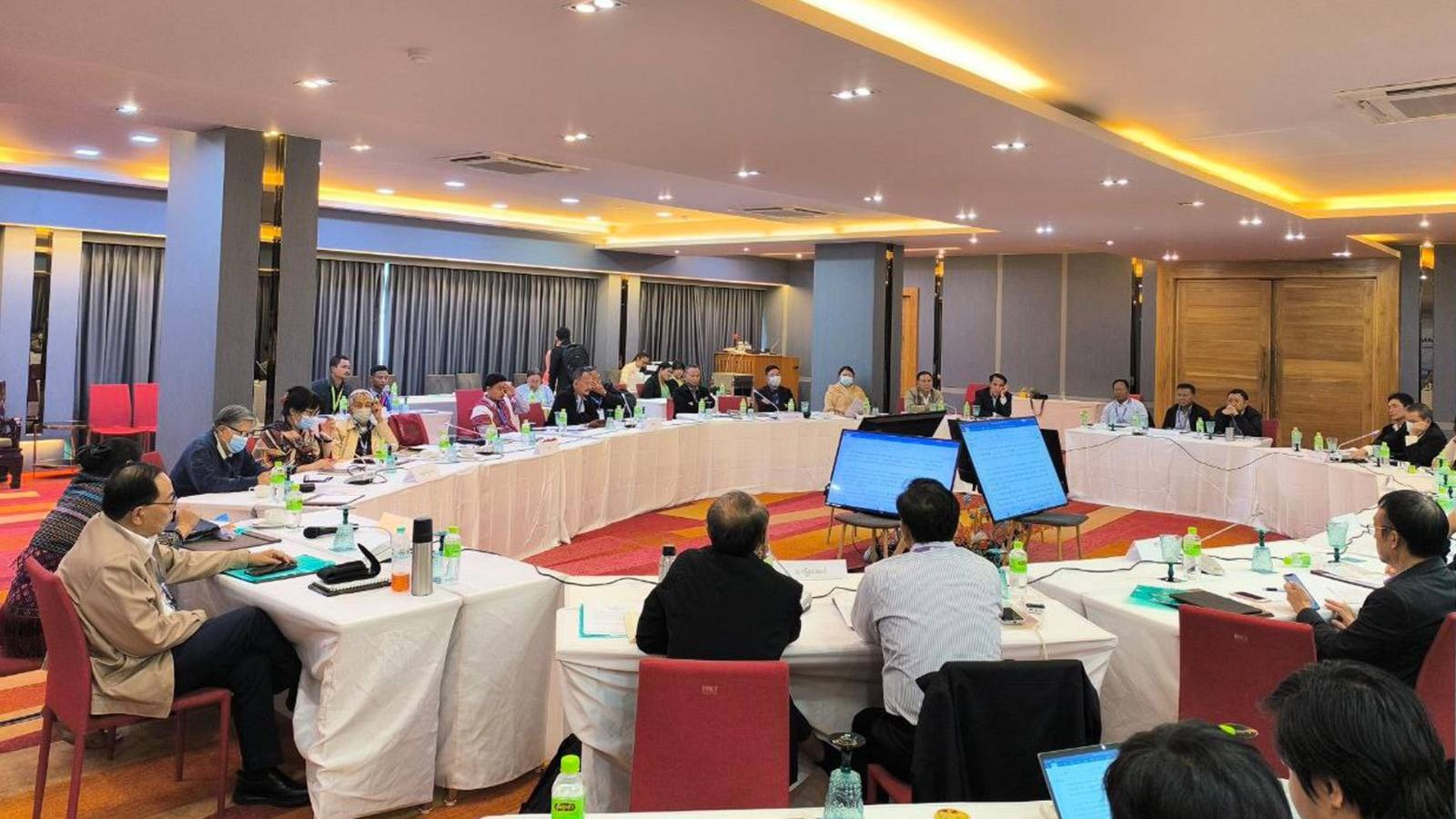
A meeting of the NCA-signatory armed groups in progress.
"We have made certain preparations. Since 2021, we haven't held what you might call political dialogues or peace talks for quite a long time. However, within the 7 EAO Alliance, we have regular meetings. Based on the emerging political landscape, our seven groups always consult and coordinate on how to begin implementing peace processes. We also have discussions with political parties as the opportunity arises. In yesterday's leadership meeting, we reviewed data and points prepared over the last two or three years for peace talks. This includes a review of the peace process, a future plan, and a formulated peace strategy for the 7 EAO. Furthermore, we have coordinated and agreed upon rules of engagement for political dialogue from the 7 EAO side. What we are currently focusing on is the revival of the culture of dialogue within the peace process; our seven groups have prepared the necessary details for that," he said.
Currently, the dialogue for peace is among the tasks the government led by President U Min Aung Hlaing aims to carry out within a 100-day window.
Additionally, according to the 7 EAO Alliance, the National Solidarity and Peacemaking Negotiation Committee (NSPNC) has recently sent invitations for peace talks to individuals who were involved at the time of the NCA signing with the respective armed organizations.