
CNI News
May 6, 2026
Dr. Kyaw Swe, a Pyithu Hluttaw representative from the Unity and Development Party (UDP), told CNI News that the 2008 Constitution does not contain explicit provisions for ceding parts of Myanmar's territory, nor is it permissible to separate and hand over parts of the country.
"There are no specific provisions in our Constitution regarding the granting of territories. To speak of a 'confederation' level—strictly speaking, true confederations don't really exist in the world anymore. The entire European Union is essentially a confederate structure, yet each country operates as a distinct sovereign entity. We cannot separate and give away parts of Myanmar's territory in that manner. A confederate status simply cannot be granted. We must pursue Federalism through the NCA (Nationwide Ceasefire Agreement) process by incorporating common agreements accepted by all ethnic groups into the current Constitution. If an agreement doesn't align with the Constitution, then the Constitution should be amended; if the Constitution cannot be amended immediately, then the peace agreement must be adjusted to complete the first step. The Union Accord already contains over 40 points. If these 40 points are brought under the framework of the Constitution, one could say the Myanmar Constitution has taken a massive step toward a federal structure," he said.
The 2008 Constitution does not explicitly state that the power to grant territory exists regarding boundary demarcation. In Chapter (2), "State Structure," the nation is divided into seven Regions, seven States, and Union Territories.
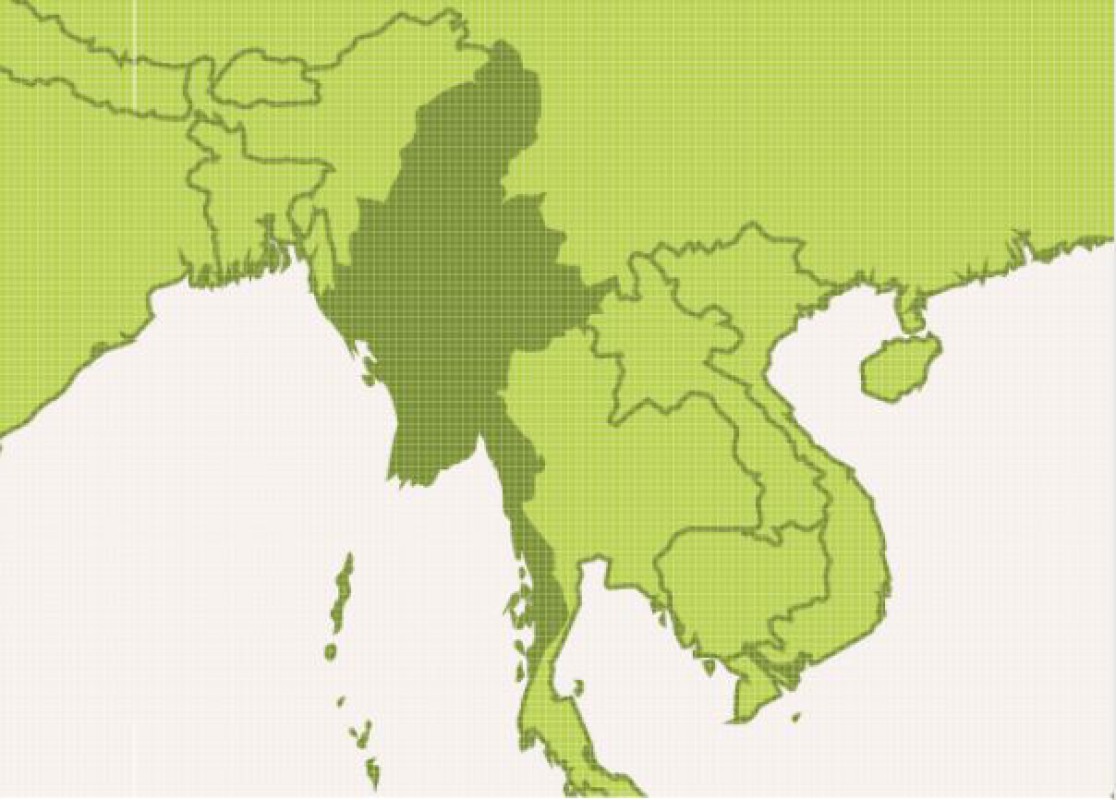
A map of Myanmar.
According to the law, if a need arises to redefine the boundaries of a Region or State, the consensus of the eligible voters residing within the affected township must first be sought. If more than half do not support the change, no further action can be taken.
If more than half support it, the consent of the representatives of the relevant Region or State Hluttaw must be obtained. If three-quarters or more support it, the approval of the Pyidaungsu Hluttaw (Union Parliament) must be sought, after which the President shall redefine the relevant boundary.
Furthermore, if the national boundary needs to be redefined, the President must first notify the Head of the Pyidaungsu Hluttaw to seek the Union Parliament's opinion. Upon receiving this notice, the Head of the Pyidaungsu Hluttaw must obtain support from more than half of the representatives from the relevant Region/State Hluttaw, the Amyotha Hluttaw (House of Nationalities), and the representatives of the specific Region or State involved within those two houses.
If the representatives of these respective houses decide against the change, the matter must be decided by the Pyidaungsu Hluttaw. If three-quarters or more of the total Union Parliament representatives support the change, it is presented to the President for the necessary boundary redefinition.
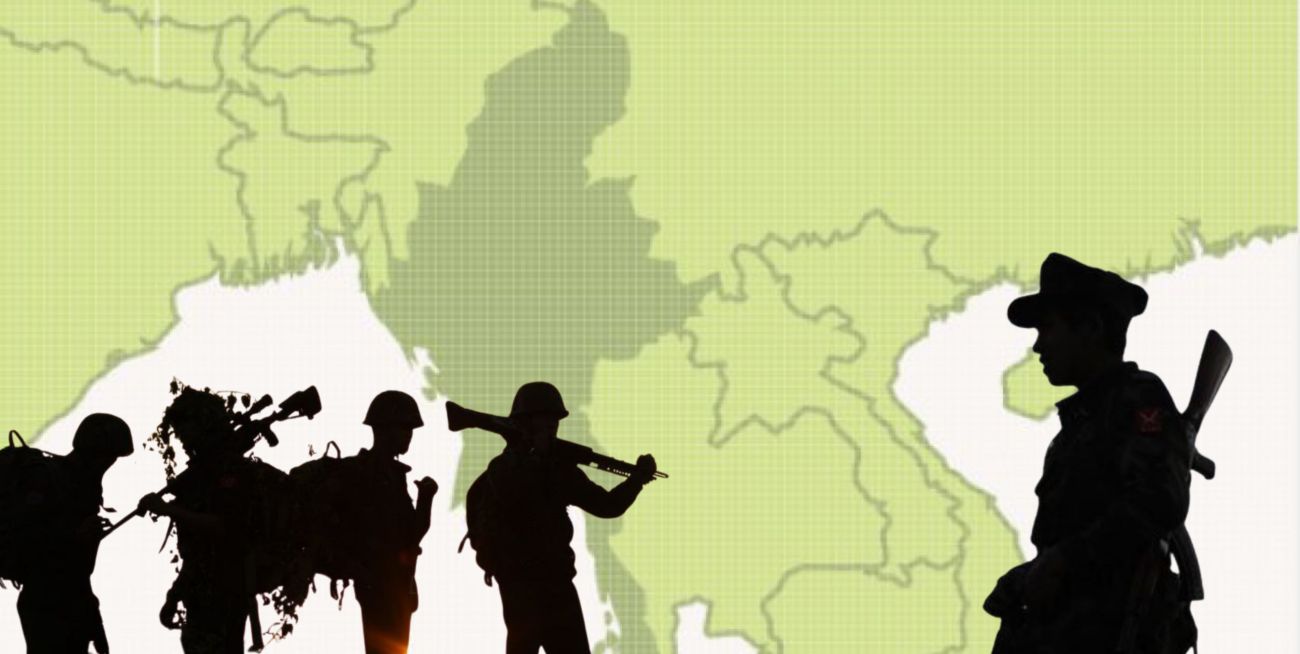
Among the current ethnic armed groups in Myanmar, some are considering political statuses beyond Federalism, desiring a level no lower than a "Confederation."
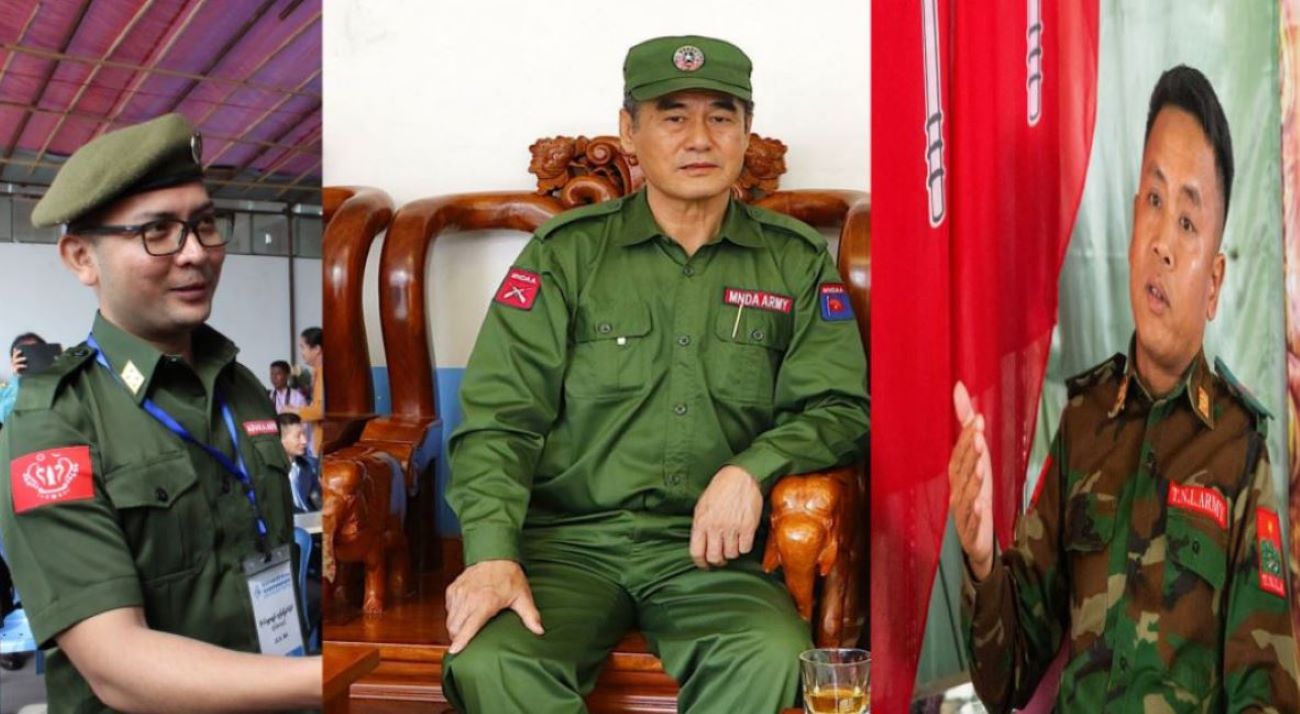
Leaders of three ethnic armed organizations.
Political analyst Dr. M. Kawn La told CNI News that because every ethnic group in Myanmar differs in culture, economy, and population, there are various methods for the Union to designate administrative territories.
"It is a broad issue. It mainly concerns self-determination, federalism, and self-autonomy. Self-autonomy and self-determination may seem similar, but they are different. We need to look at the population and demographics of each ethnic group, as well as their economic capabilities and, importantly, their cultural background—whether they have a substantial distinct cultural society. There are specific ways the Union can grant these statuses. First is the 'self-autonomous state.' For example, in the Philippines, there is the Bangsamoro Muslim autonomous region created during President Duterte's term. In our neighbor India, there are eight North-Eastern states. In these cases, sovereignty and decision-making power—autonomy—have specific limits. We still need to negotiate many of these details. Below the self-autonomous state is the self-autonomous region. A region is not as extensive as a state, often because the demographic of the ethnic group is smaller," he said.
Under the 2008 Constitution, Myanmar has one Self-Administered Division and five Self-Administered Zones, totaling six. The "Wa" region is the Self-Administered Division.
The Self-Administered Zones are: Kokang: Comprising Konkyan and Laukkai townships in Shan State. Palaung: Comprising Namhsan and Manton townships in Shan State. Danu: Comprising Ywangan and Pindaya townships in Shan State. Pa-O: Comprising Hopong, Hsiseng, and Pinlaung townships in Shan State. Naga: Comprising Lahe, Leshi, and Nanyun townships in Sagaing Region.