
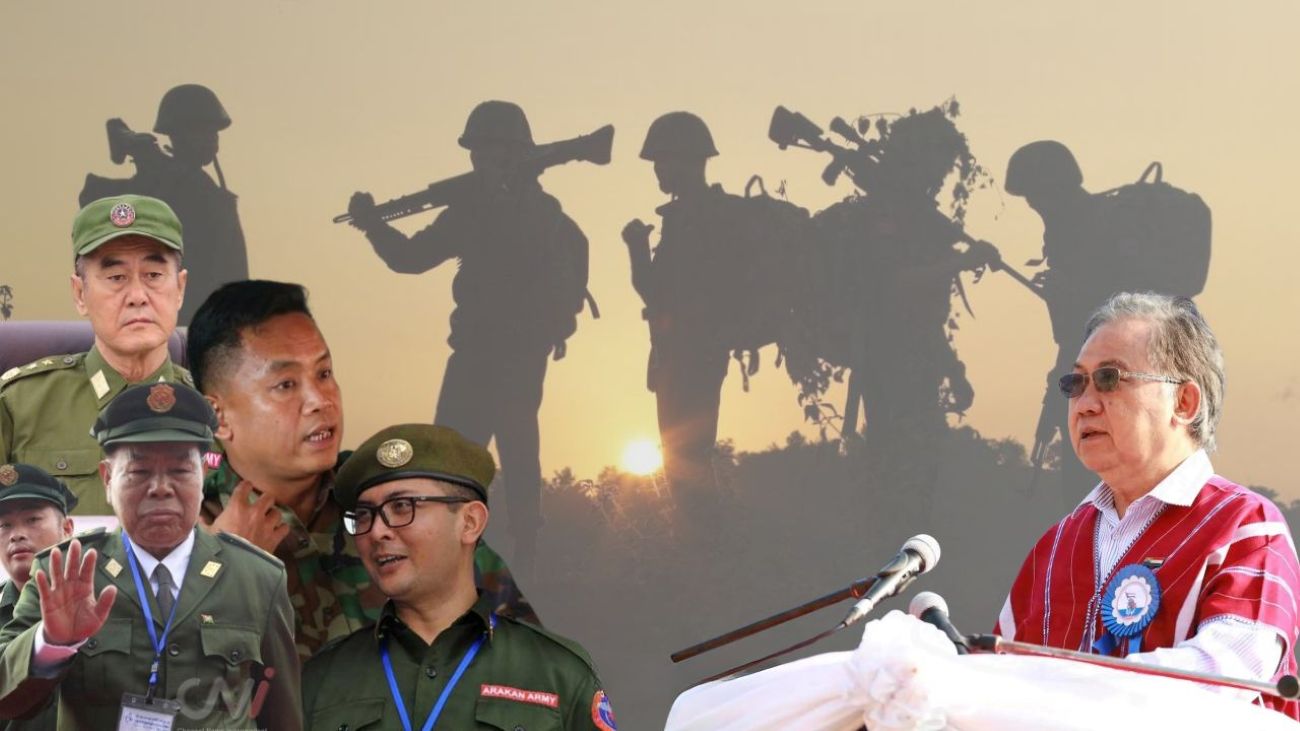
CNI News
April 25, 2026
In peace and ceasefire negotiations between the Myanmar military(Tatmadaw) and armed groups, the concept of "staying at current positions" (holding existing ground) is difficult to accept across all areas, according to Colonel Khun Okkar, Chairman of the Pa-O National Liberation Organization (PNLO-NCA/S), an NCA signatory.
Speaking to CNI News, the Colonel explained that in traditional negotiations, there is no precedent for simply stopping where the troops currently stand.
Instead, once a ceasefire is established, a demarcation line is typically drawn, and troops must often withdraw according to that line.
"In all the ceasefire signings we did during President U Thein Sein’s era, that clause was included. For example, when the PNLO/PNLA signed the union-level agreement in Yangon in March 2013, a 'gridline' was drawn for our troops to station and move within 93 villages of the Kadugyi village tract in Mawkmai Township. We had to base our forces on that line. If we wanted to go outside for organizing or political matters, we had to depart from that base. Official ceasefires require following these designated control areas. The 'stay where you are' method isn't actually practiced. The Palaung (TNLA) once requested it, but it wasn't granted. If you 'stay where you are,' it would mean groups could stay in the Mandalay Region if they were there before the ceasefire. That's not feasible. So, while it’s often requested, it’s not easy to accept everywhere," Colonel Khun Okkar said.
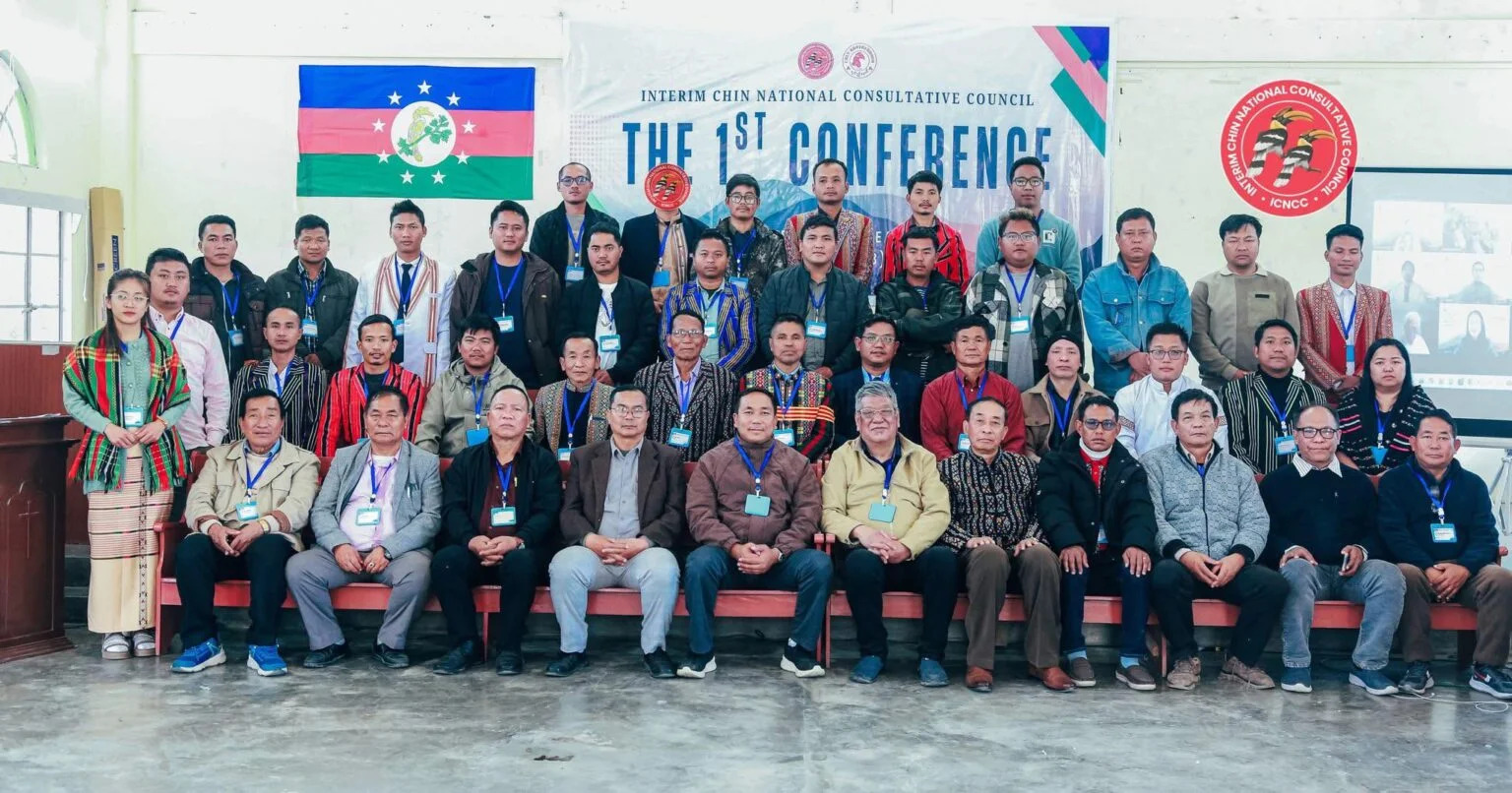
Chin revolutionary forces seen during the Spring Revolution.
Amidst the political shifts since 2021, the Myanmar military has lost control of numerous territories to ethnic armed organizations (EAOs) and revolutionary forces over the past five years.
Among these, Northern groups like the Kokang (MNDAA) and Palaung (TNLA) have already reached ceasefire agreements with the military.
Dr. Kyaw Swe, a former Pyithu Hluttaw representative from the National Unity Party (TaSaNya), told CNI News that given the current territorial gains, it would be difficult for the government to allow troops to remain in their current positions.
"It's not easy. The Constitution already defines the boundaries for Ethnic Self-Administered Zones. Giving away territories beyond those boundaries would be a constitutional violation. Realistically, those who have gained the upper hand on the ground and secured economic opportunities use the phrase 'stay where you are' because they don't want to lose those advantages. From a constitutional standpoint, this is simply not permissible," Dr. Kyaw Swe said.
Daw Saw Mra Raza Linn, Chairperson of the Arakan Liberation Party (ALP), noted that because armed groups differ in terms of region, leadership, and ideology, peace negotiations will not follow a "one-size-fits-all" model.
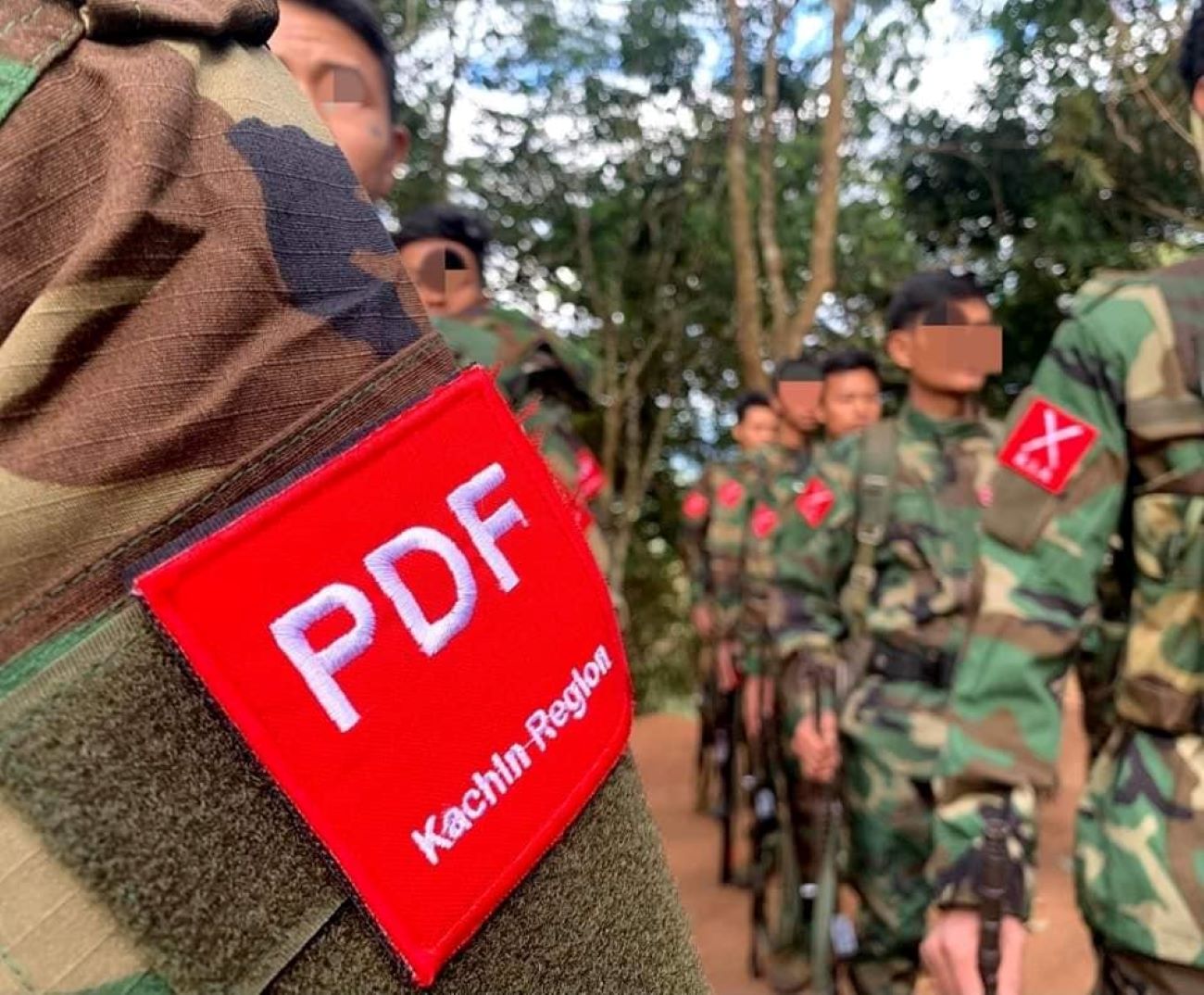
KIA-PDF joint forces pictured.
"It depends heavily on the context of the negotiations—how the combatants discuss things and what solutions they reach. I don't want to say directly which model is best. We can't say every group's path to peace will be identical. Regions, individuals, and beliefs vary. Therefore, it is vital to be able to approach peace through various methods. I’m not pointing fingers at any side, but all involved parties need to have genuine goodwill and work with pure intentions," Daw Saw Mra Raza Linn stated.
Currently, the government led by President U Min Aung Hlaing has announced a 100-day plan for various sectors, which includes a call for peace talks.
All groups—including PDFs, NCA signatories, and non-signatories—have been invited to engage in peace negotiations within the 100-day window from April 20 to July 31.