
CNI News
April 21, 2026
It is not yet feasible to grant a political status similar to the "Wa" region to all regions and states; however, the Pa-O region is slightly closer to achieving such status compared to other areas, Colonel Khun Okkar, Chairman of the Pa-O National Liberation Organization (PNLO-NCA/S), told CNI News.
He explained that the Pa-O region is not as prominent as Mong La or the "Wa" region. In the "Wa" region, there are no groups opposing the military dictatorship, nor are there central-opposing dissidents; the United Wa State Party (UWSP) and the United Wa State Army (UWSA) maintain firm control over the territory. The Pa-O region, however, lacks that level of cohesion, making it difficult to achieve "Wa" level political status at this time.
"Furthermore, there are government institutions in the 'Wa' region—teams from the Ministry of Agriculture, the Department of Education, and social organizations assigned by the government. They are allowed to exist and operate within the territory. However, they manage their own administration, judiciary, and legal affairs. While doing so, they know how to maintain relations with the government and Naypyidaw without creating friction or obstacles. They do not accept anyone within their territory who would cause such friction. In our Pa-O region, there are still voices and elements that cause friction. We are not unified. Additionally, the leading party and the armed wing are not as cohesive as the 'Wa,' nor are they as financially independent. Up until now, Pa-O armed groups have had to rely on state support. If they could stand on their own without state aid, it might be different, but currently, all transformed People's Militia Groups (PMFs) rely on support to survive. Therefore, I’d say we haven't even reached 50% of the 'Wa' level yet," Colonel Khun Okkar said.
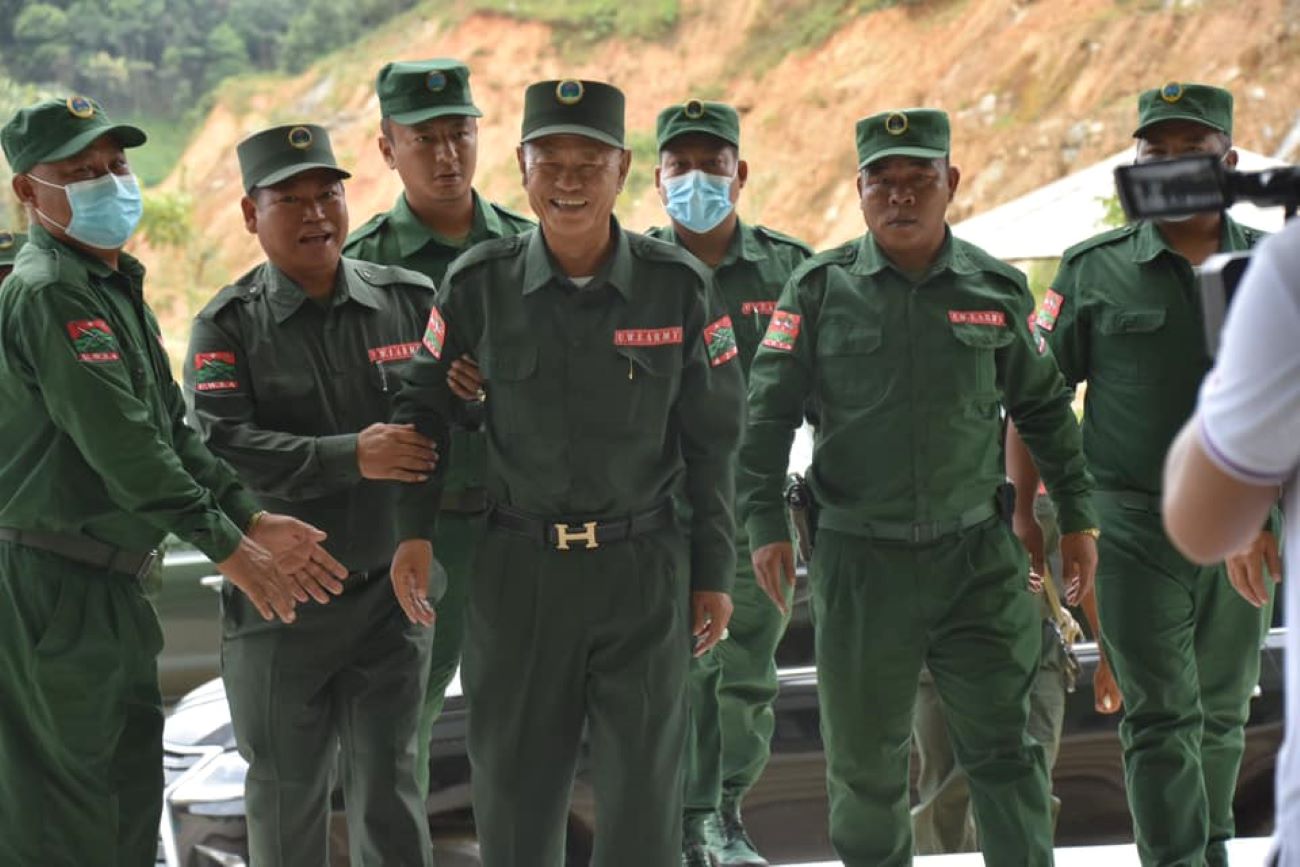
UWSA 'Wa' leaders seen together.
Under Myanmar’s 2008 Constitution, there is one Self-Administered Division and five Self-Administered Zones, totaling six units. "Wa" is designated as the Self-Administered Division.
The Self-Administered Zones include: Kokang: Konkyan and Laukkai townships in Shan State. Palaung (Ta'ang): Namhsan and Mantong townships in Shan State. Danu: Ywangan and Pindaya townships in Shan State. Pa-O: Ho Pone, Hsi Hseng, and Pinlaung townships in Shan State. Naga: Lahe, Leshi, and Nanyun townships in Sagaing Region.
In the context of ending Myanmar's nearly 80-year-long armed conflict, military and political analysts are debating whether all non-Bamar ethnic groups should be granted "Wa"-style self-autonomy. Analysts told CNI News that simply granting self-administered status is not enough to end the armed conflicts.
Political analyst Dr. An Kaw La told CNI News that while some ethnicities require status as Self-Administered States or Zones, others do not. He added that even when granting such autonomy, they would need to be entirely detached from constitutional oversight.
"In our context, we can implement sub-autonomous regions or national areas. Some regions need to be given sub-autonomy status, while for others, it isn't necessary. If we practice federalism, granting 'national areas' with political rights would suffice. It depends on the approaches to elections, administration, and implementation systems. So, is it possible or appropriate to give this to everyone? Some should receive it. In addition to the current seven regions and seven states, we can establish more Special Regions. However, some must remain legally bound; we cannot legally let them go entirely," Dr. M. Kawn La said.
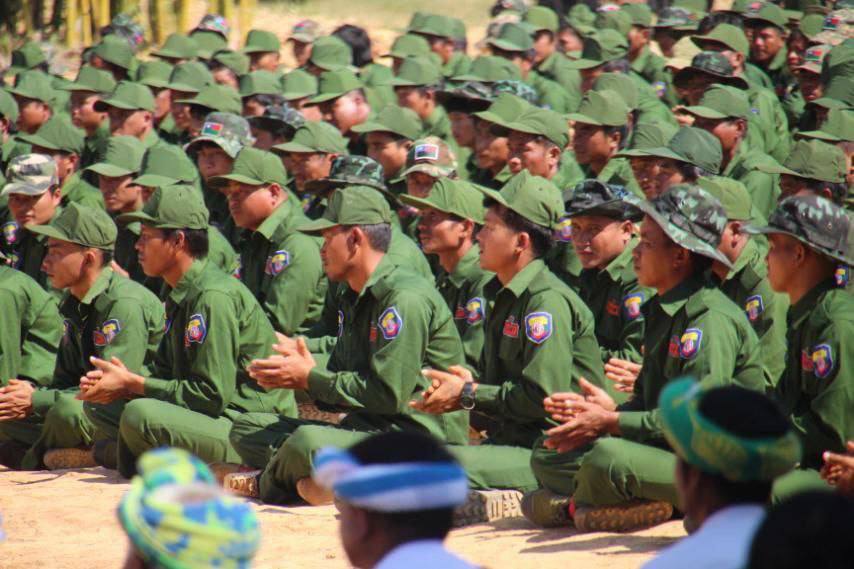
Pa-O PNO soldiers seen together.
Before 1958, under the 1947 Constitution, the Shan, Kachin, Kayah (Karenni), and Karen states held separate state statuses. State governments were formed with representatives from their respective state councils and exercised certain administrative powers.
During that era, a bicameral parliamentary system was used, featuring a Chamber of Nationalities for non-Bamar ethnic groups. In this chamber, representatives of non-Bamar ethnicities were granted seats based on state-specific rights rather than population ratio, allowing them to negotiate a balance of power almost equal to that of the Bamar ethnic group.
In 1958, ethnic groups held a high political status that legally included the right to self-determination and the right to secede from the Union.
Currently, ethnic armed organizations (EAOs) are demanding a status similar to the "Wa" or a "Confederation" status, and are engaged in armed struggle to achieve these goals.