
CNI News
April 3, 2026
Politicians and members of parliament(Hluttaw) have stated that, according to the law, MPs are prohibited from publicly disclosing or discussing a motion before it has been heard in parliament.
Myanmar's parliamentary motion submission and legislative processes are systematically managed under the laws and rules of the Pyidaungsu Hluttaw (Union Parliament), Pyithu Hluttaw (House of Representatives), and Amyotha Hluttaw (House of Nationalities).
Specifically, Rule 62 (d) of the parliamentary bylaws stipulates that no motion shall be published or announced before the Speaker (Chairperson) has granted permission.
Dr. Aye Maung, Chairman of the Arakan Front Party (AFP): Dr. Aye Maung confirmed to CNI News that laws exist preventing media disclosure prior to parliamentary submission.
"It is difficult to go into every detail, but there is a specific law. If a motion intended for parliament is discussed or debated outside before the hearing, the parliament cannot accept those discussions. This was established during the first parliament. If a motion is mentioned in an interview or appears in the media beforehand, it can no longer be submitted or discussed; the Speaker has the right to reject it under parliamentary law. You only have the right to speak to the media after it has been presented in the Hluttaw."
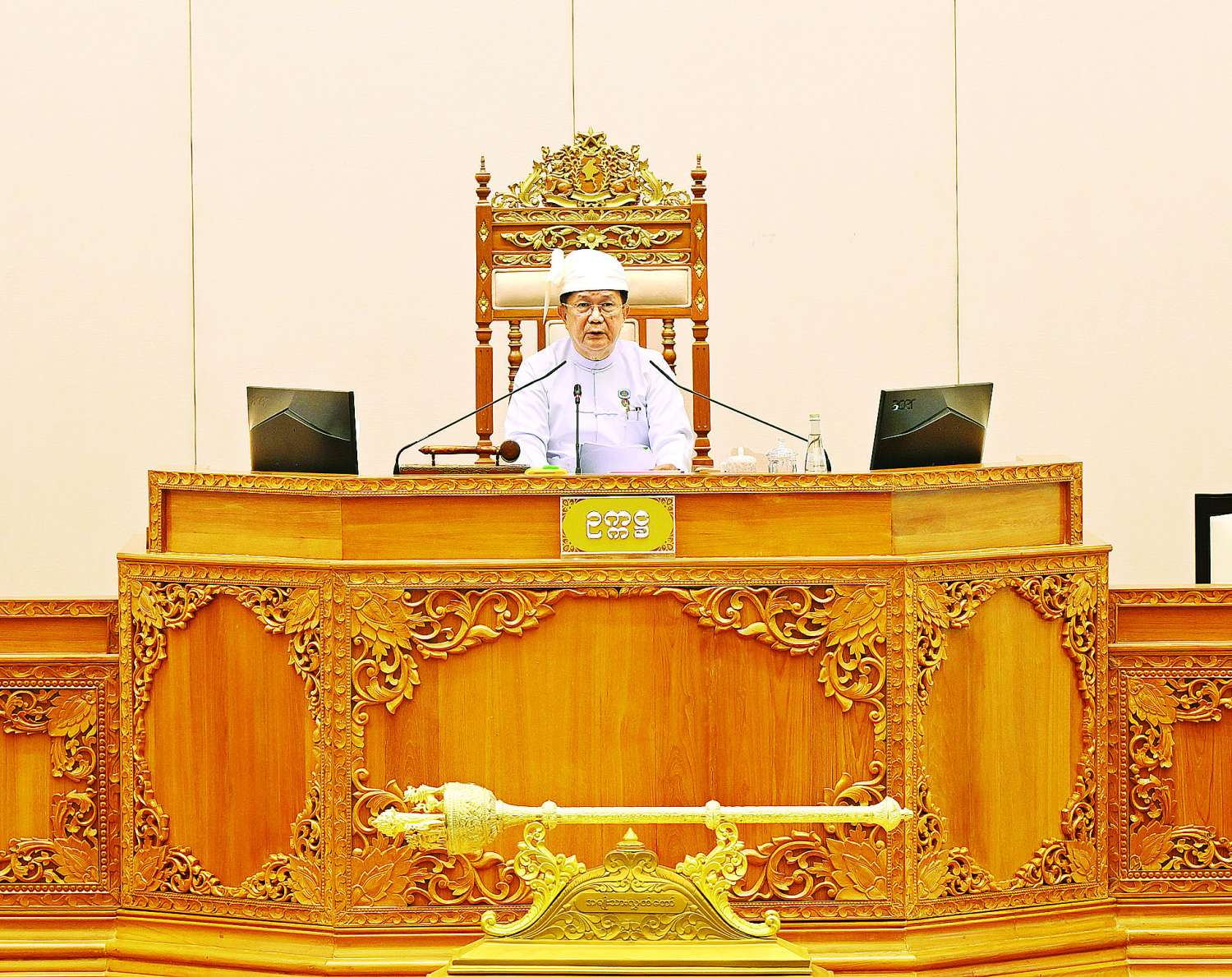
U Aung Lin Dwe, Speaker of the Amyotha Hluttaw.
U Hla Swe, Member of the Pyithu Hluttaw: U Hla Swe reiterated that these rules apply across all three levels of the Union Parliament.
"This is a law enacted by the parliament itself and cannot be violated. You cannot give motions or questions to news agencies before they are presented. If the law is broken, those questions and motions will be rejected."
U Shu Maung, Chairman of the Naga National Party (NNP): U Shu Maung suggested that the strictness of the law might be intended to maintain order during the early stages of the parliamentary term.
"I think they want to avoid unnecessary complications and public confusion that might arise from widespread outside debate before the Speaker has even accepted the motion. Since this is the beginning of the parliamentary term, the intention seems to be ensuring systematic and careful discussion."
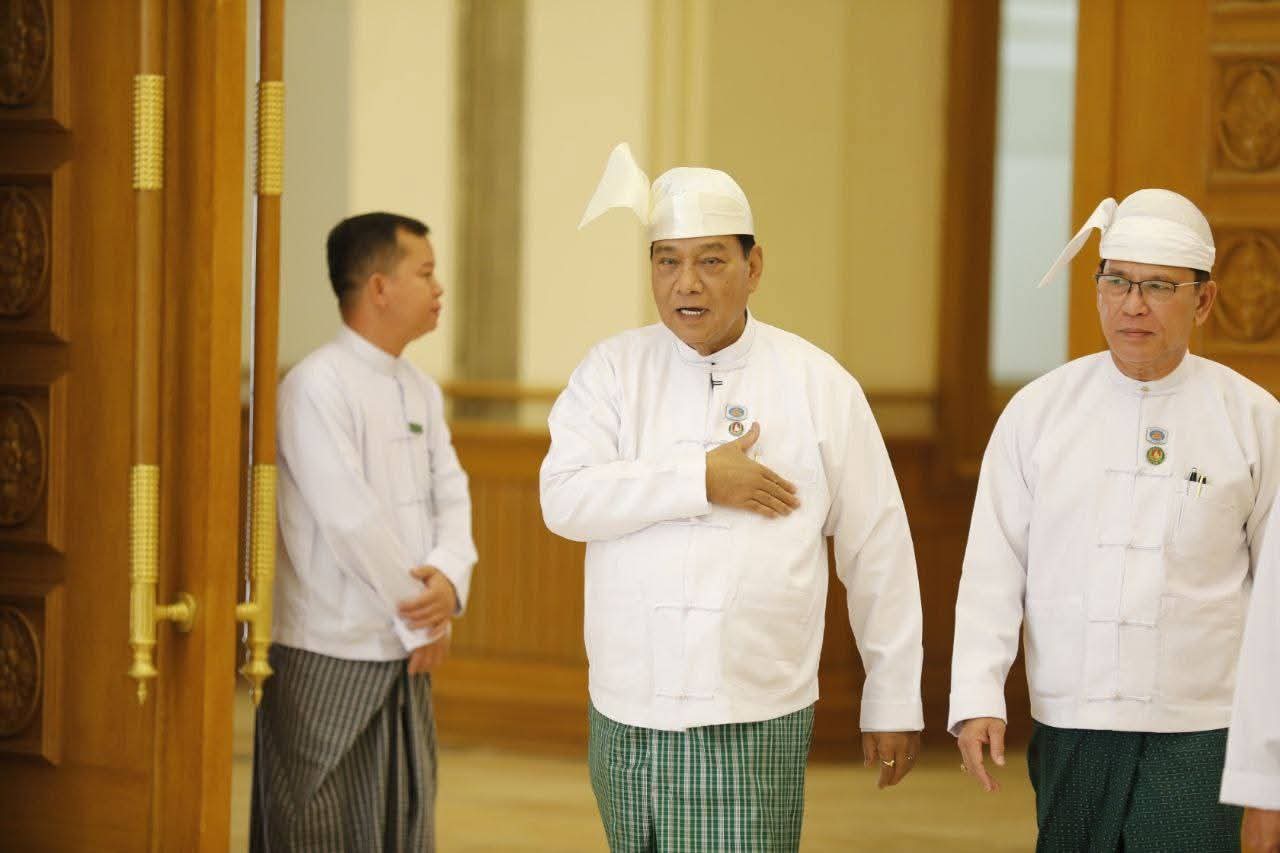
The Speaker and Deputy Speaker of the Pyithu Hluttaw.
To submit a motion, MPs must sign the proposal and send it to the Director General of the relevant parliamentary office to seek the Speaker's approval. There are five types of motions handled in parliament:, Ordinary Motions, Important (Urgent) Motions, Motions of Condolence, Motions of Congratulations, Motions of Impeachment.
The Mandate of the Parliament The Speaker of the Pyidaungsu Hluttaw, U Aung Lin Dwe, has urged MPs to prioritize the national interest and the welfare of citizens over personal or party bias, emphasizing mutual respect during negotiations.
The primary roles of the parliament include: Legislating based on the will of the people. Oversight of government actions.
Decision-making on national affairs to ensure the rule of law, democratic accountability, and sustainable peace.