
CNI News
March 25, 2026
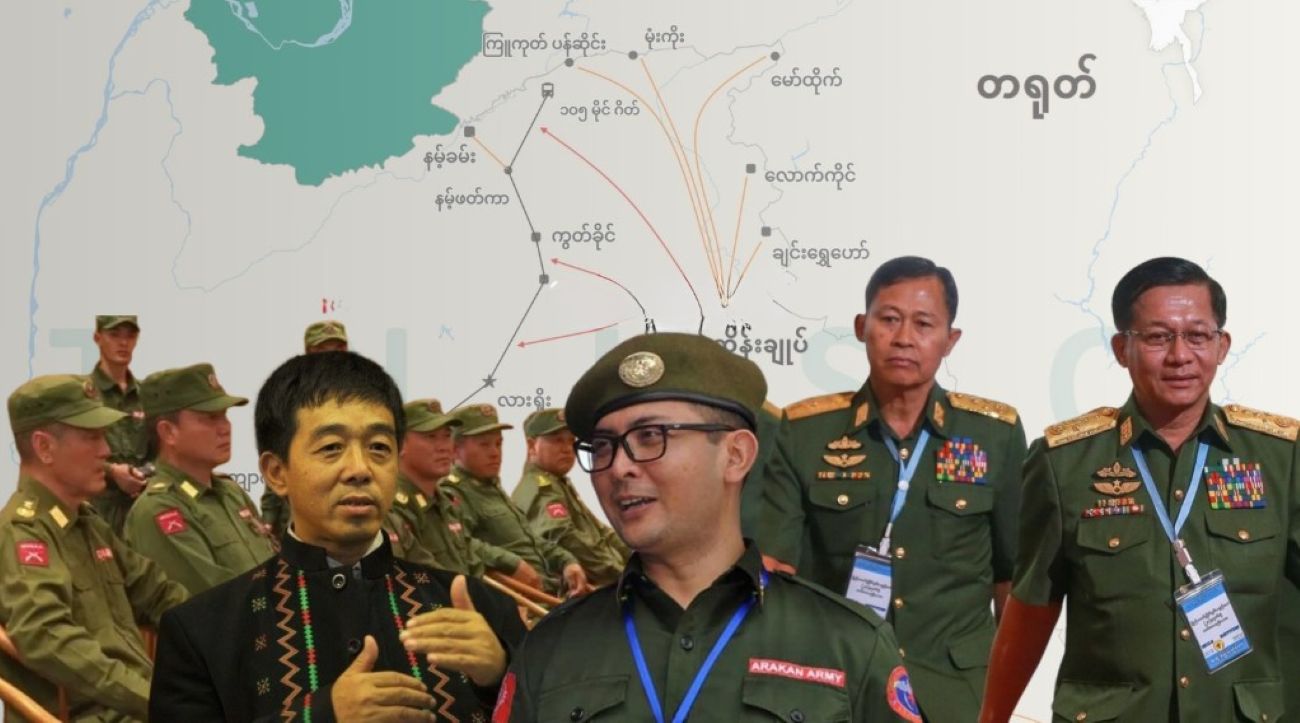
If peace negotiations are to be carried out in Myanmar, ethnic armed organizations (EAOs) should be engaged separately, as their interests differ and the strategic importance of the territories where fighting occurs also varies, political analyst Dr. An Kaw La told CNI News.
“All ethnic armed groups cannot simply be invited together at once, in our view,” he said. “Their interests are not the same. Moreover, the areas where clashes take place differ in terms of size and strategic importance. Based on those differences, outcomes may diverge. Therefore, what is meant by ‘all-inclusive’ is more likely to proceed through bilateral approaches with each group.”
He added that, unlike during the time of the Nationwide Ceasefire Agreement (NCA), when there were efforts to include multiple groups under a single framework, such an approach would be difficult under current conditions.
“In reality, since interests are different, negotiations need to be conducted separately, followed by dialogue processes. There are many stages involved in implementing peace. However, I do not think everything can happen simultaneously. A number of steps still need to be taken beforehand, and depending on how those are prepared and whether they succeed or fail, changes may occur,” he said.
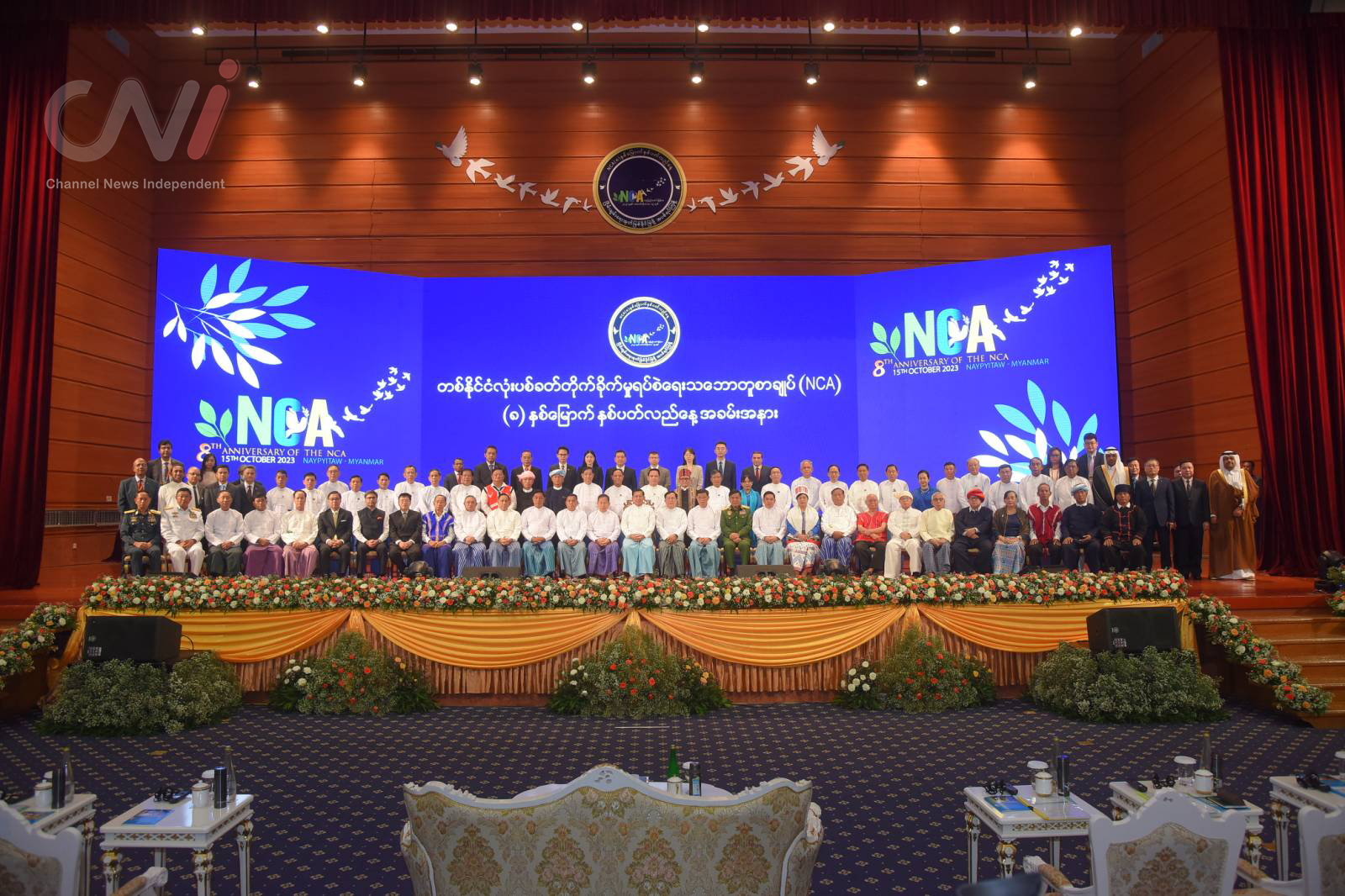
An anniversary celebration of the NCA
Since 2021, Myanmar’s political landscape has shifted, with ethnic armed groups expanding control beyond their previous territories. As a result, analysts say dialogue has become unavoidable.
During the administration of former President U Thein Sein, ceasefire offers were made to EAOs, leading to the signing of the NCA as well as bilateral agreements with individual groups. Similarly, under the National League for Democracy (NLD) government, the New Mon State Party (NMSP) and the Lahu Democratic Union (LDU) signed the NCA.
Although Union Peace Conferences were held under both civilian governments, analysts note that their impact was limited. The conference was first convened in 2016 under U Thein Sein’s administration, with the last session held in August 2020 during Daw Aung San Suu Kyi’s government.
After nearly five years of political upheaval, EAOs that have gained advantages on multiple fronts are now making higher-level demands than before.
U Khun Sai, a participant in the peace process, also told CNI News that all armed groups in Myanmar should prioritize dialogue over confrontation.
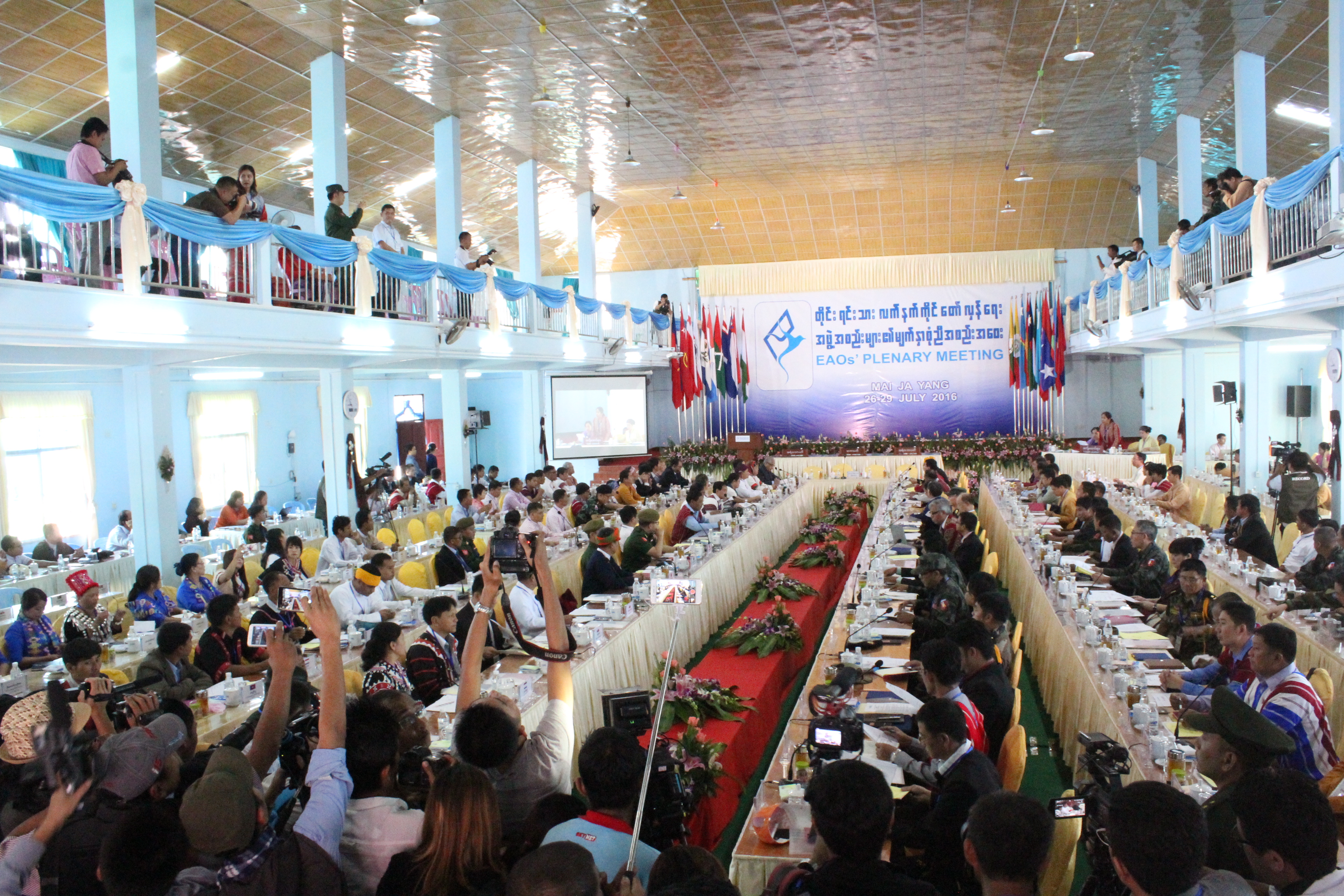
A conference of armed groups
“International peace experts say they have never seen a country as politically knowledgeable as Myanmar. Every group is full of political experts,” he said. “But the problem is that instead of negotiating to reach agreement, they spend their time competing to win arguments. When they fail to win through debate, they resort to arms.”
“That is why, in our country, we must move away from prioritizing debate and instead adopt genuine dialogue—working together to find solutions. Since peace talks began in 2011, we aimed to build a new culture of resolving political problems through dialogue rather than force. It has been about 15 years now, and we still have not fully implemented it. It is time to do so,” he urged.
Analysts also point out that peace talks will not be possible as long as deep mistrust and restrictions persist among the government, the military, and ethnic armed groups.
They add that both domestic and international peace facilitators will play an important role in making such dialogue processes possible.