

CNI News
March 25, 2026
If Myanmar is to build a federal union, it should adopt a system tailored to the specific conditions of each region or state, U Saw Than Myint, Joint Secretary of the Shan and Nationalities Democratic Party (SNDP), told CNI News.
According to him, his party envisions a system in which regions such as Yangon would have full authority over the three branches of power—legislative, judicial, and executive—exercised by their respective regional parliaments or governments. Only then, he said, would regions and states be able to exercise meaningful authority.
“Each country practices governance differently, and each region also differs,” he said. “For example, India is not officially called a federal country, yet it governs through a federal system. Federalism is essentially about how administration, management, and governance are carried out.”
He added that the conditions in Shan State, Chin State, Rakhine State, and Yangon Region are all different, and therefore cannot be managed under a single uniform model.
“As long as it does not contradict the main constitution, regions and states should have the authority to draft and implement sub-constitutions suited to their own areas. That is federalism. Administration will naturally differ from one region to another. Therefore, each region must adopt a system that fits its own situation. However, for nationwide implementation, it must be defined by the constitution,” he said.
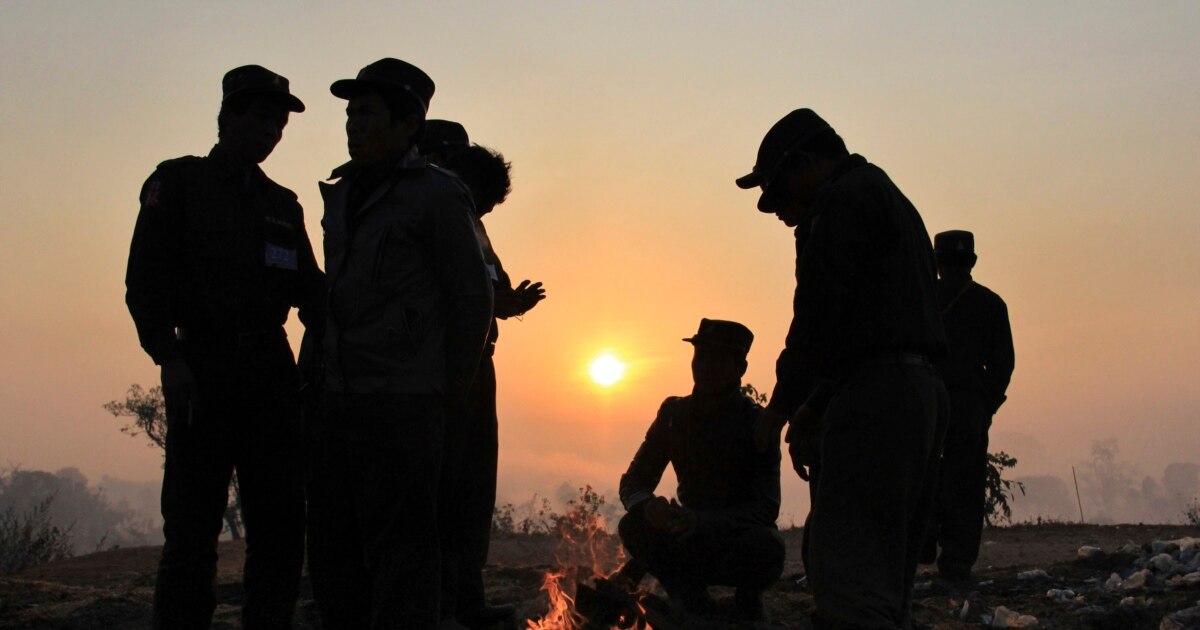
Armed forces seen
At present, Myanmar has yet to reach agreement among the military, government, parliament, ethnic armed groups, and political parties on what kind of federal system should be established.
A political analyst told CNI News that it is uncertain whether ethnic armed organizations would accept the federal model envisioned under the Nationwide Ceasefire Agreement (NCA), suggesting they may not wish to follow that framework.
“To resolve the ongoing internal armed conflicts—particularly between ethnic armed groups and the military—there must be a solution,” he said. “If federalism is to be adopted, every peace negotiation ultimately leads to discussions on constitutional reform and how to establish a federal system.”
He added that while federalism may remain the general goal, the situation following Operation 1027 has raised questions about whether a federal democratic system can realistically be implemented.
He pointed out that the United Wa State Army (UWSA) has rejected the 2008 Constitution and governs its territory autonomously. Similarly, the Northern Alliance groups—the Arakan Army (AA), Ta’ang National Liberation Army (TNLA), and Myanmar National Democratic Alliance Army (MNDAA)—have gained control over territories through armed means since Operation 1027.
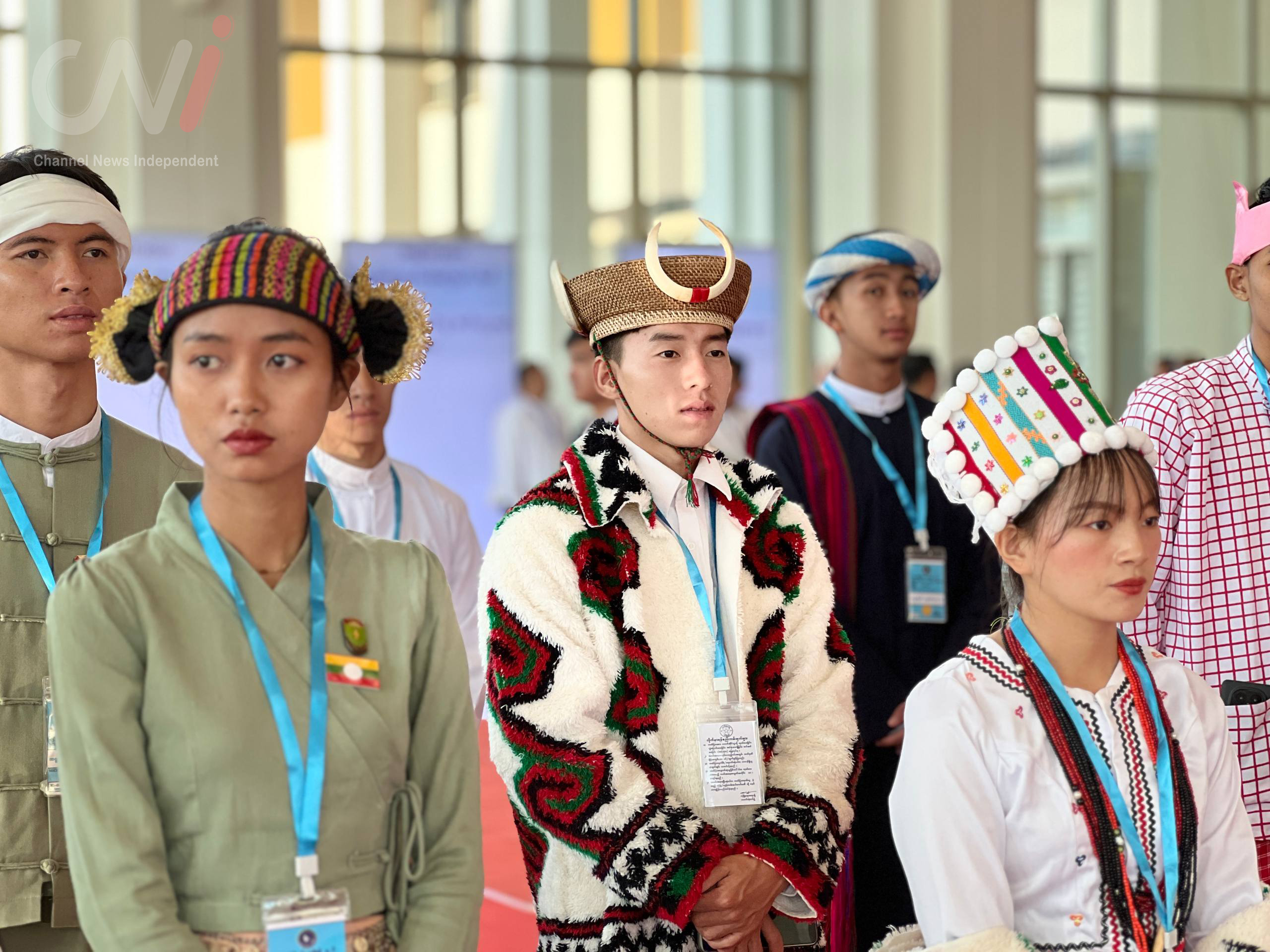
Various national ethnic groups seen
“If the federal system outlined in the NCA were to be implemented, it is uncertain whether these groups would accept it,” he said. “They may remain within a federal framework, but it is not guaranteed that they would adopt a multi-party democratic system in their regions. If forced, they may reject it. If peace is to be achieved, they are unlikely to follow the exact federal model defined in the NCA,” he added.
In Myanmar, ethnic armed groups and political parties broadly support the establishment of a federal democratic union, while the government and military have also stated their support for building a democratic federal union.
However, the Nationwide Ceasefire Agreement (NCA) itself stipulates the establishment of a union based on federalism and democracy.
Analysts also caution that when building a federal union in Myanmar, federalism and democracy should not be conflated, and must be clearly distinguished. They note that the collapse of the Soviet Union serves as a warning of the risks of mixing the two concepts improperly.
Similarly, during the era of General Ne Win, Myanmar adopted the “Burmese Way to Socialism,” which ultimately failed and led to national decline. Therefore, analysts warn that caution is needed when attemptin;g to create a uniquely “Myanmar-style” federal system.