
CNI News
17 March 2026
Ethnic Armed Organizations (EAOs) appear to be prioritizing their own interests rather than working toward the establishment of a federal union, according to former Member of Parliament Daw Sandar Min, who spoke to CNI News.
She also said that ending the armed struggle would be very difficult.
Daw Sandar Min stated: “Ending the armed struggle is extremely difficult. Over the past five years, when we study the situation, we have to ask whether these EAOs truly want to build a federal union or whether they really want federalism at all, or if they simply want to establish their own interests. From what we are seeing, many of them appear more interested in building their own interests than in building federalism. As long as self-interest and ego are placed at the forefront, it will be very difficult to end the armed struggle and achieve peace.”
Observers of military and political affairs note that federalism is an unavoidable issue for Myanmar. However, they point out that armed conflicts arise not only from political causes but also from competing interests.
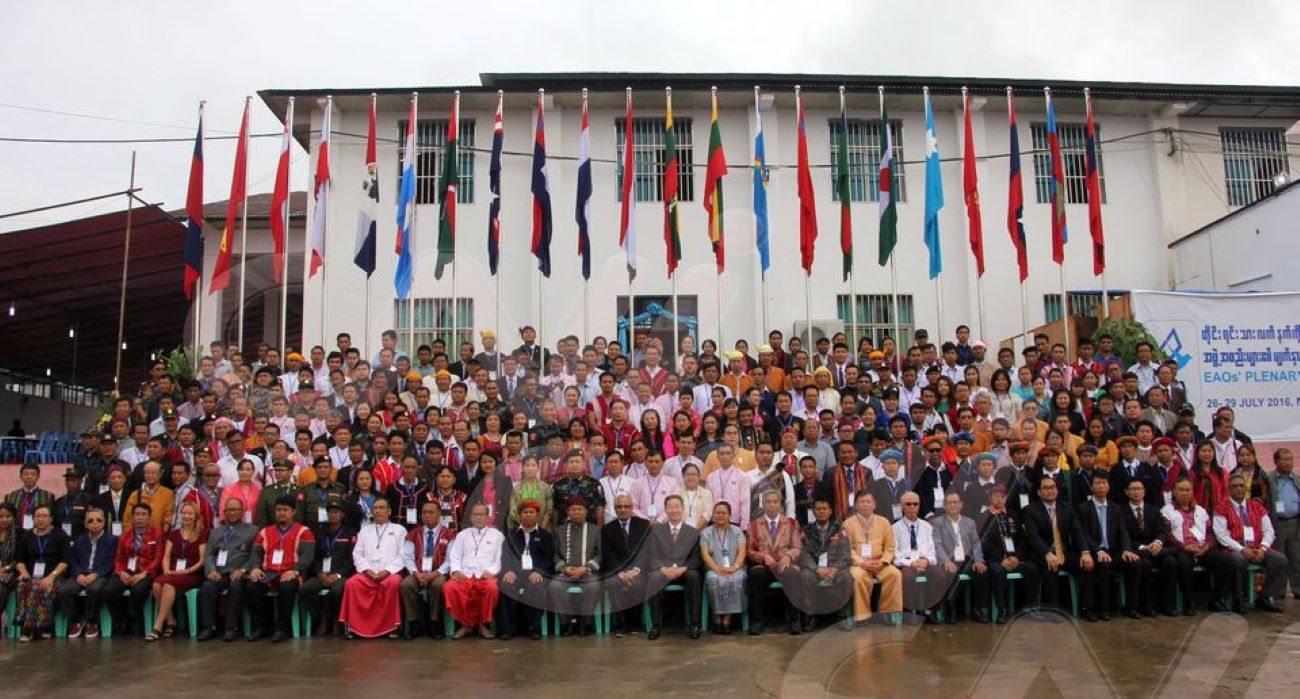
Ethnic Armed Organizations (EAOs), diplomats, and political parties seen
Senior General Min Aung Hlaing previously said that when implementing democracy and a federal administrative system, a region-based federal system would be the most appropriate approach. He made the remark on September 10, 2023, during a meeting with leaders of local militia forces in northern Shan State.
Military and political analysts have also pointed out that the main reason behind Myanmar’s armed revolutions was the failure to secure the fundamental rights of ethnic groups.
Since the political changes following February 1, 2021, armed conflicts in Myanmar have intensified and spread more widely, while the number of armed groups has also increased significantly.
At the same time, the Myanmar military and government have suffered territorial losses, while ethnic armed organizations are increasingly focusing on expanding and maintaining territorial control.
China–Myanmar affairs analyst Dr. Hla Kyaw Zaw told CNI News that when revolutionary movements begin, they are usually driven by the interests of the people and the national cause, and it is important not to deviate from that path.
She said: “When people first become revolutionaries, they often start with a sudden sense of determination. But as time goes on, some may stray from that path. Some individuals may also become morally compromised by personal interests. Even in our own experience in the Communist Party of Burma, we saw many people who eventually broke away. Such individuals will fall away during the long journey of the revolution, so we should not worry too much about them.
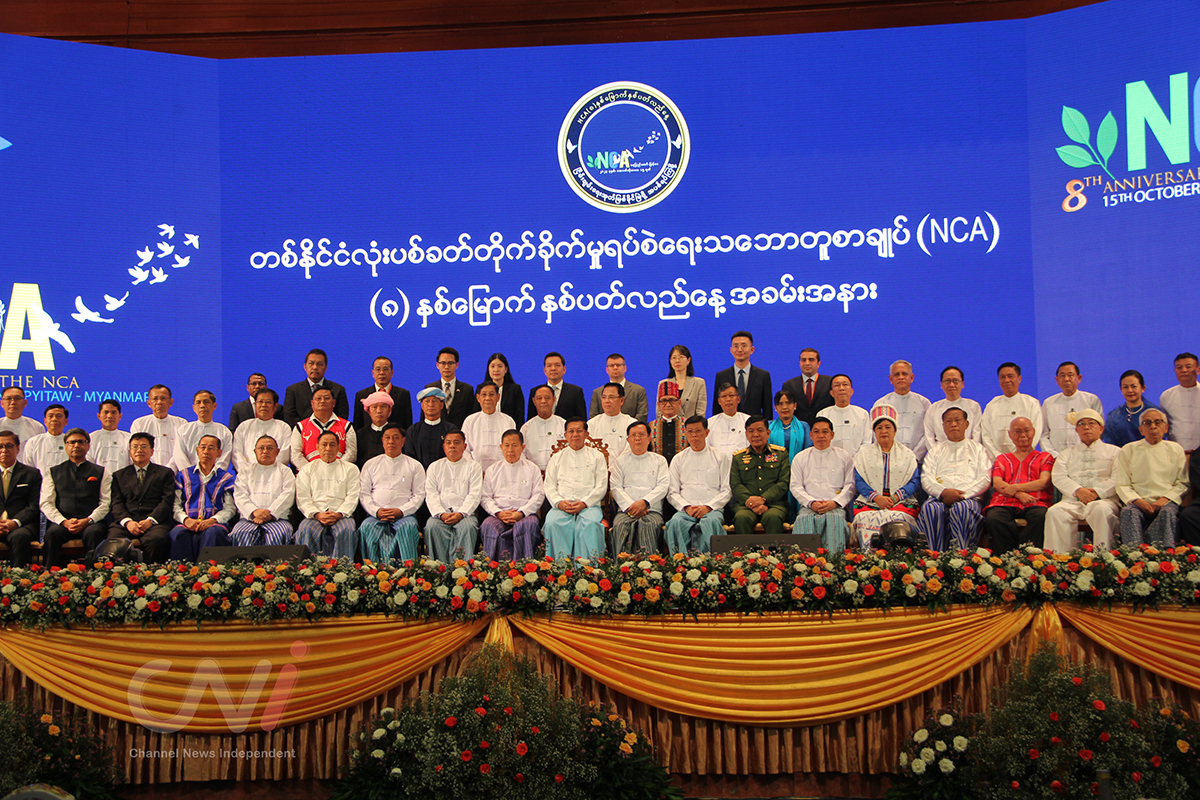
International diplomats, SAC (State Administration Council) leaders, and leaders of armed groups seen
In the long run, they will have to choose their path. If they focus only on personal interests, they may join forces with the military council, like the path taken by Bo Nagar. But if their basic political conviction becomes stronger, they will return to the revolutionary side. What I want to say is that the revolution began for the sake of the people and the national cause, so it should not deviate from that path. We must continue persuading and discussing among revolutionaries and adopt a policy of bringing people back to the revolution through dialogue.”
Military and political observers say that since federalism has been widely accepted as a solution, efforts are being made to move forward with a federal system. However, if alternative arrangements beyond that framework are pursued, it could lead to the disintegration of the Union, which could create major problems not only domestically but also across the Southeast Asian region.
Efforts are currently underway in Myanmar to build a union based on federalism and democracy.
However, some ethnic armed organizations have begun openly discussing goals that go beyond federalism, including confederation or even independence.
Amid the ongoing political and military conflicts, analysts emphasize that trust must be rebuilt in order to carry out inclusive peace processes involving all stakeholders.
They also point out that ethnic armed organizations need to prioritize the interests of all citizens rather than their own self-interest and work toward union peace. In addition, the upcoming government will need new approaches and new ways of thinking when addressing peace issues and armed conflicts.