
CNI News
March 17, 2026
Dr. Nyo Nyo Thinn, founder of the Yangon Watch group, told CNI News that the role of the military becomes elevated when a country’s powerful neighbor is not a democracy.
She stated that the military likely perceives a civilian government as being unable to protect national sovereignty when faced with threats from a highly populated country. Consequently, the military’s role is considered significant.
Dr. Nyo Nyo Thinn said, “Therefore, there are countries that believe the military's role must be higher than that of a civilian government. Our country is among them. Specifically, there is a powerful neighboring country that is not democratic. When such a large neighbor is not a democracy, the military’s role increases. Furthermore, that country poses a major threat to our national security. When bordering countries with high population densities threaten security, our situation may shift toward prioritizing security and the perpetuation of sovereignty. This is currently the case. In such circumstances, it is difficult to place the military under the control of a civilian government.”
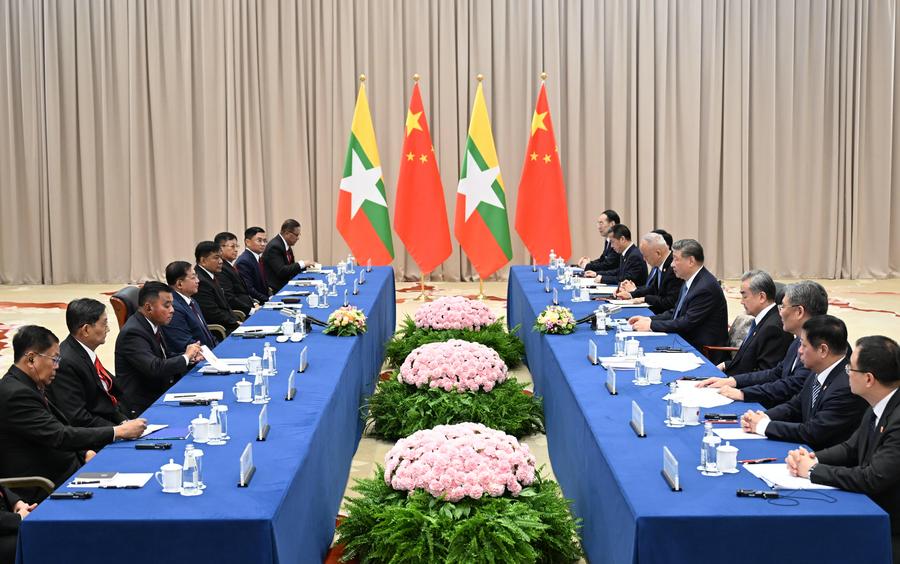
Senior General Min Aung Hlaing and Chinese President Xi Jinping seen together.
Military and political analysts point out that while democratic standards dictate that a nation’s military should be under civilian rule, these standards are not always met, depending on the democratic reforms of various countries worldwide.
Currently, the Myanmar military has been governing the country for five years after ousting the NLD government in 2021 for attempting to form a government without resolving disputes over voter lists. Following the political changes in 2021, armed organizations have multiplied, and armed conflicts have become larger and more widespread.
U Li Paw Reh, Chairman of the Lisu National Development Party (Dulei Party), told CNI News that if internal peace is achieved, the military’s role will automatically decrease.
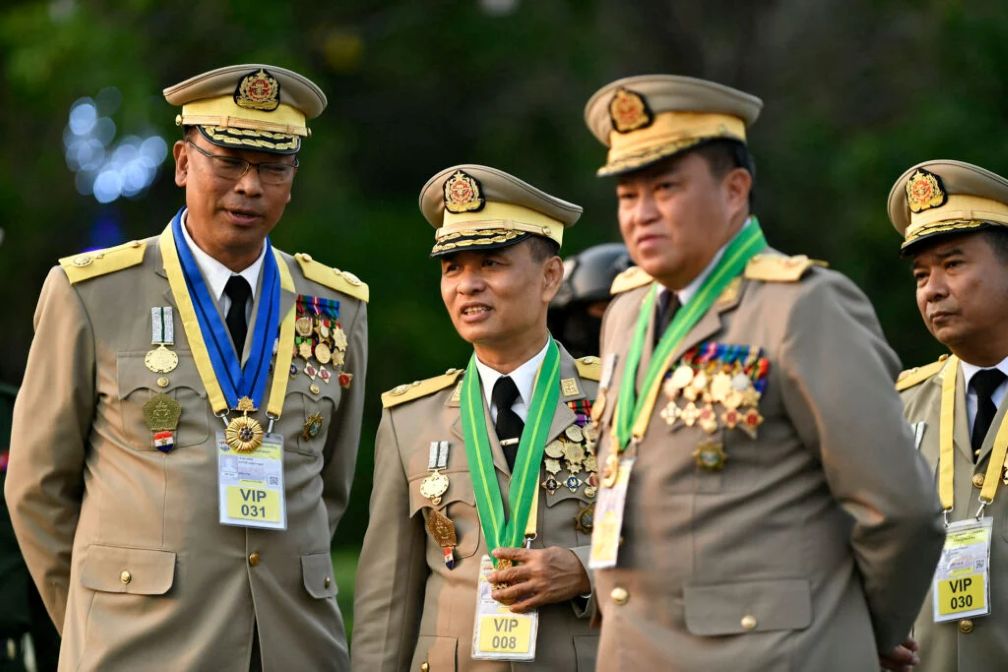
Senior military officials seen
He stated, “The main thing is that if there is internal peace and ethnic armed organizations no longer exist—if things become peaceful—the military’s role will decline. However, if the military’s role were reduced right now, they would still have to be used for national peace and security. Therefore, the primary issue is that national peace is number one. To achieve national peace, it is necessary for current military leaders, administrative leaders, and all ethnic armed organizations to work with a clear vision for the development of the country.”
In cases where a nation’s history, human resources, and practical political conditions must be considered, there are countries where the military is not at all under the control of a civilian government.
These include Pakistan, Thailand, Egypt, and some African nations such as Mali, Guinea, and Burkina Faso. North Korea is slightly different; while the military is under the leadership of the Party and its leader, it serves as the lifeblood of the state, and all national resources are prioritized for the military.