

CNI News
14 March 2026
Self-administration is an inherent part of a federal system, but in Myanmar some individuals still view federalism and self-administration as separate concepts, a political analyst told CNI News. According to the analyst, if federalism is properly understood, there would be no reason to deny self-administration.
He said, “In reality, self-administration is one of the components of a federal system. However, some people interpret self-administration and self-governance as something separate. In fact, federalism already includes self-administration. Self-administration or self-determination means that people in a region hold their own elections and the government that emerges in their state governs them. The central government should not interfere with that regional government. The federal government cannot change the chief minister, the administrator, or the government of that region. The region governs itself. Of course, it remains part of the country, but it is governed according to the decisions and the mandate of the people in that region. That is an important component of federalism. If this is understood, there is no reason to deny it.”
However, he added that Myanmar’s 2008 Constitution does not align with the essence of a federal system. Therefore, solutions should be approached by aligning the framework of the 2008 Constitution with principles closer to those of federalism.
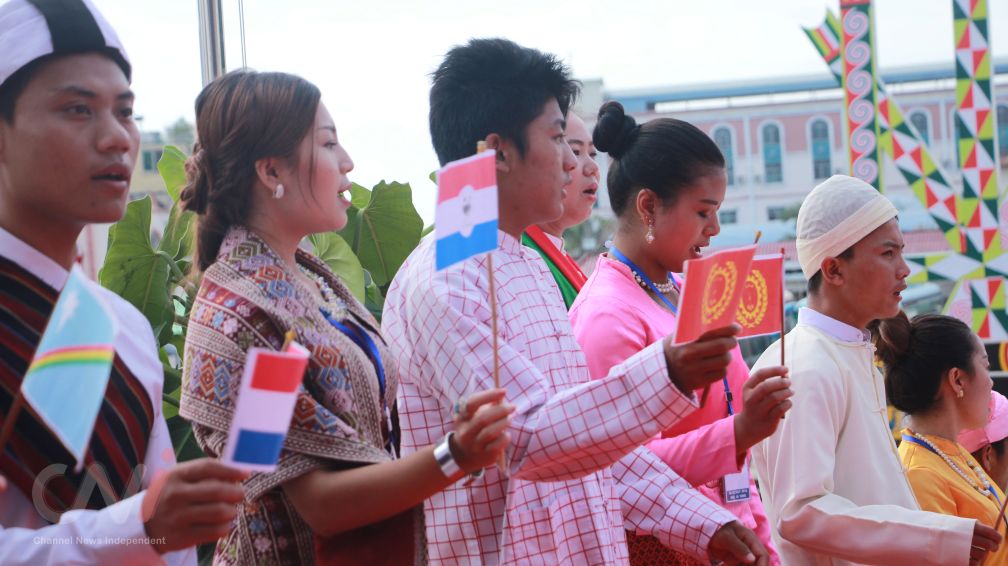
Ethnic groups of diverse backgrounds
Another political analyst said, “Under the 2008 Constitution, the situation is different. Elections are held in the states at the same time as the national elections. After the elections and the formation of parliaments, the president from the central government appoints the chief ministers of the states. In addition, military representatives still occupy one-quarter of the seats in the legislatures. The chief ministers are nominated by the president. This does not conform to the essence of federalism. Not only that, it also contradicts the self-administration that ethnic groups are demanding. These issues need to be addressed by approaching the framework of the 2008 Constitution with ideas that are closer to the principles of federalism.”
Military and political observers have also pointed out the need to clearly understand the essence of both federalism and democracy, whether it is called a “federal democracy” or a “democratic federal union.”
They noted that transitioning to a federal system would require either amending the 2008 Constitution or drafting a new constitution.
Observers also recommended opening political dialogue in order to end ethnic armed conflicts and establish a federal union.
Dr. Nyo Nyo Thin, founder of the Yangon Watch group, told CNI News that what is most important is the genuine willingness of all armed groups, including the Myanmar military, to provide real peace.
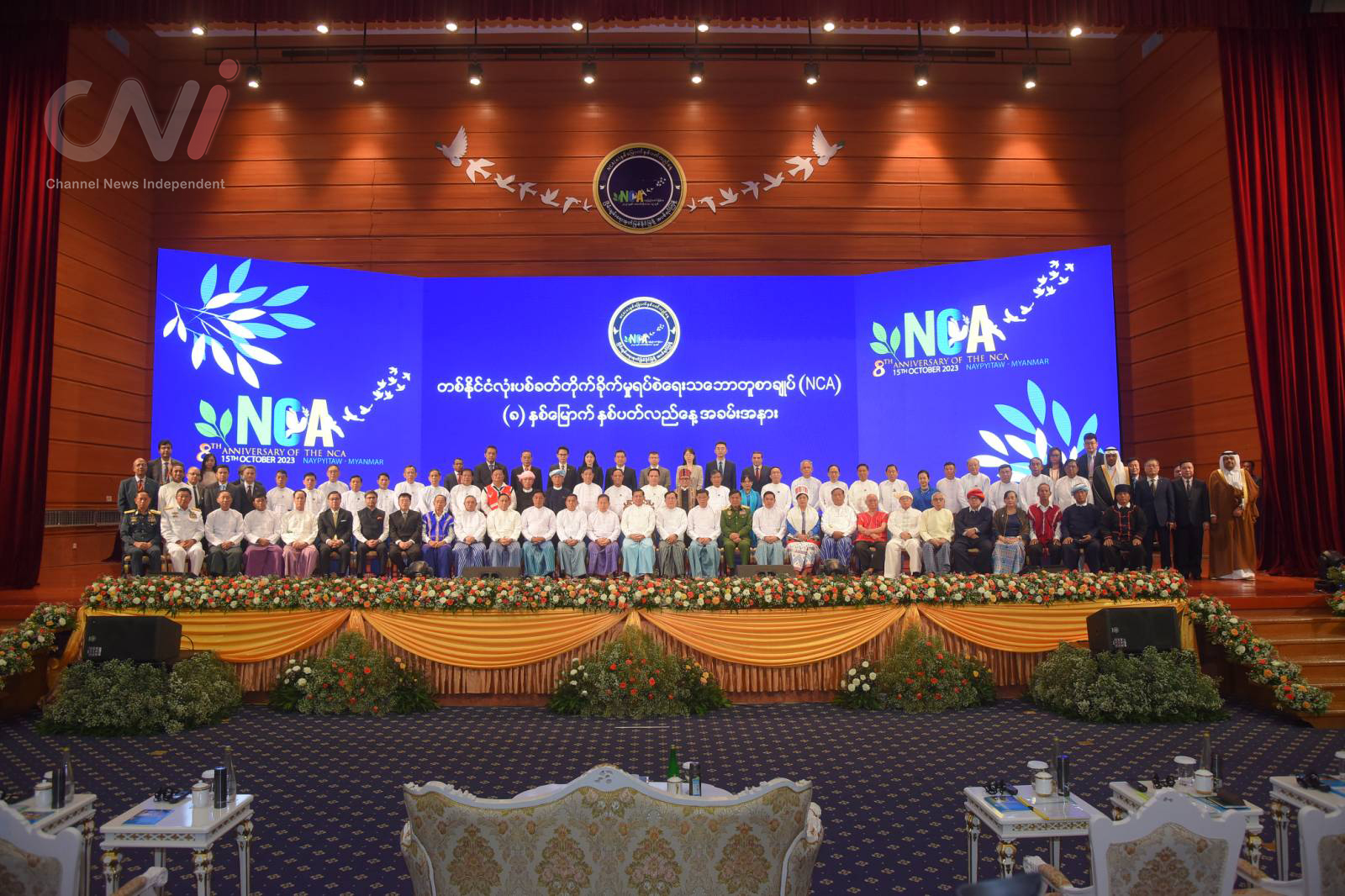
Government, Tatmadaw, and armed group leaders seen together
She said, “Once talks begin, discussions can address what kind of federal system is desired and what type of autonomy is being sought. Under the 2008 Constitution, some things can be granted while others cannot. Even if certain things cannot be granted directly, opportunities can still be created through other mechanisms. These are matters that can be addressed through peace dialogue platforms. There is nothing that cannot be discussed. What matters most is that all armed organizations, including the Myanmar military, genuinely have the goodwill to deliver real peace for the future union and for the next generation.”
Political analysts also noted that devolving power to the states is a key factor in achieving peace. They argued that since the current 2008 Constitution is based on military dominance, a new constitution is necessary for a genuine federal democracy.
In shaping Myanmar’s future, ethnic armed organizations and non-Bamar ethnic forces have expressed a desire to establish a federal democratic union, while the Myanmar military, the NLD, and the USDP have expressed support for building a democratic federal union.
However, the Nationwide Ceasefire Agreement (NCA) states that a union based on democracy and federalism should be built in accordance with the outcomes of political dialogue.
Senior General Min Aung Hlaing also previously stated, in a message sent to the ceremony marking the 75th Kachin State Day on January 10, 2023, that under a union system based on democracy and federalism, states and regions would be granted self-determination rights under the constitution.