
CNI News
March 7, 2026
Political analyst Dr. An Kaw La told CNI News that there are two major weaknesses in the Nationwide Ceasefire Agreement (NCA).
According to him, the first major weakness concerns territorial issues, while the second is the inability to effectively implement national-level political dialogues.
Dr. An Kaw La said:
“Regarding the peace process, the NCA was implemented as much as possible. However, there are two main weaknesses in the NCA. The first concerns territorial issues. There is a certain assumption that groups must have territory. That is one issue. The second is that the NCA was actually designed to gain legitimacy through national-level political dialogues based on ethnicity and region, followed by conferences. The weakness is that these two points have not worked well. National-level political dialogues have not been conducted widely or effectively. That is one issue. The other issue is the territorial question. For example, I will explain. The Arakan Liberation Party (ALP) led by Saw Mra Razar Lin no longer has territory, even though it signed the NCA. So it has become stuck in a difficult position. Because the process is restricted by territorial conditions, what happens is that armed groups start thinking they must fight to gain territory. The original idea was that groups would sign the NCA, stop fighting, and continue political dialogue from their existing positions. If necessary, they could withdraw from certain areas. But another problem is that national-level political dialogues have not been held. The frameworks intended to organize such dialogues have many weaknesses. These issues need to be carefully reviewed and corrected.”
Military and political analysts have also pointed out that the negotiation frameworks of the NCA should be revised, because continuing the process exactly as it was in the past may no longer be effective.
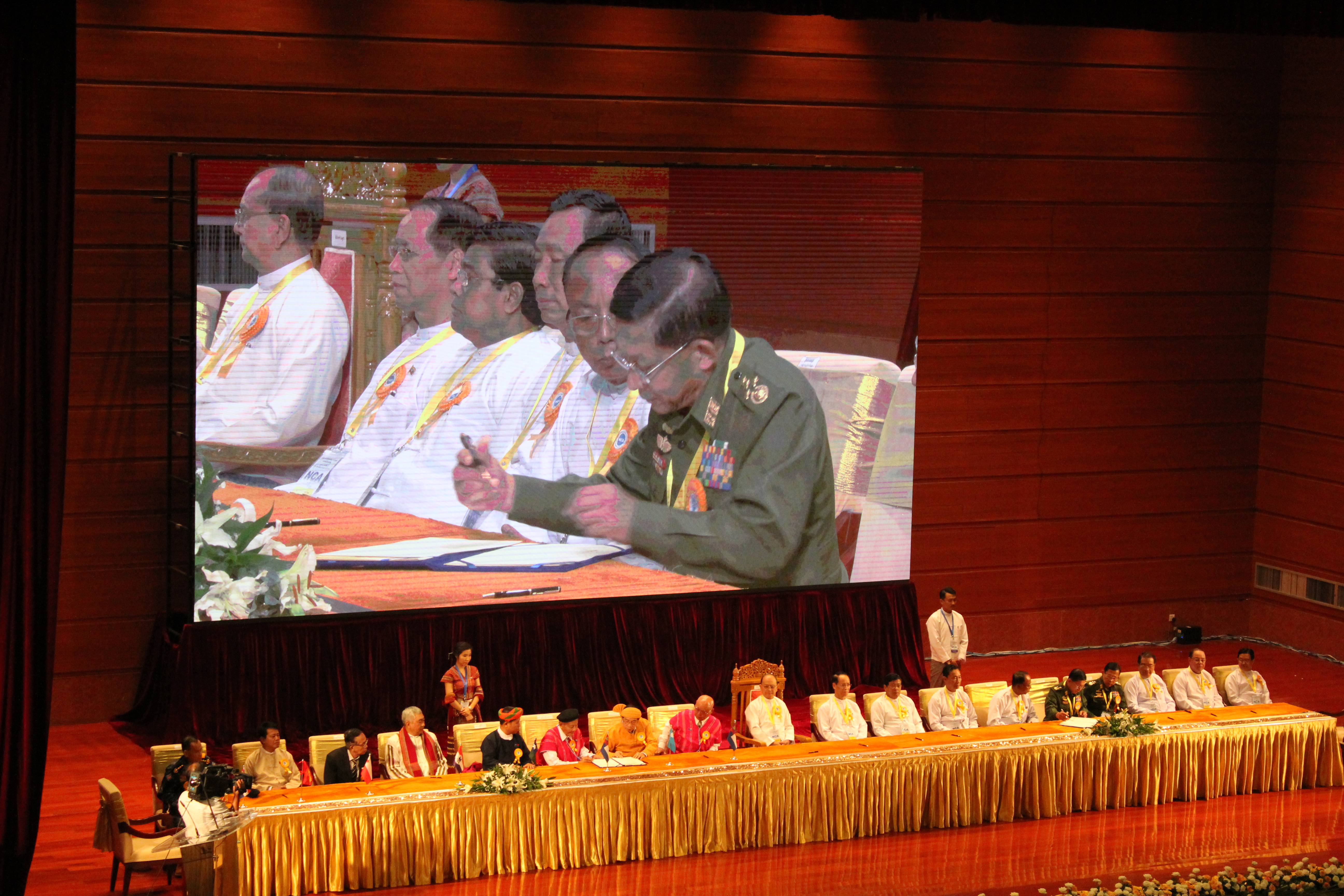
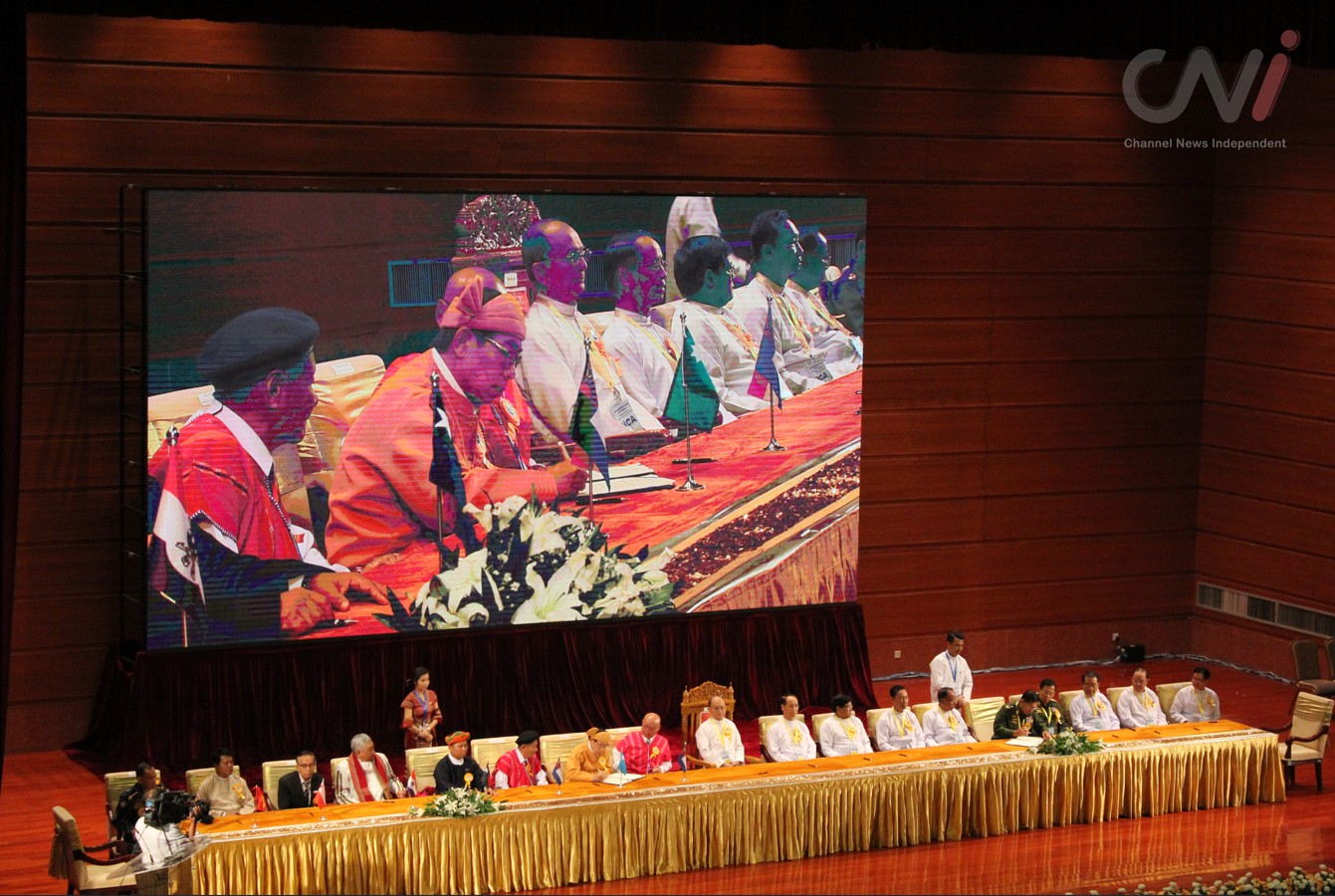
Signing the NCA in 2015 seen
Sai Htay Aung, chairman of the Tai-Leng (Shanni) Nationalities Development Party (TNDP), told CNI News that although the NCA may have weaknesses, the new government could still use the NCA pathway to discuss peace.
He said:
“It is true that there may be weaknesses. The NCA process started during the time of President U Thein Sein. The agreement went through several stages, and later the government revised some points it wanted. In fact, about 90 percent of the proposals came from the EAO side. Of course weaknesses may exist; no agreement can ever be completely perfect. But for the moment we still have to proceed based on the NCA. There are still groups that continue to follow the NCA path. However, this does not mean we must rigidly follow it without change.We can revise strategies and negotiate many aspects. Therefore, I believe the government will still pursue peace through the NCA framework.The NCA was signed in front of the international community with eight EAOs. For that reason, the government will likely continue following the NCA agreement. Even if there are weaknesses, they can be improved along the way.”
The Nationwide Ceasefire Agreement (NCA) was signed on October 15, 2015, by the following groups: Karen National Union (KNU),Restoration Council of Shan State (RCSS),KNU/KNLA-PC,Democratic Karen Benevolent Army (DKBA),Arakan Liberation Party (ALP),All Burma Students’ Democratic Front (ABSDF),Chin National Front (CNF),Pa-O National Liberation Organization (PNLO).
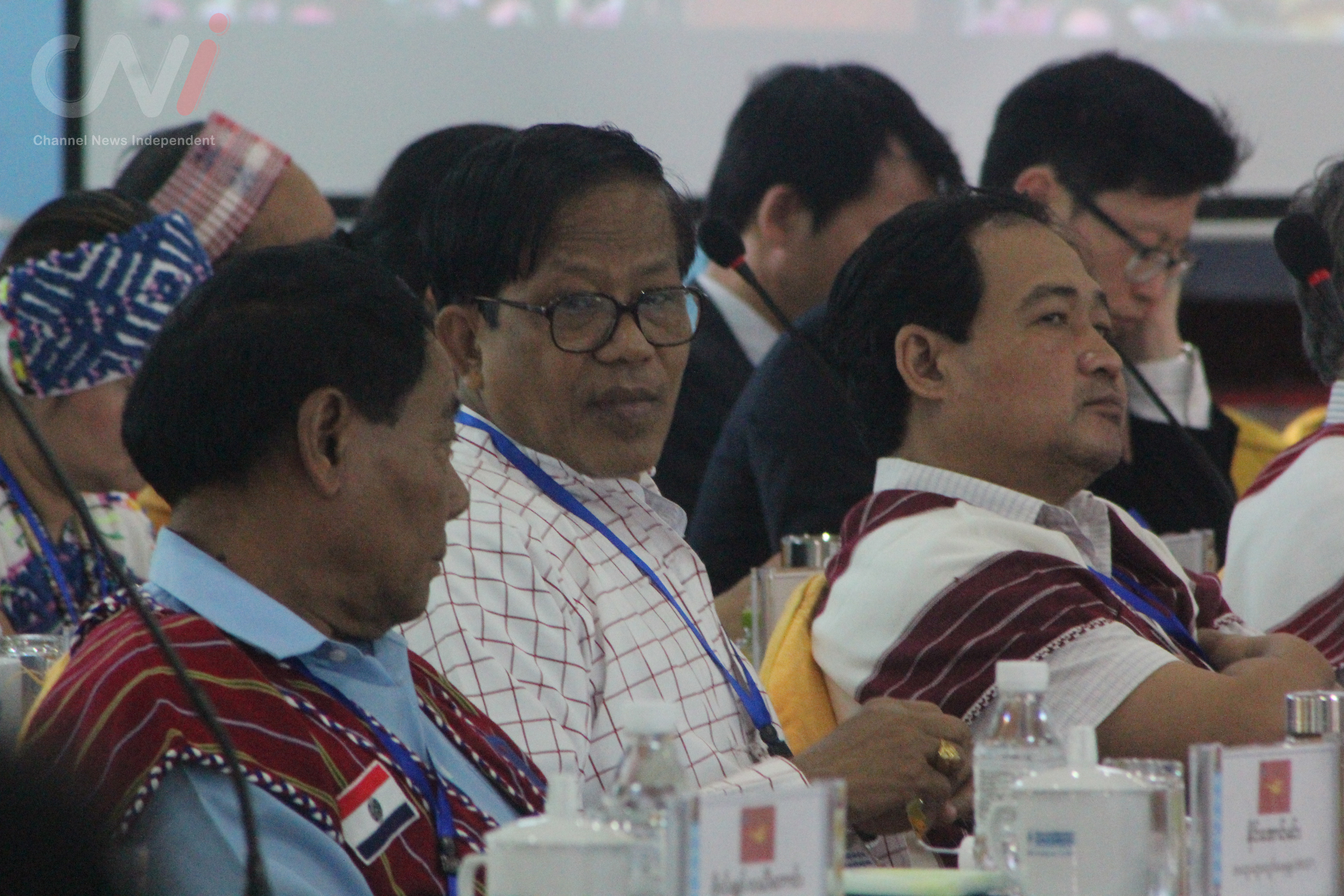
Leaders of Mon, Karen and Karenni
Later, on February 13, 2018, the following groups also signed: New Mon State Party (NMSP),Lahu Democratic Union (LDU).
Currently, KNU, CNF, and ABSDF have withdrawn from the NCA and are engaged in fighting against the Myanmar military (Tatmadaw). Meanwhile, ALP, PNLO, LDU, and NMSP have split into two factions each.