
CNI News
4 March 2026
Political analyst U Kyaw Htet told CNI News that it is necessary to enact a law capable of taking action against any organization that violates the Nationwide Ceasefire Agreement (NCA).
He stated that the agreements within the NCA are not matters to be conducted solely with the Military (Tatmadaw) but with the State. He noted that because there were no provisions on how to penalize violations after signing the NCA, groups have been fluctuating between withdrawing from and participating in the agreement.
"The NCA agreement is not a matter just for the military; it is a matter for the State. If NCA rules are violated, the military must take action on behalf of the State. Currently, we only have the signing of the NCA. I view the reversal [of peace] as happening because there are no specific legal provisions on how to take action if violations occur after signing. Whether it is the government or Ethnic Armed Organizations (EAOs), there needs to be a law in the country stating that the State will take action against anyone who does not follow the NCA. It can be analyzed that violations are happening easily because these laws do not exist. Furthermore, federal rights need to be granted. There needs to be an 'open-palm' [generous] approach. It needs to be enacted according to the law and by the Parliament. Otherwise, questions arise over who is doing what and which group is being represented, creating a political landscape where conflicts are manufactured as desired," U Kyaw Htet said.
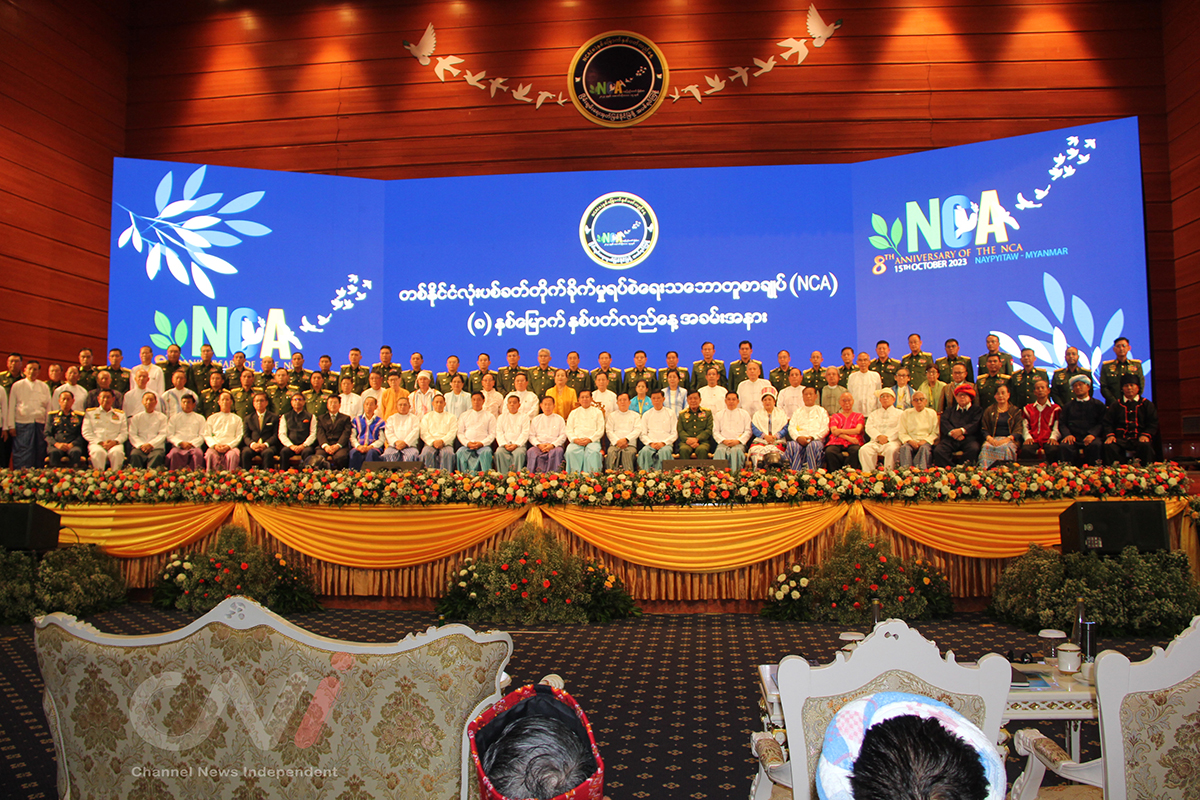
Scene from an NCA anniversary event
During the administration led by U Thein Sein in 2011–2012, bilateral ceasefire agreements were signed at the state and union levels with 14 EAOs. Discussions for the NCA began in 2013, and a draft was reached in August 2015.
Subsequently, the following groups signed the NCA:
October 15, 2015: KNU, RCSS, ALP, DKBA, KNU/KNLA-PC, PNLO, CNF, and ABSDF.
February 13, 2018: NMSP and LDU.
Currently, the KNU, CNF, and ABSDF have withdrawn from the NCA and are engaged in active combat with the Myanmar military.
U Khun Sai, who is involved in the peace process, told CNI News that proceeding with the previous NCA framework will no longer be effective and that the negotiation frameworks need to be revised.
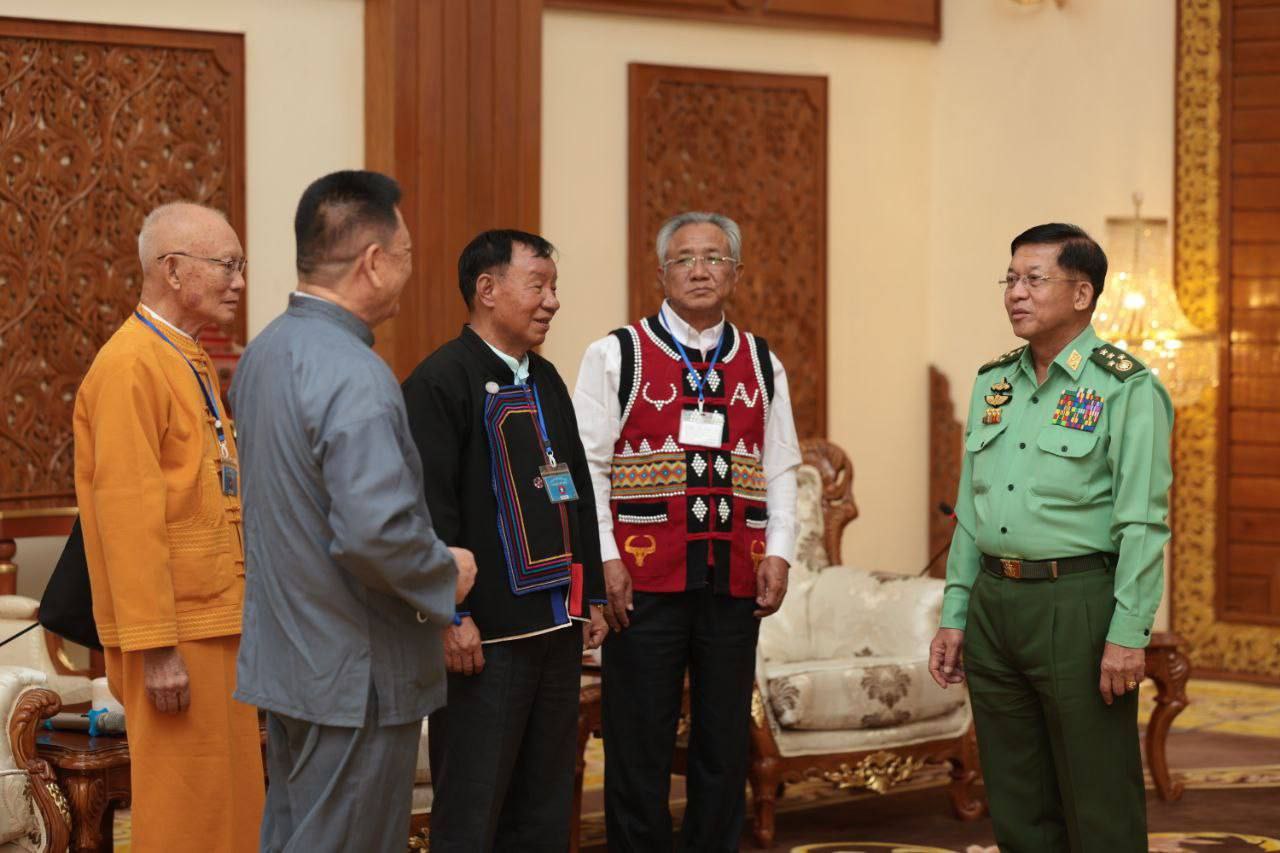
Senior General Min Aung Hlaing and leaders of armed organizations seen together
"It would be good to have [a law]. Regarding this matter, it’s important to know what constitutes a violation. You can't just blame one side; it can happen on both sides. If penalties are to be imposed, everyone needs to realize that 'it’s not just him who will suffer, but me too.' There are currently two ways to think about this. One is to punish the offender. If they correct their mistakes because of the punishment, that’s good. However, if they respond to punishment by turning back to armed resistance, we must consider in advance how to handle that. If we don't think ahead, instead of solving the problem, it will make it worse. That is the problem with our country," U Khun Sai explained.
He added, "The situation has changed significantly. Back then, there were 21 armed groups nationwide, but now there are hundreds. In a situation where there are hundreds of groups, it is impossible to carry out the NCA according to its original process. This needs to be amended. Primarily, we need to revise the negotiation framework. While the framework isn't directly inside the NCA, it is the framework that arose from it."
In the NCA signed between EAOs and the Myanmar Military-Government-Parliament, there are no specific provisions regarding under what conditions a group has the right to withdraw or is prohibited from doing so.
Furthermore, because there is no mechanism to take action against those who breach the contract, the NCA is often interpreted arbitrarily, leading to mutual accusations of violations and ongoing disputes.