
CNI News
12 February 2026
Military and political analysts are sharing their perspectives on how the Myanmar military (Tatmadaw) might carry out operations to reclaim lost territories under the new government, which is expected to emerge after the convening of parliament (Hluttaw) in March 2026.
Colonel Khun Okkar, Chairman of the Pa-O National Liberation Organization (PNLO-NCA/S)—a signatory of the Nationwide Ceasefire Agreement—told CNI News that while he does not believe the new government and parliament will prioritize military action, if they do, they are likely to focus on the central regions of Myanmar.
"There are two possibilities. They might negotiate with those who have seized territories. For instance, the retrieval of Hsipaw and Lashio in the north was achieved through non-military means; it was done through negotiation. Therefore, they might try to negotiate or make deals. However, in places like Magway and Sagaing, where negotiations or deals may not be possible, military intensity could increase. On the other hand, I don't think the situation is conducive to escalating military operations in Rakhine or Kachin states. I believe they will prioritize military actions in the central heartland—Magway, Sagaing, Mandalay, and Bago. They will likely approach ethnic regions using a different method. They cannot conduct military operations across the entire country simultaneously, so they are expected to prioritize the central regions," he said.
Military and political observers noted that although clashes between the Myanmar military and revolutionary forces plus some ethnic armed organizations continue after the completion of the three-phase election, the intensity is lower than in the pre-election period.
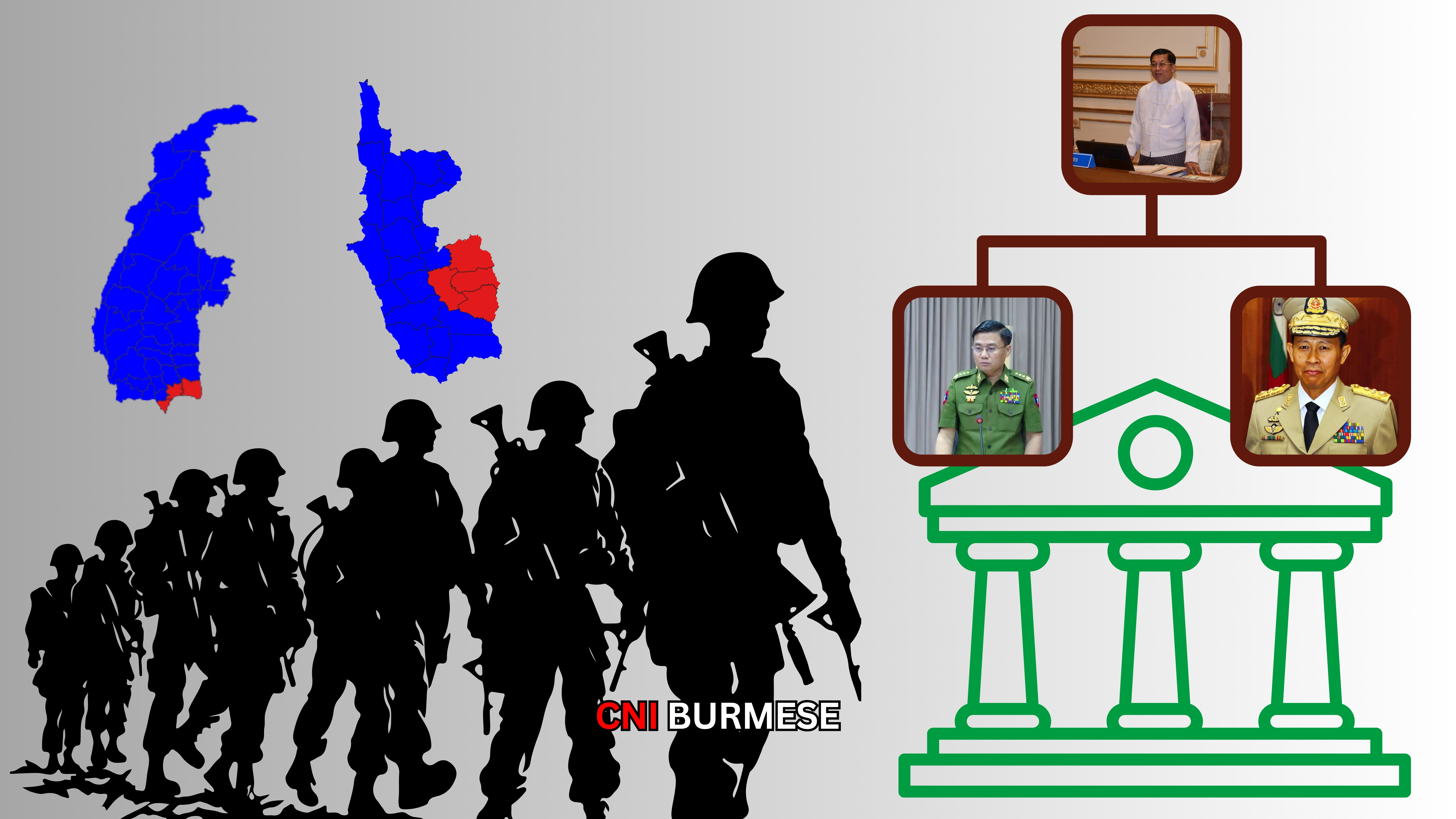
Armed group members and Military leaders seen
While the Myanmar military has regained some lost territories through Chinese mediation, a significant number of territories remain outside their control.
A political analyst told CNI News that if the current Commander-in-Chief, Senior General Min Aung Hlaing, becomes President, the military situation under the new government will depend on the vision of either the new Commander-in-Chief or Senior General Min Aung Hlaing himself.
"He is currently focusing on major cities like Naypyidaw, Mandalay, Sagaing, and Monywa, aiming to crush or push away the forces threatening these areas and their surroundings. This doesn't strictly depend on the incoming President. Since we began practicing the 2008 Constitution in 2010, the President has taken the administrative role while the Commander-in-Chief handles military duties. Therefore, it will depend on the vision of either the new Commander-in-Chief or the former one, U Min Aung Hlaing," the analyst said.
Currently, during the pre-parliamentary period, the Union Consultative Council Law has been enacted. Additionally, the Martial Law orders in 63 townships, which have been under a state of emergency since July 31, 2025, have been extended for another 90 days.
The 63 townships under Martial Law include areas controlled by ethnic armed organizations as well as those partially controlled by forces under the National Unity Government (NUG).
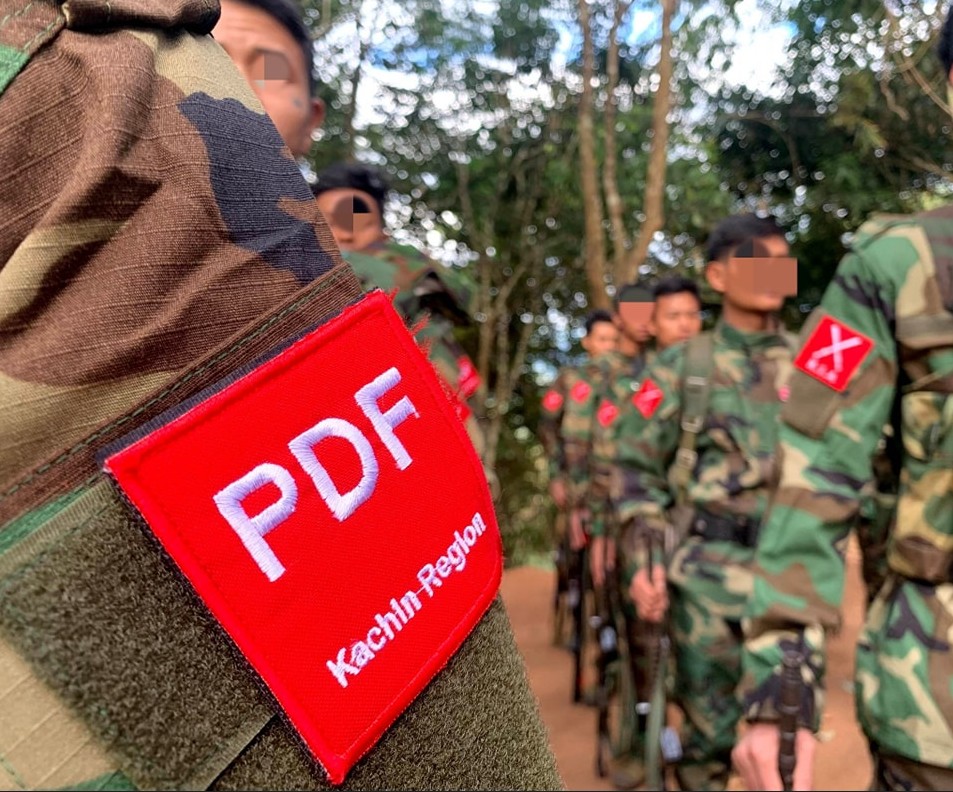
KIA-PDF joint forces seen
These townships include: Kachin State: Sumprabum, Shwegu, Injangyang, Sawlaw, Chipwi. Kayah (Karenni) State: Shadaw, Hpasaung, Mese.
Karen State: Kawkareik, Kyainseikgyi. Chin State: Kanpetlet, Thantlang, Paletwa, Tonzang, Mindat, Matupi, Falam.
Sagaing Region: Tigyaing, Kawlin, Pinlebu, Khin-U, Wetlet, Kani, Depayin, Pale, Indaw.
Magway Region: Pauk, Myaing, Saw, Tilin, Yesagyo. Mandalay Region: Mogok, Singu, Ngazun.
Rakhine State: Ramree, Pauktaw, Ponnagyun, Rathedaung, Gwa, Maungdaw, Buthidaung, Kyauktaw, Minbya, Myebon, Mrauk-U, Thandwe, Ann, Taungup.
Shan State: Namtu, Mabein, Kutkai, Namkham, Hsenwi, Kunlong, Namhsan, Mantong, Hopang, Laukkai, Konkyan, Momeik, Kyaukme, Hsipaw, and Mong La.