
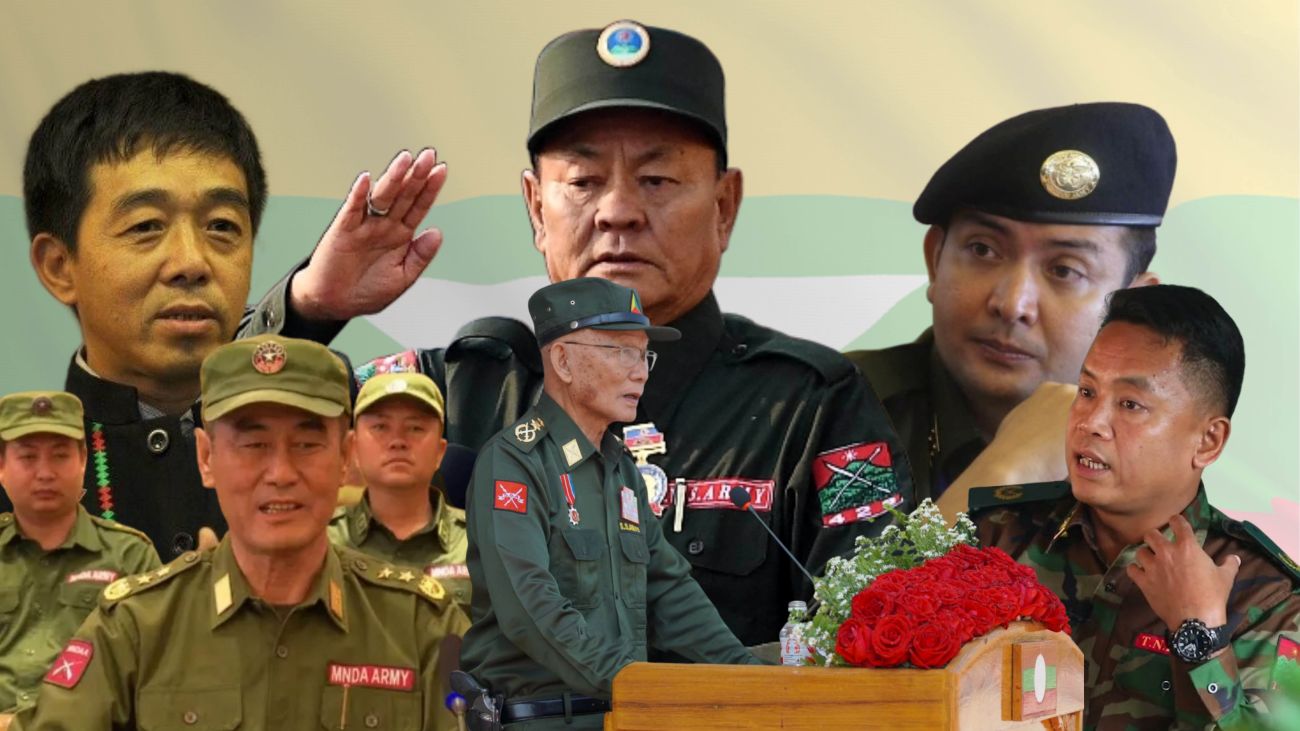
CNI News
11 February 2026
In the current Myanmar political landscape, where armed conflicts have yet to cease, new policies must be established to facilitate peace negotiations with Ethnic Armed Organizations (EAOs), Colonel Khun Okkar, Chairman of the Pa-O National Liberation Organization (PNLO-NCA/S)—a signatory to the Nationwide Ceasefire Agreement (NCA)—told CNI News.
He stated that China's efforts alone are not enough to negotiate peace with ethnic armed groups. He noted that in politics, nothing is "impossible," and everything is "possible," suggesting that if the opportunity to negotiate is granted, peace can be achieved.
Colonel Khun Okkar said, "It is possible if policies that both sides can accept are set. The principles laid down during President U Thein Sein’s era were good. We can hold state-level, union-level, and then nationwide ceasefire talks. By taking a little time with these meetings, separate agreements can be signed with each group. That would make things go smoothly. Of course, there are territorial limits; that depends on the negotiations. Nothing is impossible. In politics, everything is possible. However, negotiation is required, and there are limits. There are limits to how much the Arakan (Rakhine) want or how much the Kachin want. Every group has a desire to negotiate. When negotiating, you can mutually adjust what they want and what you can give. There has to be a 'give and take.' You won't get everything you ask for, but you won't get nothing either. It works both ways. Negotiations are necessary. If the chance to negotiate is given, peace can be achieved."
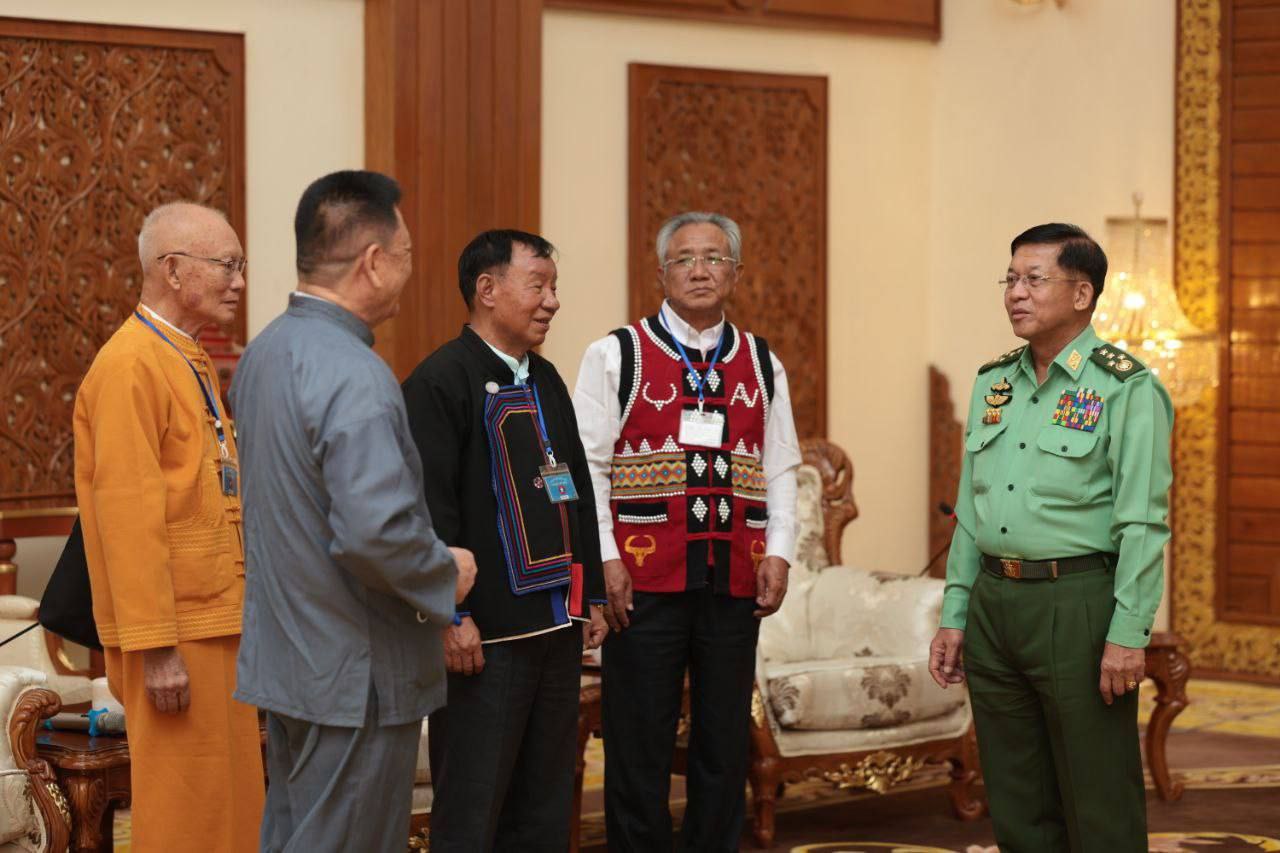
Senior General Min Aung Hlaing and leaders of the NDAA, SSPP, and UWSA.
Currently, the groups that have not yet signed the NCA include the UWSA, NDAA, MNDAA, TNLA, KIA, SSPP, AA, and KNPP.
A political analyst told CNI News that although some ethnic armed groups have declared their withdrawal from the NCA or stated the treaty is void and are engaging in armed struggle, the government appears to continue recognizing them.
The analyst suggested that if the Northern groups study the NCA thoroughly and choose to sign, there could be opportunities for them. However, he noted that if territories are strictly defined only according to the existing Constitution, these groups will not come to the negotiating table.
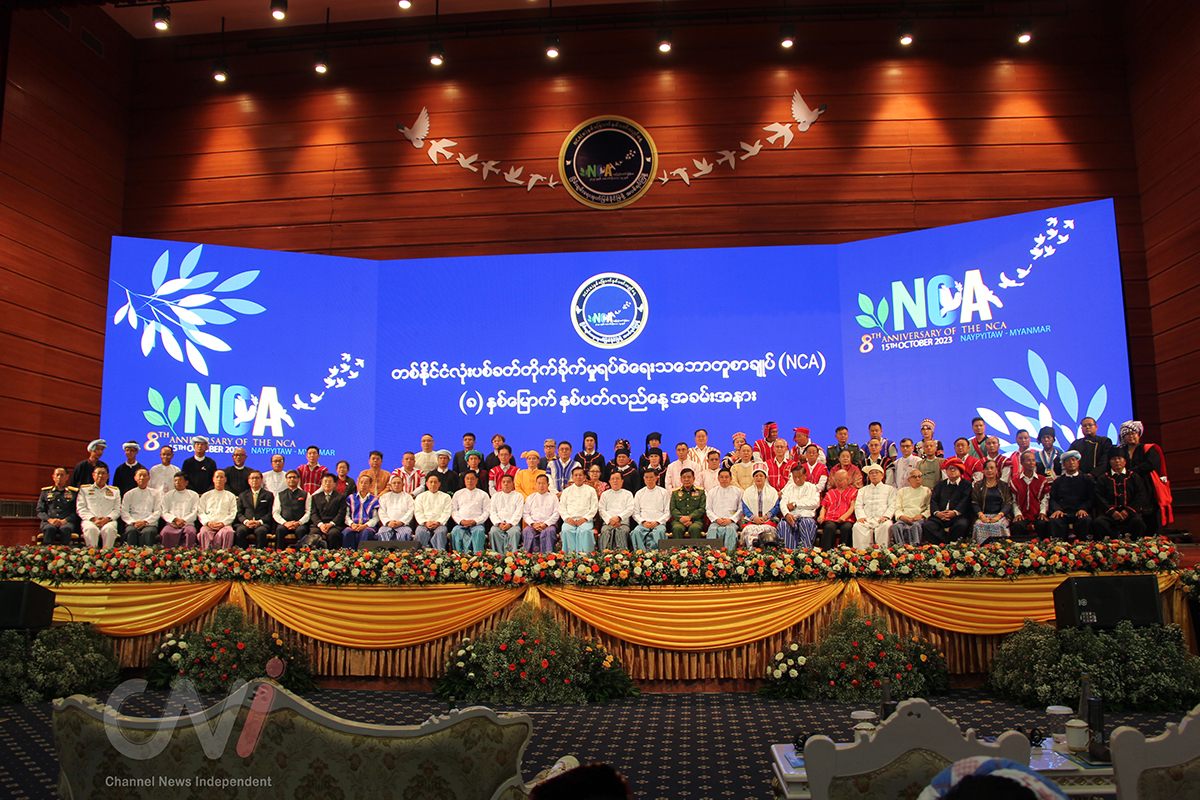
The anniversary ceremony of the NCA.
The political analyst said, "By signing the NCA, they wouldn't have to withdraw from the areas their troops currently control. They would stop the fighting in their current positions and sit at the peace talk table. What I mean is, they are currently in a winning position. According to the NCA, once fighting stops where the troops are stationed, peace is discussed. During those talks, they can discuss granting states or changing the designation of ethnic territories on the map. They need someone to encourage them—for example, if a country like China urges them to try and sign the NCA, and the government side keeps the door open, they might negotiate. If not—if the territory must strictly remain as defined in the original Constitution—the EAOs won't come. There will just be a lull in fighting, but no actual peace. It would be a situation where they fight when they want to and stop when they don't, resulting in a state where there is neither peace nor active combat."
The ethnic armed organizations in Myanmar that signed the Nationwide Ceasefire Agreement (NCA) include the RCSS, DKBA, KNU/KNLA-PC, ALP, PNLO, NMSP, CNF, ABSDF, LDU, and KNU.
However, following the political changes after February 1, 2021, the CNF, ABSDF, and KNU withdrew, claiming the NCA was void. Furthermore, groups like the PNLO, ALP, LDU, and NMSP have split into two factions.