
CNI News
February 9, 2026
Military and political analysts are weighing in on the potential impact of the Union Consultative Council Law, enacted on February 3, 2026, on Myanmar’s political landscape.
Analysts draw a distinction between the "State Counsellor" role during the NLD era and this new council:
Under the NLD era, the State Counsellor Law focused on an individual (Daw Aung San Suu Kyi) working alongside the President.
According to the current law approved by Acting President Senior General Min Aung Hlaing, this law creates a collective group to work with the President.
Political analyst U An Kaw La told CNI News that a consultative group could make government implementation more effective.
He noted that a single government is insufficient to navigate the current complexities of Myanmar, ASEAN dynamics, and regional power balancing.
He views the Council as a "State Think Tank" necessary for studying the rapid changes in global policies and strategies.
Having a dedicated counseling body allows the government to focus on implementation while the think tank handles strategic analysis.
Dr. Aye Maung, Chairman of the Arakan Front Party (AFP), suggests this could lead to lasting peace:
He believes the Council will allow for "overlapping" governance, where stability from one 5-year term is handed over to the next.
He argued that if this stability can be maintained through three consecutive 5-year terms, Myanmar could achieve genuine peace, democratic transition, and a federal union.
The law was enacted by the National Defense and Security Council (NDSC) using legislative powers under Section 427 of the Constitution. Key details of the Union Consultative Council Law include:
Structure: Contains 4 chapters and 11 sections.
Composition: The President appoints a council of at least 5 members, including a Chairman and a Secretary.
Authority: The President defines the duties and powers of the Council, placing it directly under presidential authority.
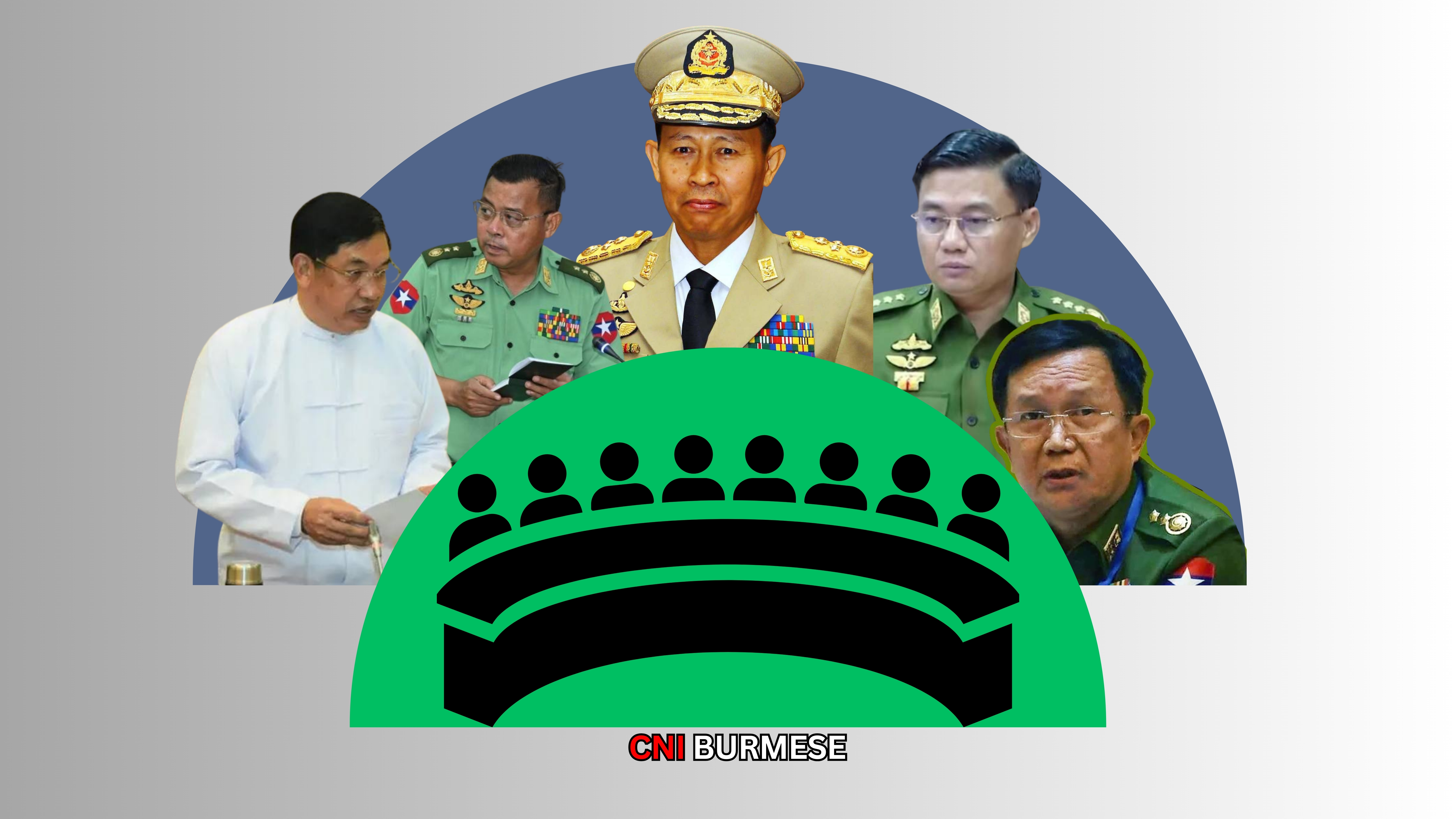
Observers speculate that if Senior General Min Aung Hlaing continues as President, the Council's leadership could look like this:
Chairman: Vice-Senior General Soe Win, Secretary: General Ye Win Oo, Members: Likely to be former military officials currently assigned to civilian roles.