
CNI News
30 January 2026
Political parties and observers are analyzing whether the Union Solidarity and Development Party (USDP), which won the election, might form a national unity government style administration in the post-election period.
Dr. Aye Maung, Chairman of the Arakan Front Party (AFP), told CNI News that a review of the USDP’s goals, policies, slogans, and their conduct during the election period suggests they may not form a government alone. Instead, they are likely to collaborate with individuals capable of shaping the nation’s future to form a national unity government.
"Looking back at the entire election period, their slogan was to build a 'Stronger Myanmar.' The founders and current leaders of the USDP have a vision to build a more robust state. One should analyze whether they intend to go it alone or not. The post-election government needs to align with the USDP’s slogan. Given the 'Stronger Myanmar' motto, it doesn’t seem like the USDP will form a government in isolation. They are moving towards a model of working together with qualified individuals, current leaders, and visionaries for the future state. Although the USDP could form a government on its own, they already have a vision for the future of the new state. This makes it more likely they will form such a government, reducing the likelihood of a single-party administration. Therefore, a government capable of leading national unity and national reconciliation is likely to emerge," he said.
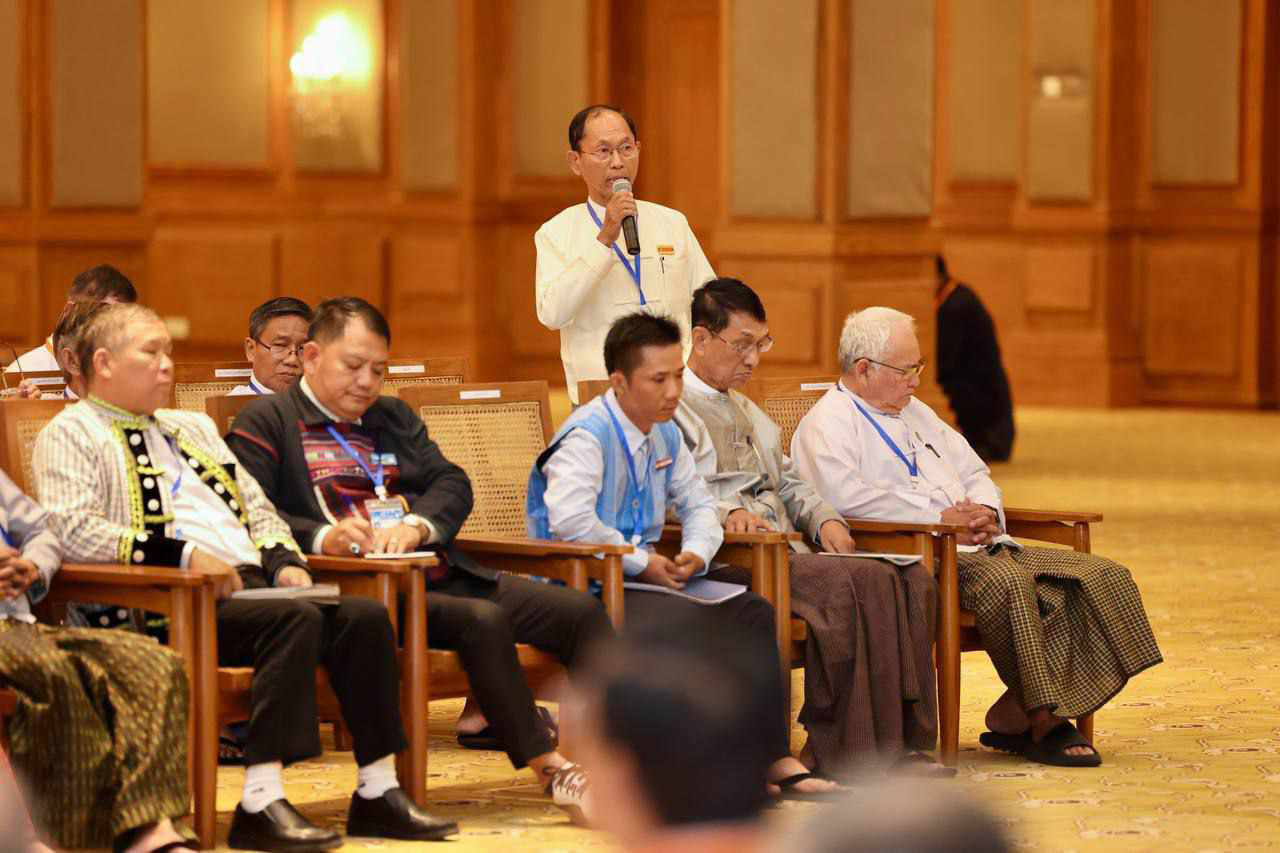
U Ko Ko Gyi and other political party members.
U Ko Ko Gyi, Chairman of the People’s Party (PP), stated on January 25, 2026, during the third phase of the election, that the incoming government needs to form a national unity government to resolve the current armed conflicts and political crises.
"I have been calling for the formation of a national unity government since before 2020—long before the current overseas NUG was even a concept. I said then that because this country is rife with conflict, we should avoid a 'winner-takes-all' approach and instead create a government structure capable of resolving those conflicts. This is different from a coalition. At the time, I faced much criticism from people who didn't want a coalition. A coalition is when a single party cannot form a government and has to join with smaller parties. A National Unity Government is one where, even if a party can govern alone, it includes ethnic leaders and other democratic forces that ought to be included. I said this over six years ago, and the need remains today. I'm not saying this based on who won more or fewer seats. In times of such high conflict, the magnanimity, intellect, and heart of the leaders are vital. If we instead provoke emotions and stay at extreme ends, our country will never recover. That’s why I want to emphasize again the need for a National Unity Government format," he said.
Political analyst U Htet Aung Kyaw told CNI News that since the winning USDP can choose how to shape the government, it ultimately depends on them. He added that the emergence of an elected government meets at least the minimum expectations.
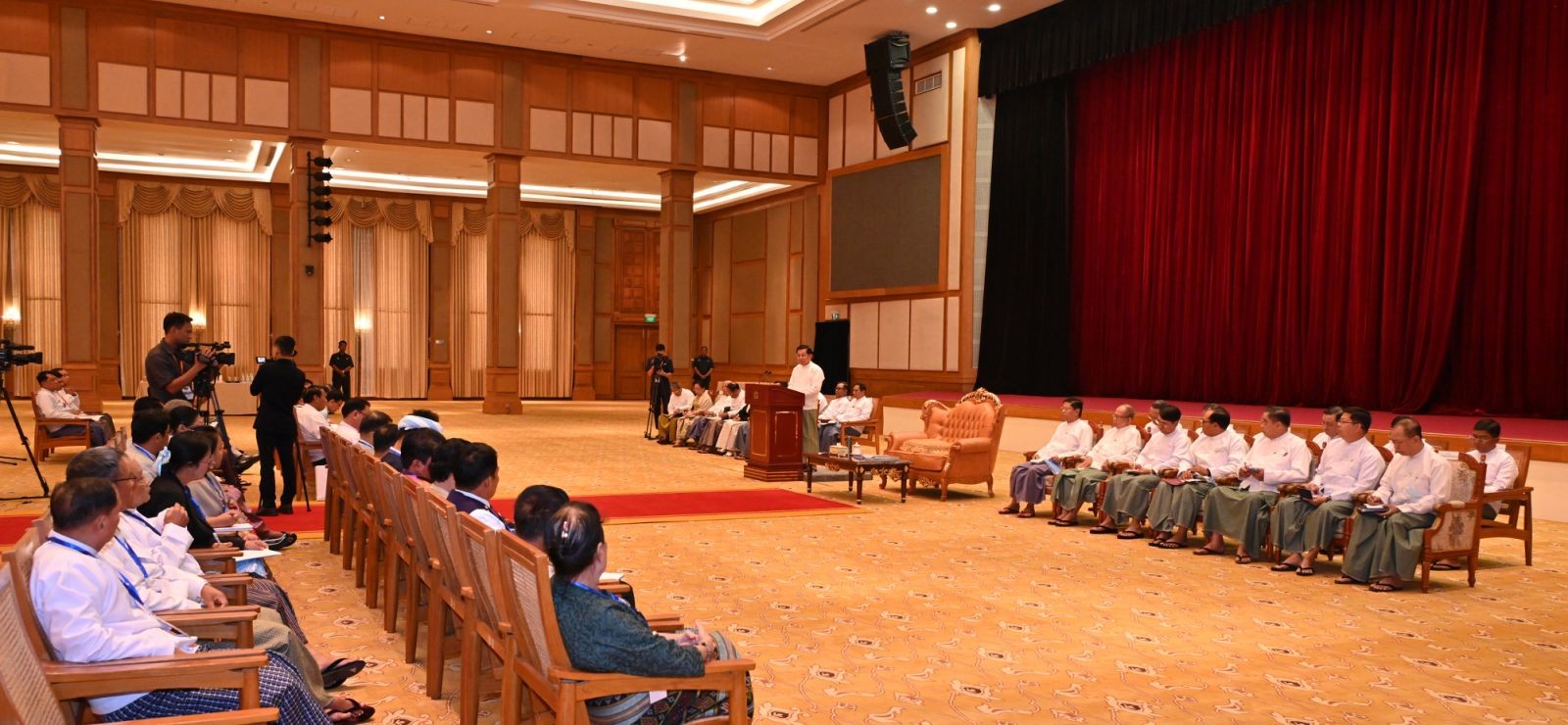
Senior General Min Aung Hlaing meeting with political parties.
"It will likely be a government led primarily by the USDP and the military. The National Unity Government U Ko Ko Gyi mentioned will happen if they want it to, and won't if they don't. It depends on how the winning party thinks. There isn't much more to say; they have the freedom to create it as they see fit. Whatever happens, our minimum expectation—the return of Parliament and the emergence of an elected government—has been met. We will all have to work together to see how much 'check and balance' can be achieved within the current framework," he said.
Myanmar’s multi-party general election was held in three phases starting December 28, 2025, and was successfully concluded on January 25, 2026.
A total of 57 political parties (6 Union-level and 51 Regional/State parties) and 4,863 independent candidates participated. Senior General Min Aung Hlaing has stated that Parliament will convene in March, the new government will form in April, and state power will be transferred to the winning party.
To form a government in Myanmar, a party needs 50% of the 588 seats in the Union Parliament (294 seats). Before the final results of the January 25 phase were known, the USDP had already secured 194 seats from the first two phases. When combined with the 166 seats (25%) reserved for military appointees, the USDP-aligned bloc currently holds 360 seats, surpassing the 294 seats required to form a government.