

CNI News
23 January 2026
Myanmar’s Commander-in-Chief of the Defense Services, Senior General Min Aung Hlaing, is the subject of analysis among military and political observers regarding how he could assume the presidency after the election while also maintaining control over the Myanmar Armed Forces (Tatmadaw).
Under the 2008 Constitution, if Senior General Min Aung Hlaing were to become President and govern the country after the election, he would be required to resign from his role within the Tatmadaw.
Article 63 of the 2008 Constitution stipulates that if the President or Vice Presidents are Members of Parliament, they must resign as MPs; and if they are civil servants, they must resign or retire from civil service from the day they are elected as President or Vice President.
Therefore, similar to how Daw Aung San Suu Kyi assumed the position of State Counsellor during her tenure by using Article 217, Senior General Min Aung Hlaing could also adopt a certain title or role to exercise control over both the government and the military, according to political analyst Sai Min Hlaing, who spoke to CNI News.
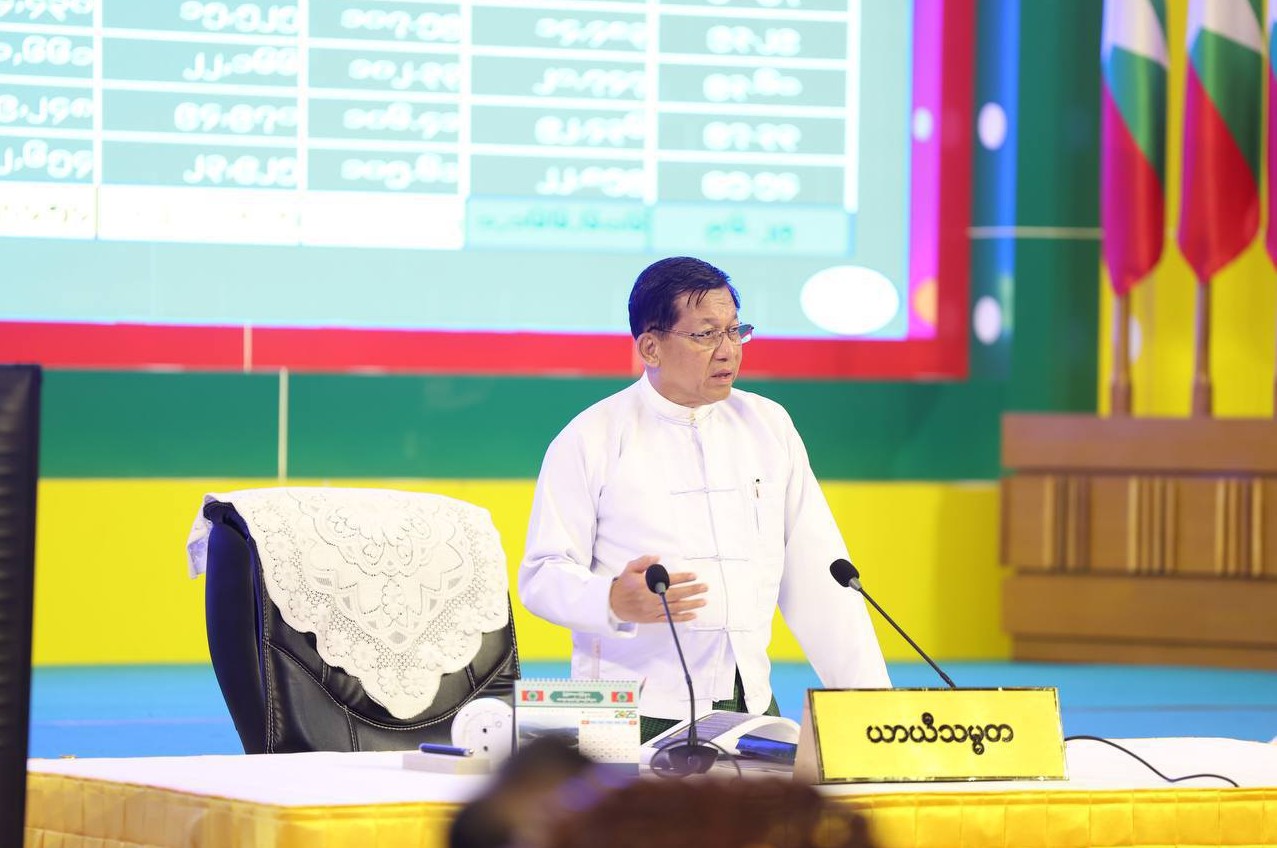
Acting President Senior General Min Aung Hlaing seen
He said:
“If Senior General Min Aung Hlaing truly becomes President, then first, he will be President, and second, he will effectively act like a supreme military commander. He would be both the President and the supreme commander. If he is the supreme commander, that is the highest position in the military. Officially, there is the post of Commander-in-Chief of Defense Services. But our country does not really operate under a clear ‘supreme commander’ system, so that title is not very prominent. However, if he becomes President, he would still effectively be the top leader of the military. The newly appointed Commander-in-Chief would remain under him, because the President would be the supreme commander of the Tatmadaw.”
Article 217 of the 2008 Constitution states that, without contravening constitutional provisions, executive power of the Union is vested in the President.
This wording does not mean that the Union Parliament cannot assign duties and powers to any authority or individual. Nor does it mean that duties and powers assigned under existing laws to relevant authorities or individuals are transferred to the President.
However, if Senior General Min Aung Hlaing were to use this article as a political maneuver, he would have to remain behind the scenes. In that case, he could oversee matters through a council composed of retired officials, according to Dr. Aye Maung, Chairman of the Arakan Front Party (AFP), who spoke to CNI News.
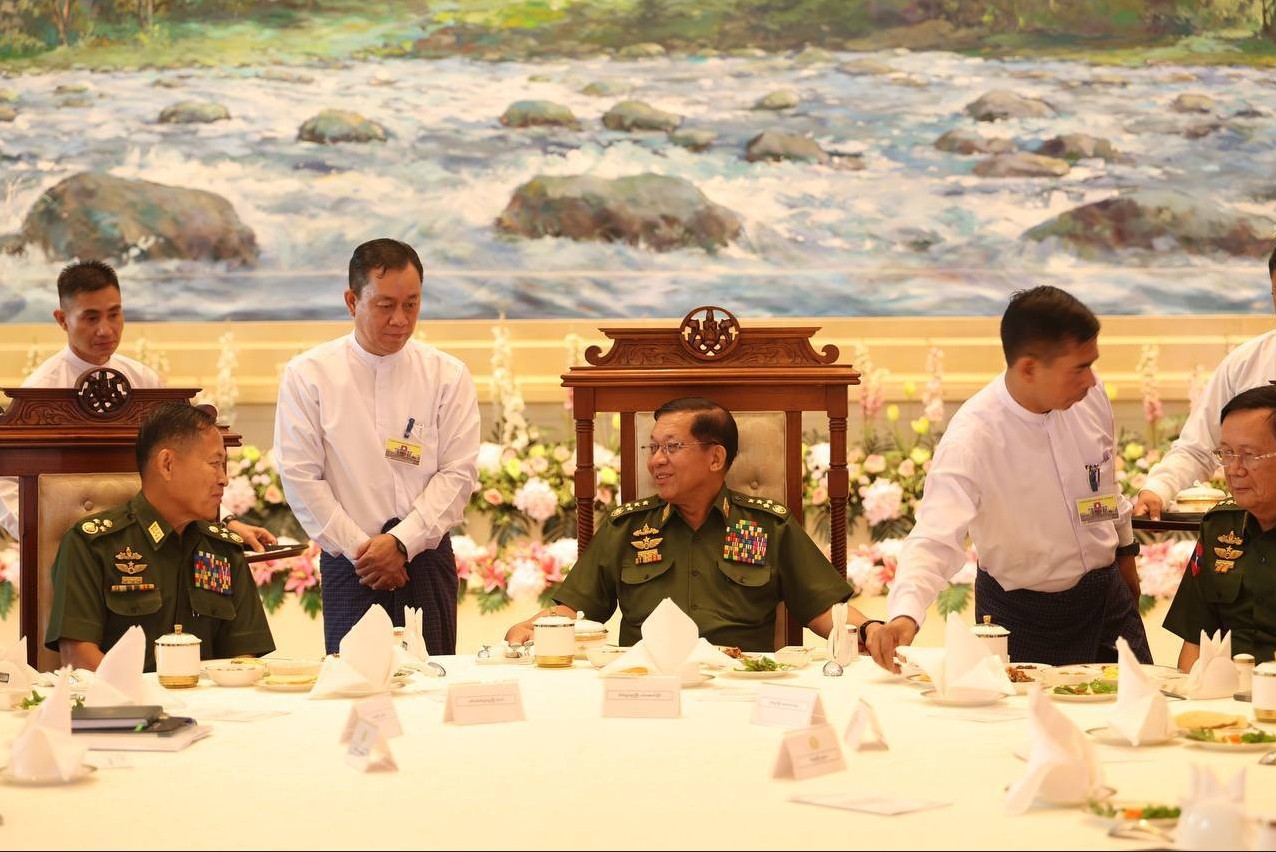
Senior leaders of the Myanmar Tatmadaw seen
Dr. Aye Maung said:
“If Senior General Min Aung Hlaing leads the transitional period, and if he tries to operate under Article 217 in relation to the Tatmadaw, then he would have to stay in the background. Alternatively, he could rely on a behind-the-scenes body—perhaps the current National Defense and Security Council. Would that council be led by Soe Win, or would Min Aung Hlaing himself, as a retired officer and President, be involved? Regarding the Defense Services Act, a council composed of retired officers could be formed to support and oversee the Commander-in-Chief. Such a council could be designed by amending the Defense Services Act to create a position with full authority, though without salary. As a retired Commander-in-Chief, even as a pensioner, it cannot be ruled out that he could still supervise and guide the Tatmadaw toward becoming a more systematic and modern military. However, using Article 217 for this purpose does not seem likely.”
In addition, a military observer told CNI News that the Tatmadaw can form defense councils as needed, and by consolidating such a council, it could control both the presidency and the military.
The observer said:
“The Constitution grants the Tatmadaw autonomy to manage its own affairs. This gives the military considerable authority. A defense council also holds significant power regarding military matters. How extensive those powers would be is unclear. What is certain is that if he becomes President, he must leave the military. The roles of President and Commander-in-Chief cannot be held simultaneously. He also would not be able to serve directly on the defense council in that capacity. However, if such a council is formed independently by the military—since it is not a constitutional body—the Tatmadaw can establish it whenever necessary. In that sense, he could still retain influence. If he wants to form one, he can. So far, we have not heard that such a council has been formed.”
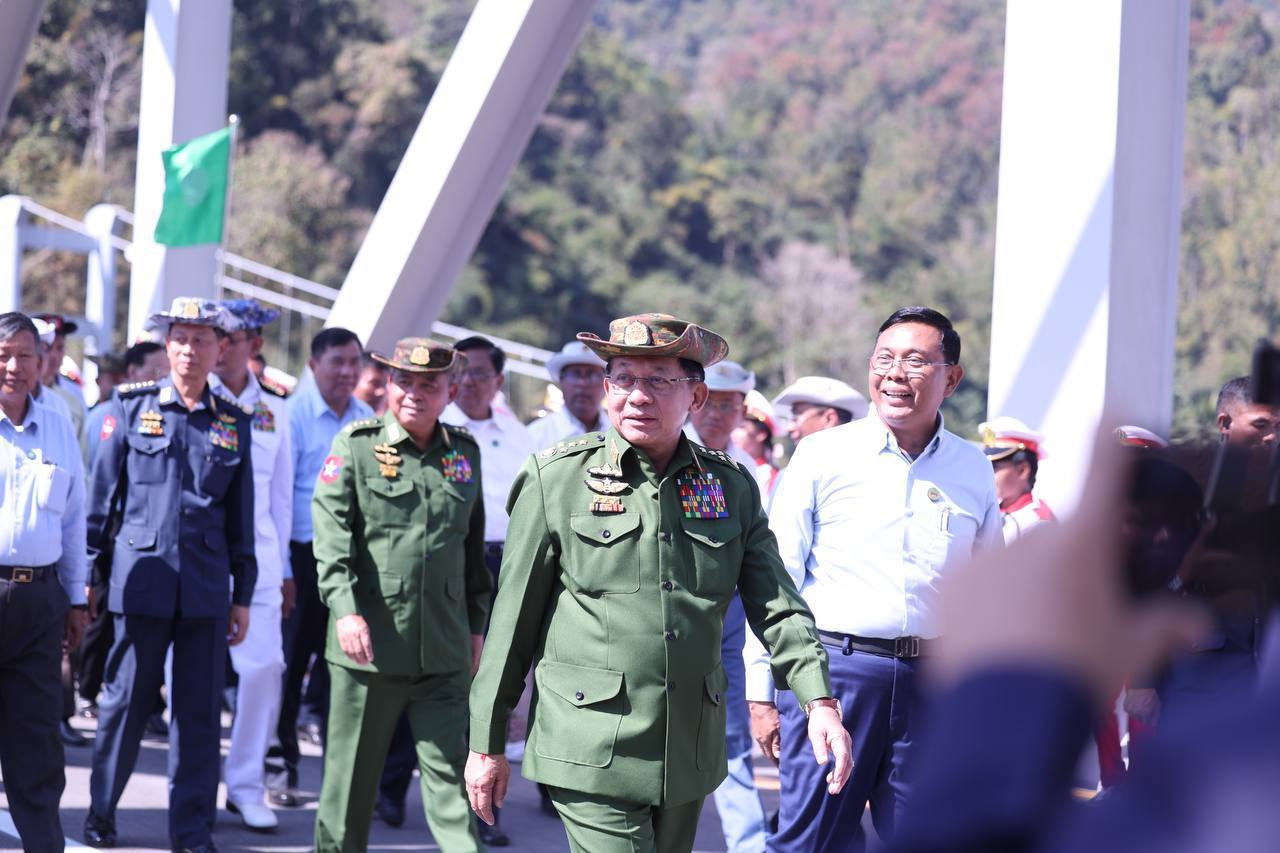
Senior leaders of the Myanmar Tatmadaw seen
At present, both international circles and domestic military and political analysts believe that Senior General Min Aung Hlaing could become President after the election.
However, if he assumes the presidency, he would be required to retire from or resign his position in the Tatmadaw. As a result, analysts believe he may seek a legal pathway that would allow him to control both the presidency and the military.
If such steps are taken, certain provisions of the Constitution would first need to be amended. Consequently, observers are closely watching to see what form these actions may take.