
CNI News
14 January 2026
Colonel Khun Okkar, Chairman of the Pa-O National Liberation Organization (PNLO-NCA/S), a signatory of the Nationwide Ceasefire Agreement, told CNI News that Myanmar can defend itself at the International Court of Justice (ICJ) by arguing that its actions were a response to ARSA terrorism and did not constitute genocide.
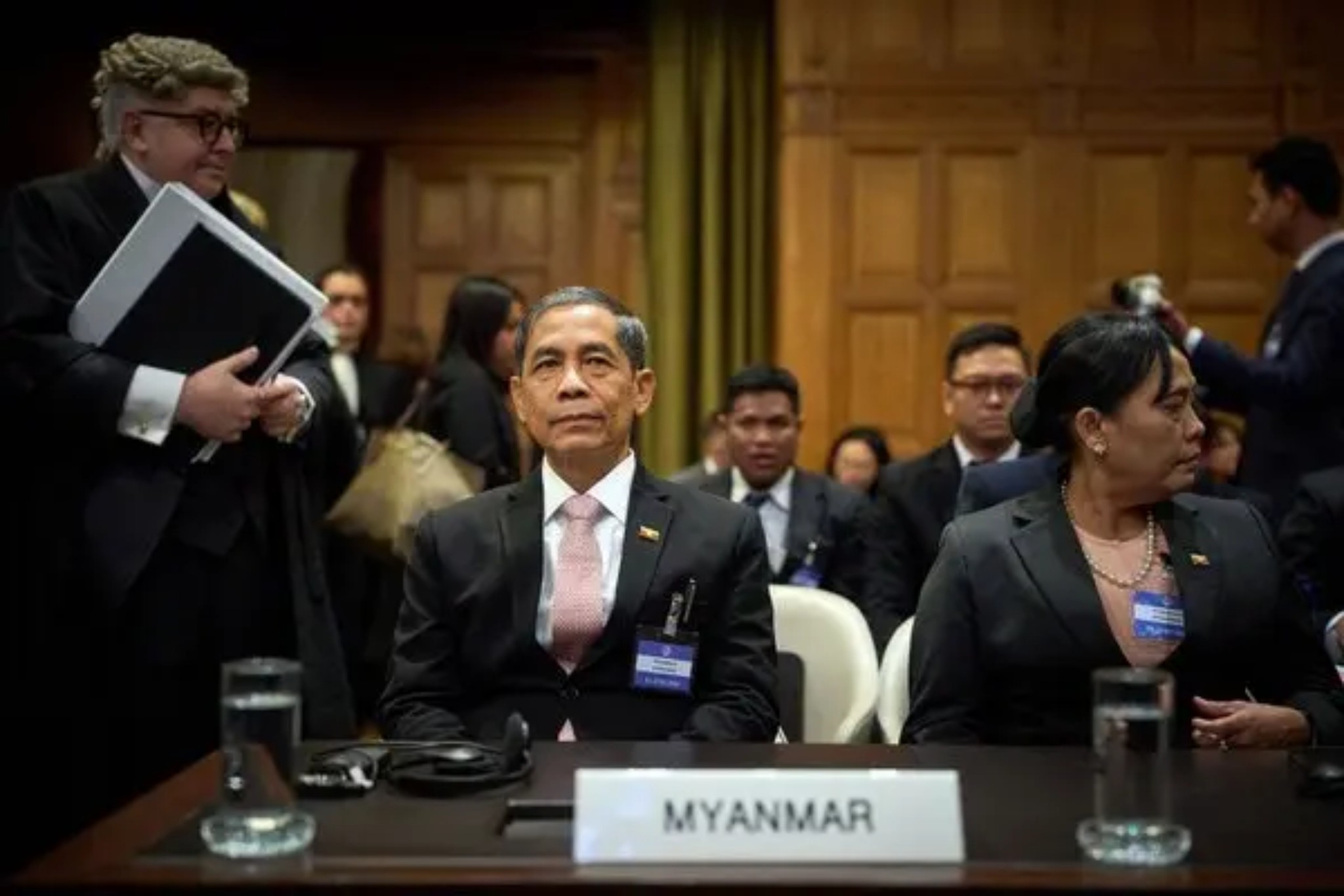
A Myanmar delegation led by Minister for the Ministry (2) of the President's Office, U Ko Ko Hlaing, will present the defense at the ICJ hearings in The Hague, Netherlands, regarding the Rohingya (Bengali) issue.
The delegation, which includes Union Attorney General and Minister for the Ministry of Legal Affairs Dr. Thida Oo, departed for the Netherlands on January 9, 2026.
The ICJ hearings are scheduled from January 12 to January 29. Myanmar is slated to present its oral arguments twice: first from January 16 to 20, and again from January 28 to 29.
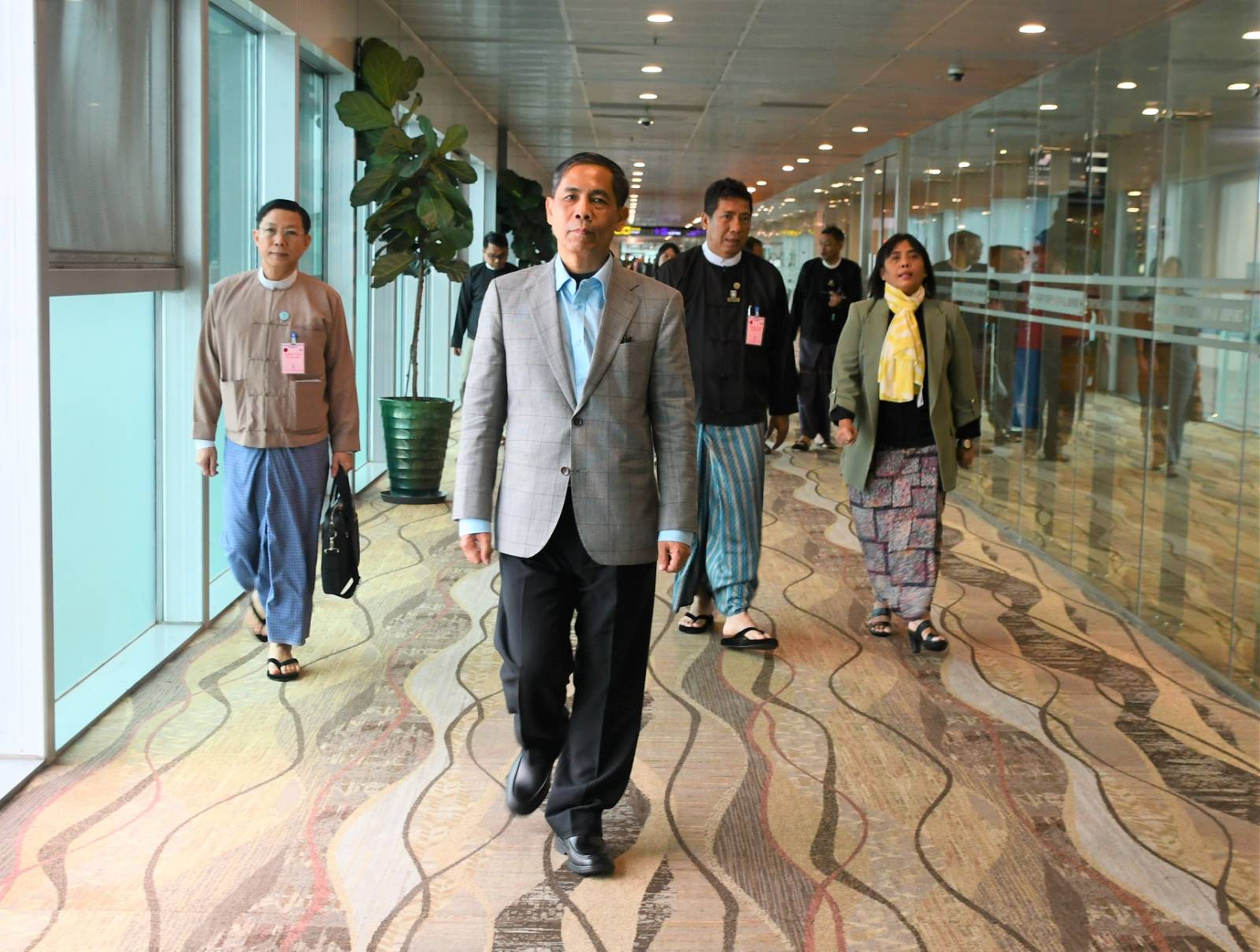
U Ko Ko Hlaing and Dr. Thida Oo seen at the airport.
Colonel Khun Okkar suggested that the Myanmar representatives could approach their defense from two primary legal angles, emphasizing the lack of genocidal intent.
"From what I understand, there are two ways to argue from a legal perspective," he said. "First, by highlighting these terrorist organizations. When groups like ARSA attacked police stations at that time, human rights violations might have occurred during the crackdown on such terrorist groups. However, they can defend themselves by stating there was no 'Genocide Intention.'"
Colonel Khun Okkar further explained that the Myanmar representatives might challenge whether the Gambia can provide sufficient and solid evidence for its allegations.
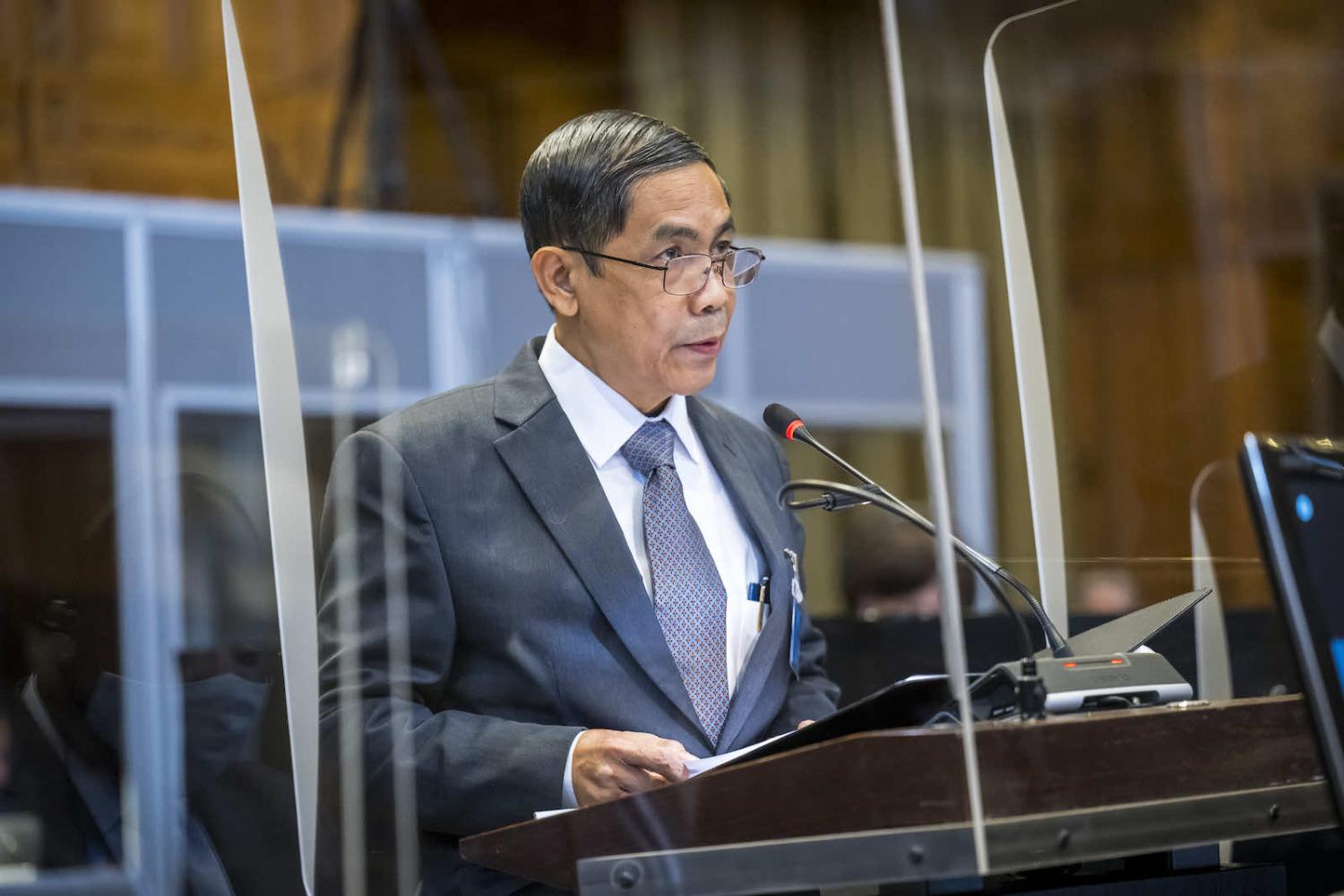
U Ko Ko Hlaing presenting oral arguments at the ICJ.
"Secondly, the accuser must provide sufficient evidence. Can they provide enough solid proof? You cannot prosecute a case without adequate evidence. Therefore, the next question is whether the Gambia can prove a 'Material Breach.' The second point is that there was no genocidal intent; it happened during counter-terrorism operations. While there may be suspicions of genocide because of that, it does not mean genocide actually occurred. In law, if there is a 'benefit of the doubt' regarding whether genocide happened, that benefit goes to the defendant. If our country receives that benefit of the doubt, it would mean the actions do not amount to genocide. I believe they will approach the case with these two questions: whether the accusing side can present full evidence."
The ICJ case stems from allegations of genocide following coordinated attacks by the ARSA terrorist group on 30 border guard outposts in Rakhine State on August 25, 2017, during the National League for Democracy (NLD) government's tenure.
The Gambia filed the lawsuit against Myanmar at the ICJ based on these allegations, leading to Myanmar's ongoing legal defense.
The team led by Minister U Ko Ko Hlaing previously represented Myanmar at the ICJ in February 2022.