
CNI News
8 January 2026
In Myanmar’s 2025 General Election (Phase 1), political parties and political observers have raised concerns over whether the public truly understands the voting system.
The Union Election Commission (UEC) told CNI News that pilot voting using MEVM machines was conducted in Nay Pyi Taw with central organizations, ministries, universities, civil society organizations, and in nine regions and states. Political parties also carried out trial voting exercises.
However, political observers have pointed out that public interest in voting remains low and that many voters are confused due to changes in the voting system.
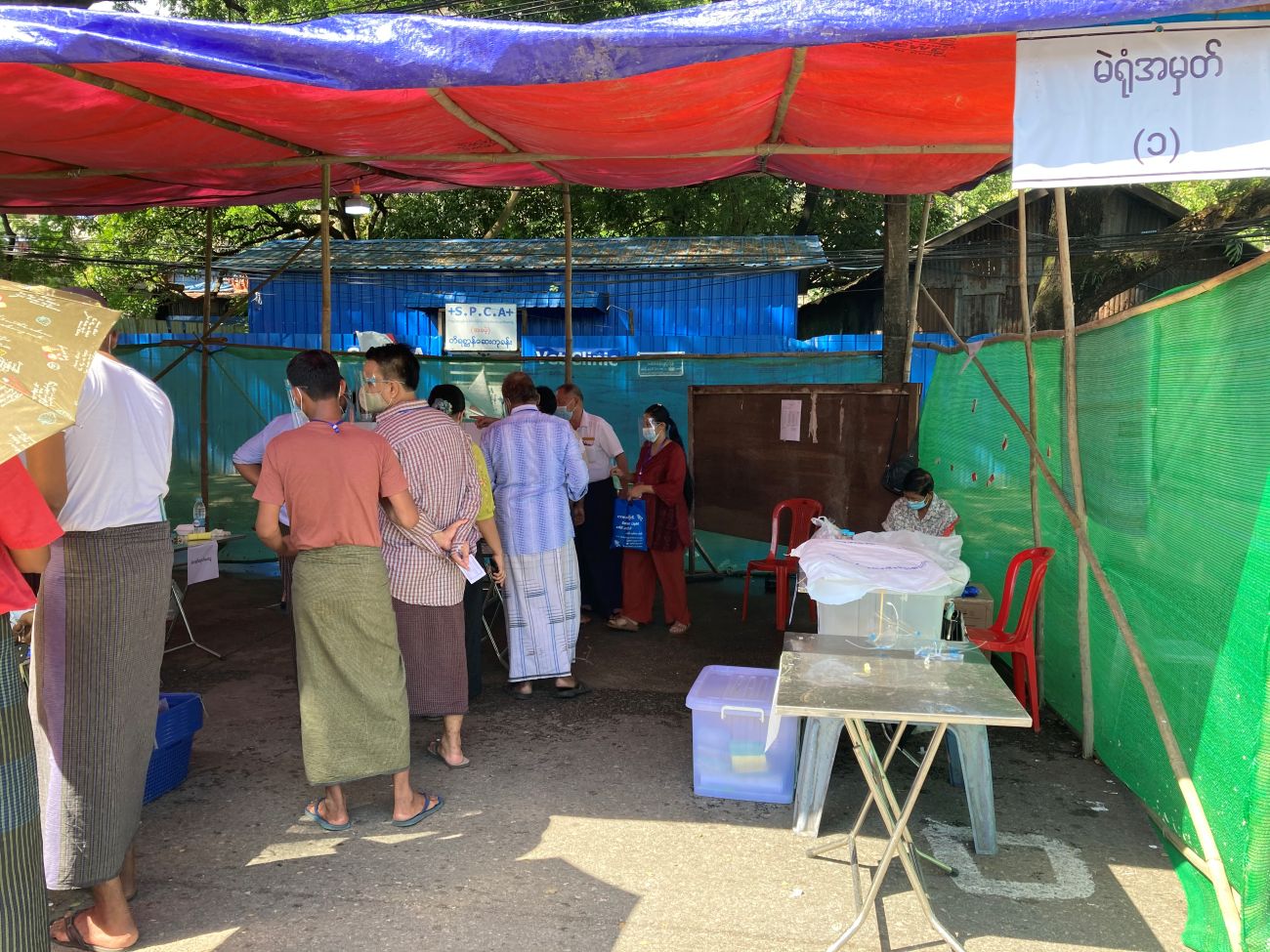
During Phase 1 of the election, voters lacked understanding of the voting procedure and pressed the machine buttons randomly at polling stations, according to U Saw Han Aye, Vice Chairman of the People’s Pioneer Party (PPP), who spoke to CNI News.
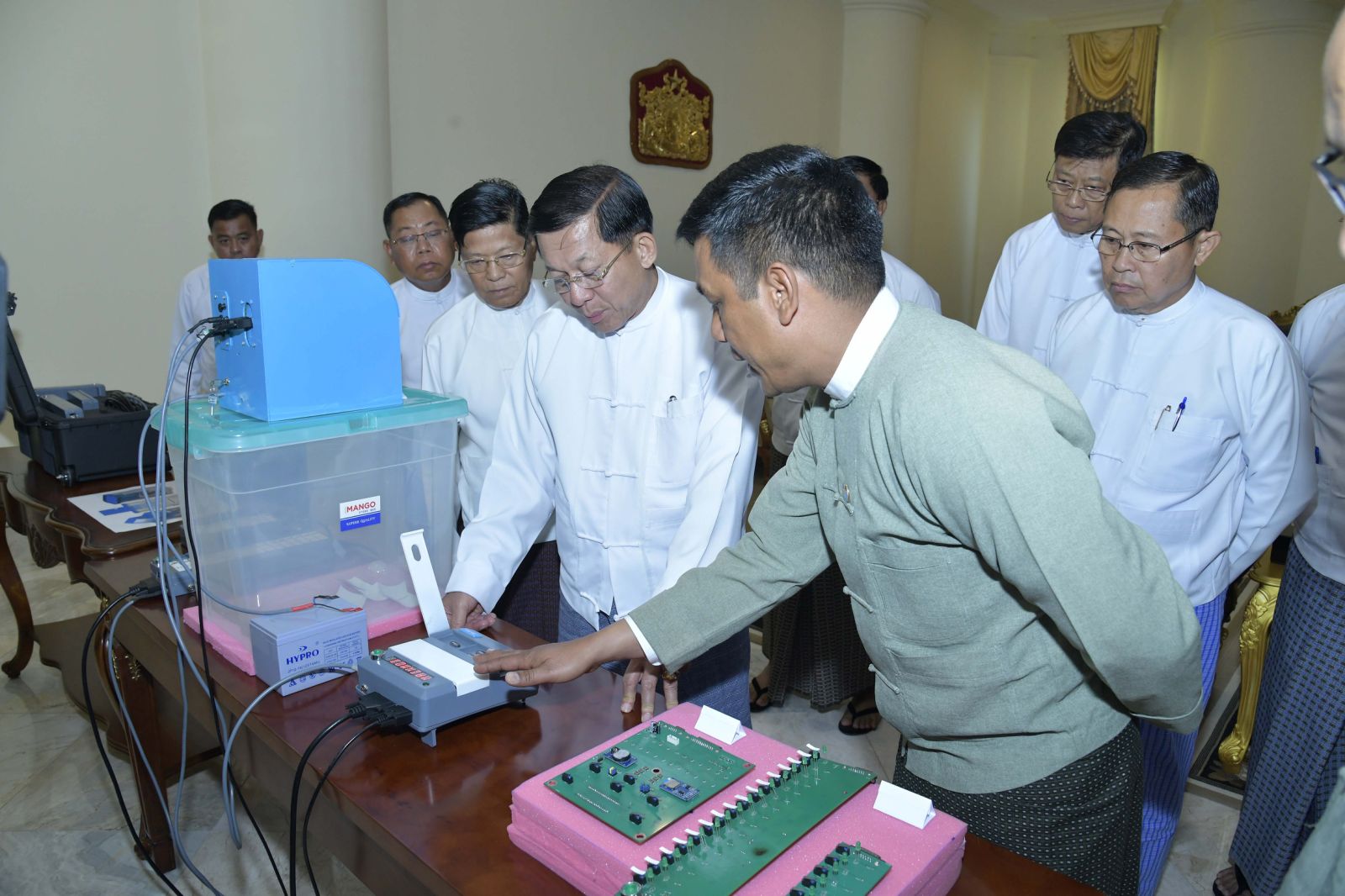
Explaining how to vote using the MEVM system
He said: “We reviewed the weaknesses that occurred during Phase 1 and submitted the best possible recommendations so that these shortcomings would not reoccur in Phase 2 and Phase 3, ensuring transparency, accuracy, and fairness. Some of these recommendations have reportedly been amended and implemented.
During Phase 1, advance ballot boxes were tied with plain white cable ties without yellow security seals bearing serial numbers. Now, yellow numbered security seals are being used. In the first phase, the use of ordinary white ties resulted in many weaknesses.
There were also problems related to electronic voting, including unauthorized individuals entering polling stations and giving instructions. The main issue was that polling staff simply told voters, ‘Press the blue button,’ after turning on the machine.
What they should have said was, ‘Look for the logo of the party you support and then press the blue button next to it.’ But this was not properly explained. Since all the buttons were blue, some voters pressed them randomly.
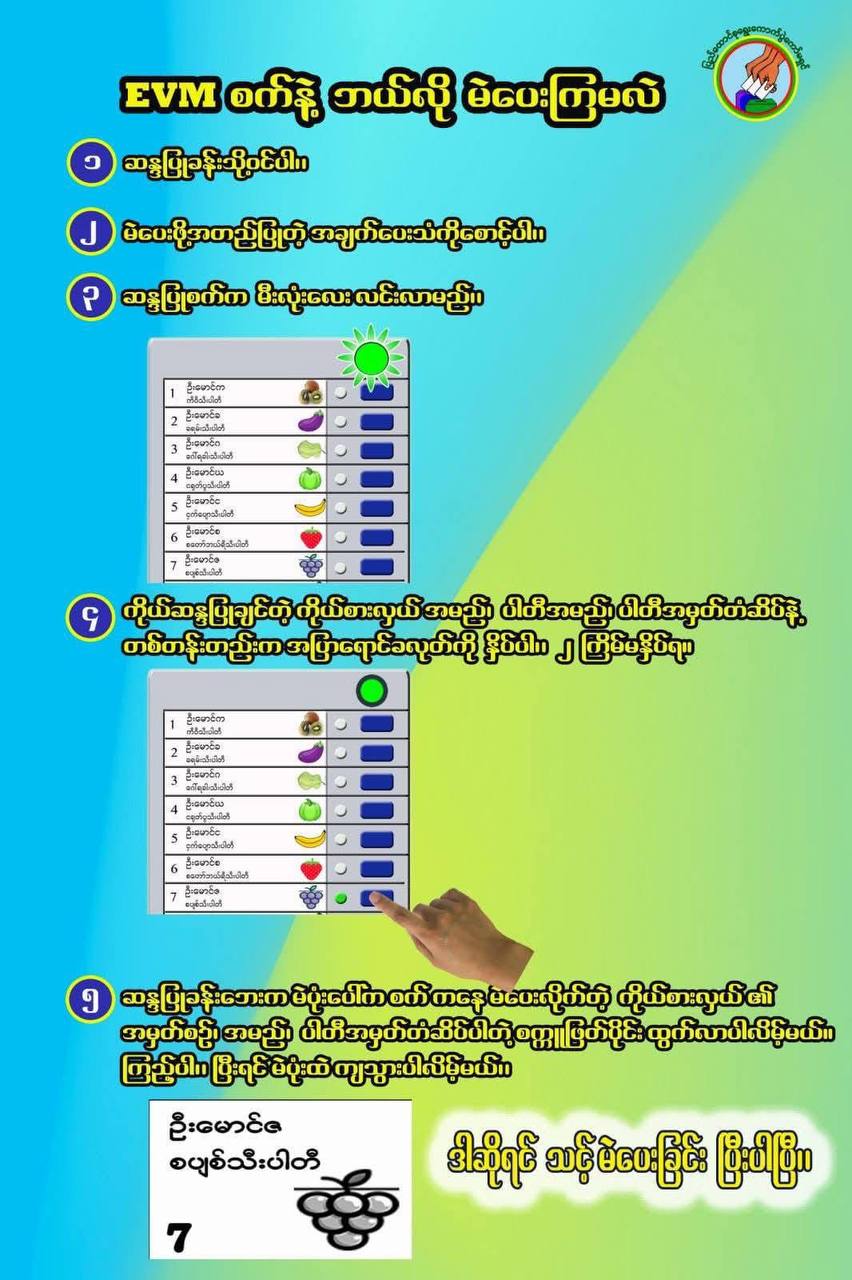
Demonstration of the MEVM voting process
Nine out of ten voters did not know that after pressing the button, a ballot paper would drop into the ballot box. Polling staff themselves also failed to explain this.”
Independent candidate U Kyaw Htet, who plans to contest the election, told CNI News that public awareness regarding the voting system was weak and that voter education efforts were insufficient.
He said: “If you want to mobilize public awareness on a wide scale, you need to make use of the media. But this was done very late. Public understanding of the voting system is weak.
Although election sub-commissions are trying their best, much time has been spent training machine operators and polling staff on voter lists. As a result, there was little opportunity to widely demonstrate how to vote.
In this election, many people simply did not know how the system worked. Even many urban voters could end up engaging in ‘blind voting.’ Therefore, public education during this election has been inadequate.”
The UEC told CNI News that training on the operation of voting machines is being conducted across regions and states. Demonstration sessions are being provided down to the ward and village-tract levels so that voters can vote confidently using the machines. Public awareness programs are also being broadcast through the media.
According to the UEC, more than 24 million people nationwide were eligible to vote in Myanmar’s 2025 General Election. In Phase 1, held on December 28, 2025, over 11.6 million voters were eligible, and more than 6.09 million cast their votes.
Phase 2 of the election will be held on January 11, 2026, and Phase 3 will follow on January 25, 2026.