
CNI News
7 January 2026
The government and parliament(Hluttw) that will emerge after the election may become a new administration and legislature dominated by a single political party, according to political analyst U Htet Aung Kyaw, who spoke to CNI News Agency.
In Myanmar, Election Phase (1) was first held on December 28, 2025. Election Phase (2) is scheduled for January 11, 2026, and Election Phase (3) for January 25, 2026.
After the completion of Election Phase (1) and the announcement of results, it is understood that the Union Solidarity and Development Party (USDP) won about 80 percent of the seats in 102 townships.
Political analyst U Htet Aung Kyaw told CNI News that he had hoped the post-election parliament would not be dominated by a single party, but that other parties would also be represented in a proportionate and appropriate manner. However, he said that this expectation was not met in the current Election Phase (1).
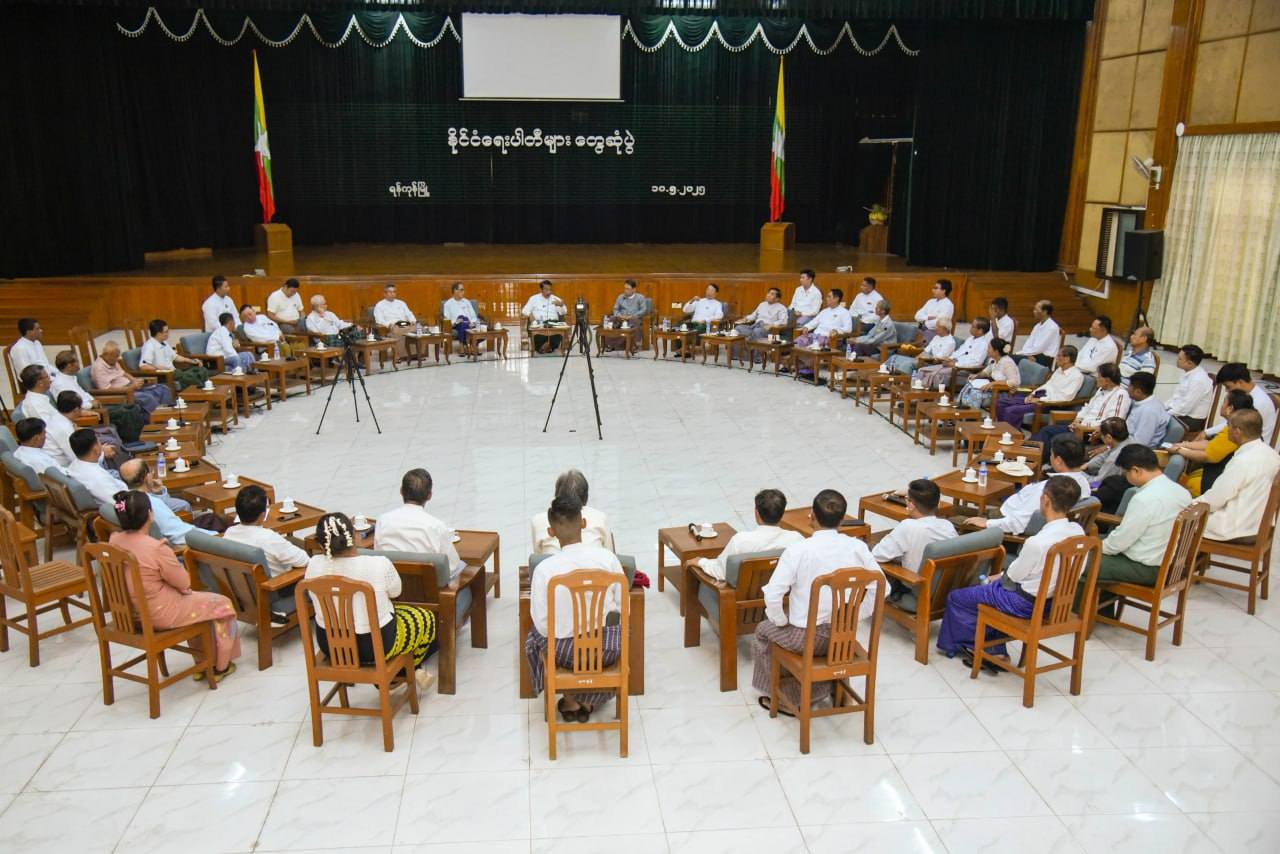
Political parties meeting
He said: “We want the election to take place as quickly as possible, so we welcome and are pleased that the election process itself has proceeded successfully. However, when it comes to the results of this election, what we want is a situation in parliament where there is strong capacity for checks and balances. That is why we hoped not for domination by a single party, but for a political landscape in which parties are represented proportionally and can restrain and balance one another. But that expectation has not been fulfilled. If things continue in line with the current dynamics seen in the first phase of the election, then this is certain: the parliament will become one dominated by a single party, and the government will be formed and led by that same party.”
U Thein Tun Oo, Director of the Thayninga Institute for Strategy Studies, told CNI News that it is difficult to draw conclusions about the likelihood of a single-party-dominated political landscape based on the results of only one phase of the election. He said that regardless of which party is strong, what matters most is how much it can actually work for the country.
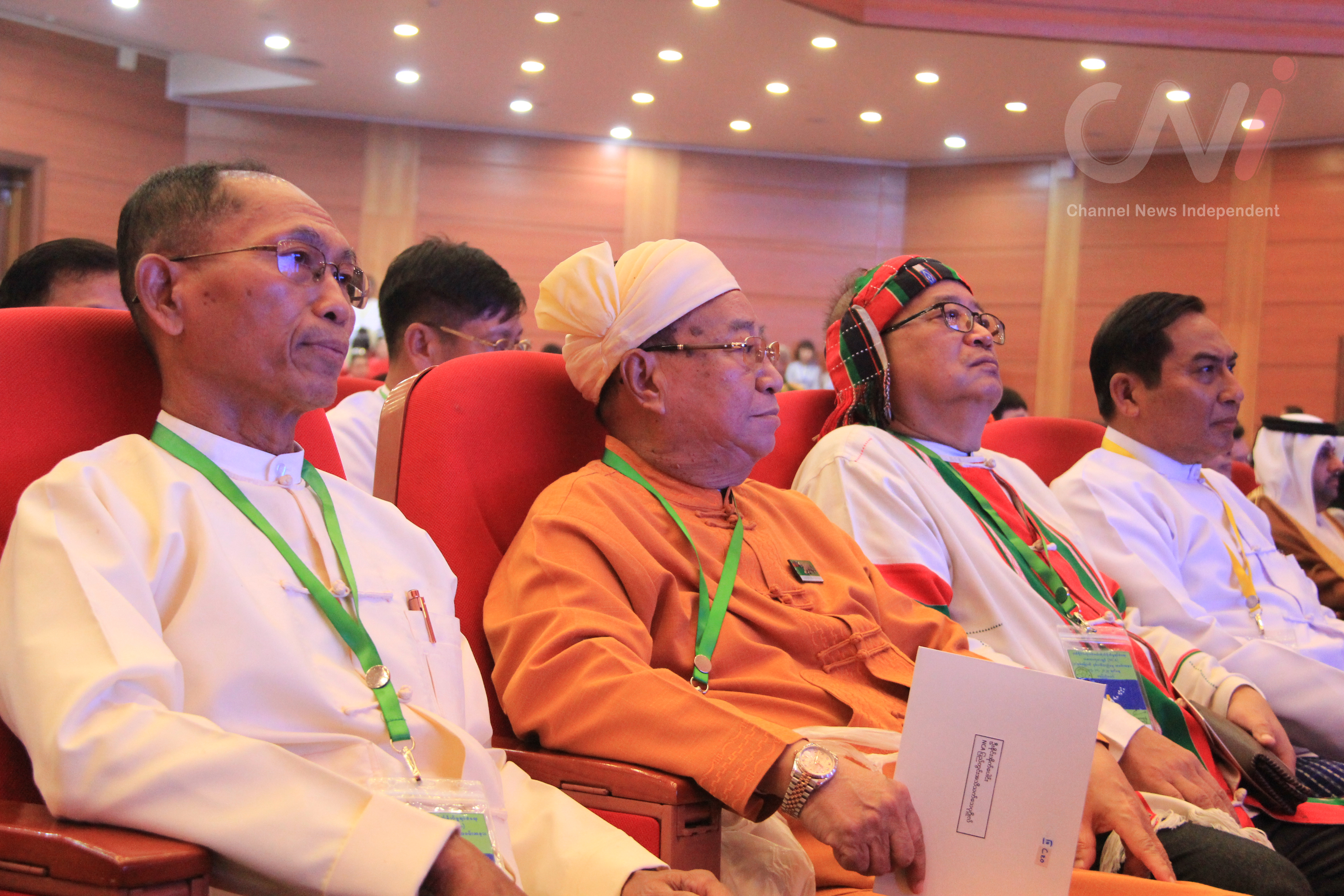
Some political party leaders seen
He said: “In the 2010 election, the USDP also won a majority in a similar way, so some people make assumptions by looking at those past patterns. However, we need to consider who will actually enter parliament—whether they are familiar faces or new ones—and, more importantly, how effectively they can work on national issues. When it comes to making assessments, it may seem reasonable to speculate based on past experiences, but we cannot draw firm conclusions based solely on the fact that one party has a majority. In our view, regardless of which party is dominant, the key questions are what kinds of policies it can formulate for the country’s future, what changes it can implement, and how much it can actually deliver. Those are the most important factors.”
Political observers also noted that public interest in the election remains weak because many people believe that no real change will occur, as the new government is likely to be led by the military and the USDP when it is formed.
Currently, it is known that in Election Phase (1), held on December 28, 2025, the Union Solidarity and Development Party (USDP) won approximately 80 percent of the seats nationwide and secured victories across all of Yangon Region and the Nay Pyi Taw Council area.
Following that, the National Unity Party (Ta Sa Nya) ranked second, while the Pa-O National Organization Party, the Naga National Party, the Mon Unity Party, the Arakan Front Party, and the Shanni (Tai Leng) Solidarity Party ranked third.