
CNI News
30 December 2025
In Myanmar, Section 261 of the 2008 Constitution grants the President the authority to directly appoint Chief Ministers of Regions and States. Political parties are pointing out how this situation should be relaxed in order to build a democratic and federal Union.
U Naing Than Shwe, spokesperson of the Mon Unity Party (MUP), told the CNI news agency that if the President appoints the Chief Ministers and the regional/state assembly only confirms them, that situation amounts to centralization of power.
He said “We’ve talked about amending the law regarding the appointment of Chief Ministers. But amendments can only happen once the matter reaches Hluttaw. In practice, amendments can only be made through the parliamentary process — submitting motions and following the necessary procedures. Direct appointment by the President leads to increased centralization. If Chief Ministers were to be elected by the regional/state parliaments, that would be much closer to federalism. If the President appoints while the parliament merely confirms, that is still centralization. It depends on the policies of the ruling President. Under Sections 261 and 262, the President selects and appoints Chief Ministers, and then the parliament confirms them. If the President softens his stance and says, ‘I will appoint the Chief Minister chosen by your parliament,’ then it depends on the President’s approval. How will the law be amended in parliament? And even if the President agrees, obstacles may still arise.”
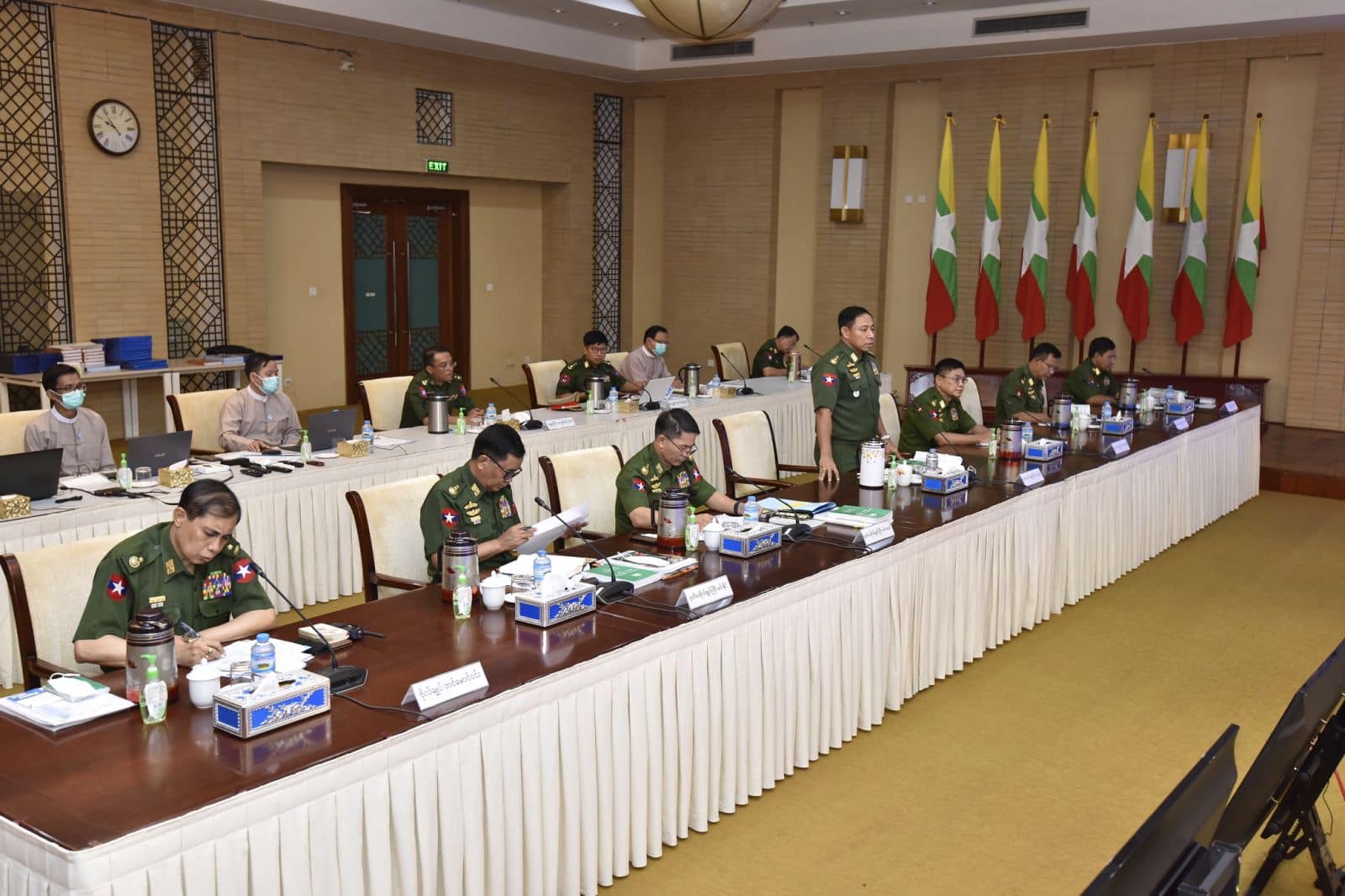
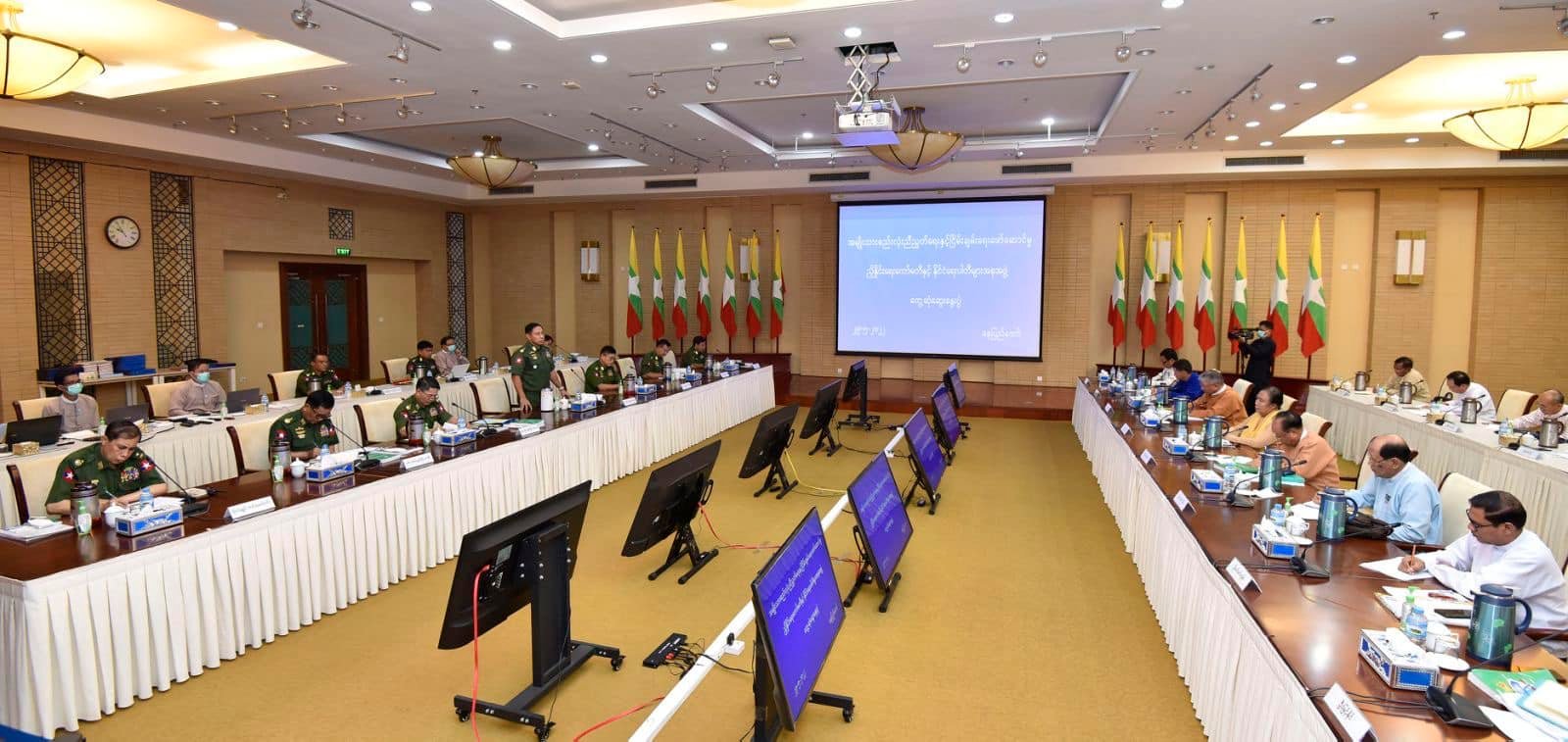
NSPNC delegation seen during a meeting
Ethnic political parties and politicians are currently highlighting the need to amend Section 261, which grants the President direct authority to appoint Chief Ministers of Regions and States.
During the administration of President Thein Sein, led by the USDP, the NLD discussed amending Article 261, but the military and USDP objected. Later, under the government led by the NLD and Daw Aung San Suu Kyi, the USDP and the military supported amending Article 261, but this time the NLD opposed it.
Dr. Aye Maung, Chairman of the Arakan Front Party (AFP), told CNI News that it is difficult to claim that the President’s direct appointment of Chief Ministers is democratic or federal in nature.
He said “Federalism relates to autonomy — having self-governing powers and the authority to make one’s own decisions. In a democratic process, people would accept a Chief Minister nominated by the majority of representatives elected by the people of that state or region.
Ideally, the most correct approach is where the people directly elect the Chief Minister of their State or Region. That is direct democracy. If that is not possible, then the parliament — elected representatives — should select a person, and the President simply confirms that nomination. That is more federal. But if the President directly selects and appoints the Chief Minister, it is hard to say that it is democratic or federal.”
Myanmar has 14 Regions and States, and according to Section 261 of the 2008 Constitution, the President has the authority to directly select and appoint the 14 Chief Ministers.

political parties’ working committee
This provision contradicts the desire of ethnic political parties and ethnic communities who want the Chief Minister to be appointed from the party that wins the majority in their respective regions. It also does not provide guarantees for equality and the establishment of a federal union.
Chairman U Ko Ko Gyi of the People’s Party (PP) told CNI News that discussions on amending Section 261 were confidential and that only once a new parliament emerges will constitutional amendment processes begin, depending on how the President decides.
He said “We can only speak in general terms. Because the agreed points are confidential, we cannot disclose details.Once a new parliament is formed, constitutional amendment procedures can begin. For now, we see that the existing law will continue to be applied. It depends on how the President thinks and decides.”
Discussions on amending Section 261 have taken place between the military’s National Solidarity and Peace-making Negotiation Committee (NSPNC) and political parties. However, both sides have kept the details confidential, and it is not known whether the military agrees or disagrees with amending Section 261.
Those close to the military and political parties say that if the next government emerging from the military-led election truly wants a federal Union, it should ease the President’s authority to appoint Chief Ministers in the States and Regions — even if Section 261 is not formally amended.