
CNI News
28 December 2025
Dr. Aung Naing Oo, a veteran Mon politician, told CNI News that the current system in Myanmar—where the central government maintains primary control over the administration of Regions and States and merely redistributes power—is a contradiction of the federal system.
He noted that the main issue is the lack of authority for Regions and States to elect their own Chief Ministers through their own local processes; instead, a system where the President and the Union Government make the selection is being practiced.
Dr. Aung Naing Oo said: "Another point is the legislative power. For example, regarding education and health, Naypyidaw (the central government) holds almost all the authority. It is a system centered at the top. Furthermore, ethnic literature matters, which should fall under the right to self-determination, cannot be implemented extensively. Then there are sectors like electricity production and trade—States do not have much authority to manage these yet. All of these are structured in a way that only the Union Government has the power to act. To put it simply, the central government has taken too much authority. This is a barrier to federalism and needs to be reformed. Another issue is fiscal distribution. We need reforms in how budget and natural resources are shared. Currently, almost all collected taxes are sent to the Union Government. Then, the Union redistributes it, deciding how much to give to which Region or State. Basically, this is a system where the Union central government holds the reins and merely doles out power. This is still the opposite of federalism. These things will need to be changed."
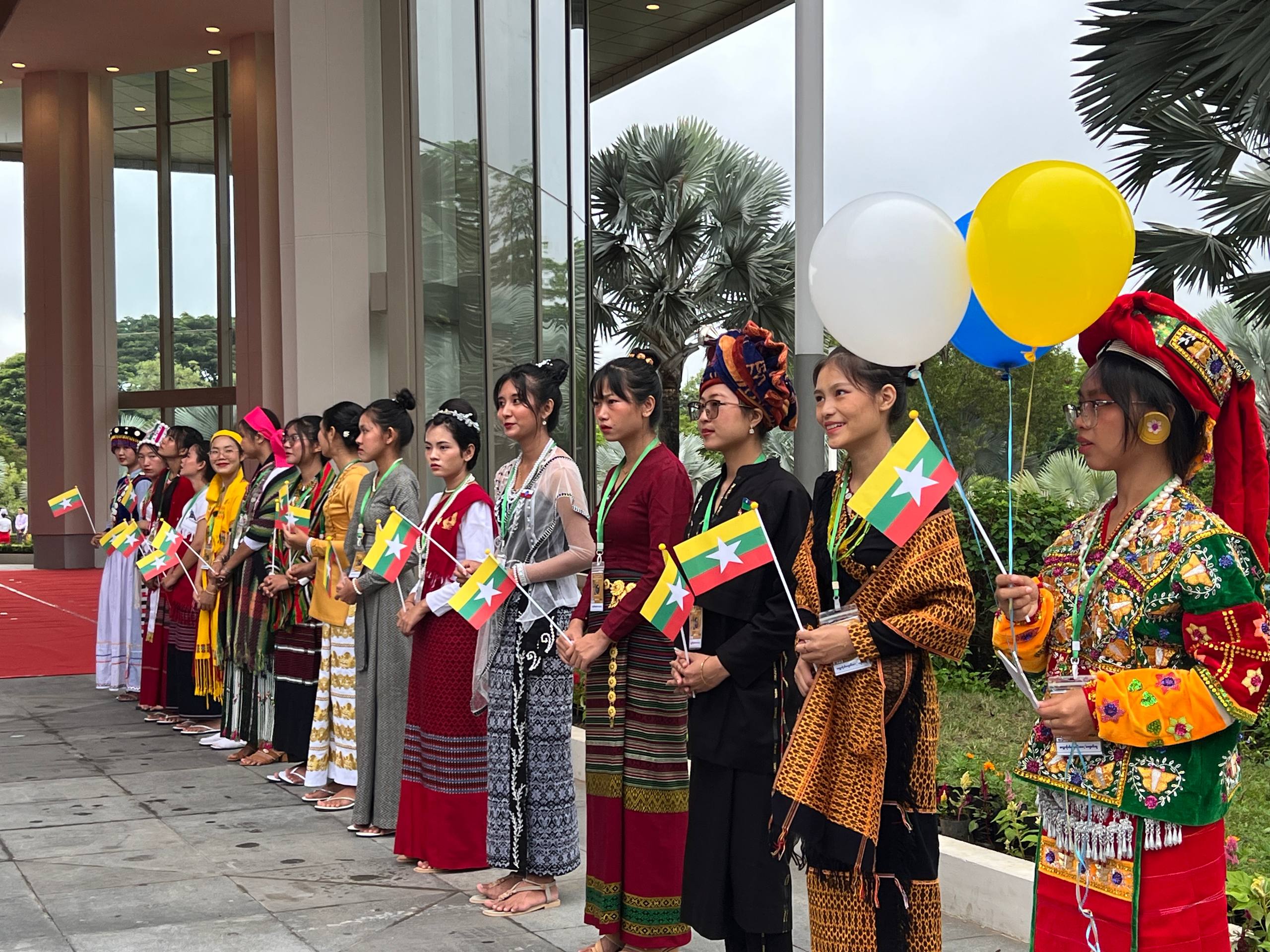
Some ethnic groups seen
A Federal Union system is a political administrative system where ethnic groups and ethnic people's representatives organize and govern together.
In a federal system, the constitution serves as an arrangement to share power between the central government and the regional/state governments. In this sharing of power, the territories (Regions and States) that make up the federal nation are constitutionally guaranteed a high degree of self-decision-making in certain policy areas, while in other policy areas, they are designed to exercise power together according to agreed-upon principles.
Therefore, a federal system means a combination of "Self-Rule" for parts of the country and "Shared Rule" for the union as a whole.
Dr. Aung Naing Oo further explained to CNI News that even when ethnic political parties win a landslide victory in their respective states, they cannot bypass the control of the central government because the central government chooses and forms the state governments.
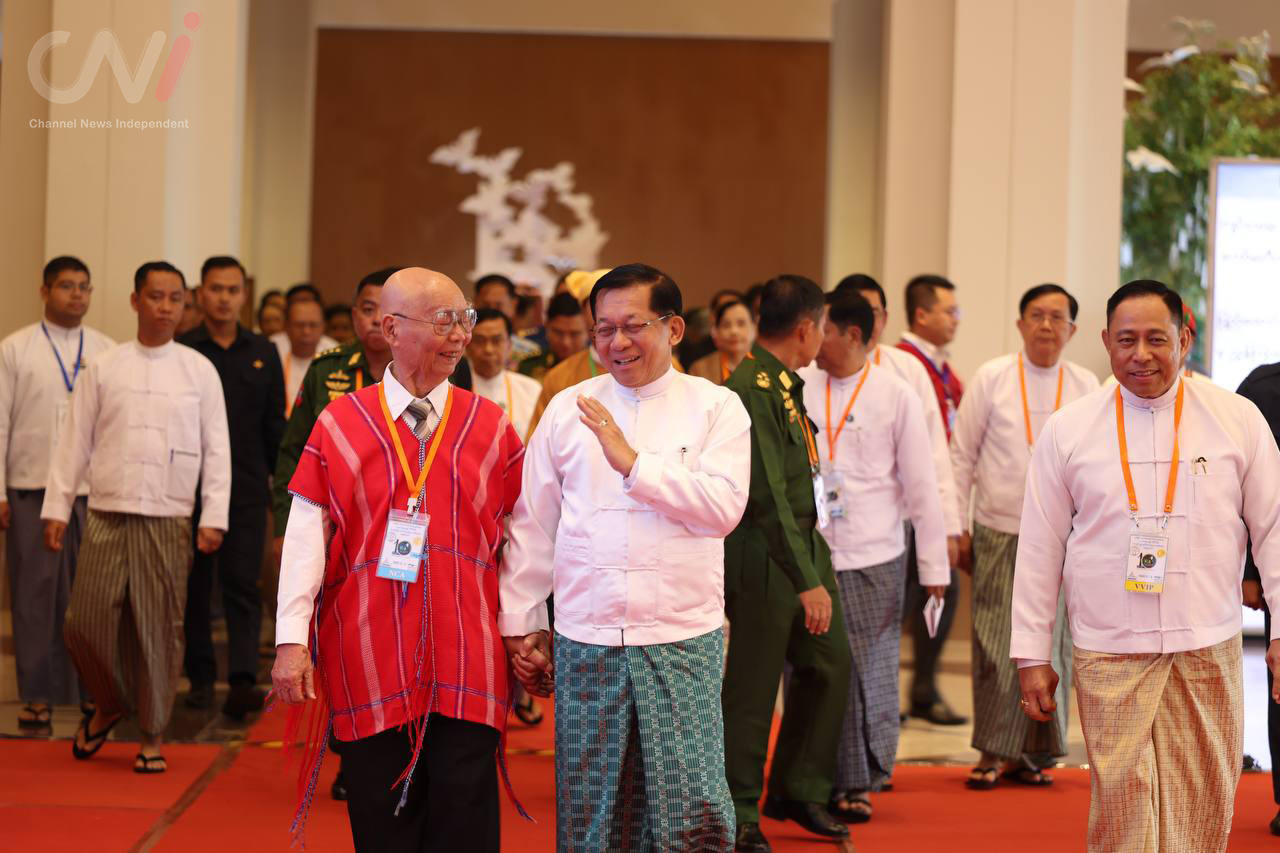
Senior General Min Aung Hlaing and Saw Mutu Say Phoe, former chairman of the KNU
He said: "If this keeps up, the hopes and expectations of ethnic people could grow significantly. For example, look at Mon State or Rakhine State. Even if a Mon-based party wins the majority of seats in parliament through an official election, they cannot yet form a state government. This is because the central government chooses the Chief Minister, so there is nothing they can do. It was the same in Rakhine. Between the 2015 and 2020 terms, Rakhine parties won the majority in the Rakhine State Parliament. But they couldn't form the government. During that period, the Union President selected a Chief Minister for Rakhine State from among the representatives. So, no matter how much you win in your State or Region, you only get seats as government members. No matter how much you struggle and try, it's a situation where you cannot escape the control of the central government."
On the other hand, Senior General Min Aung Hlaing stated during the graduation ceremony of the 26th Intake of the Defense Services Technological Academy (DSTA) on December 10, 2025, that the survival of a multi-party democratic system is crucial for the emergence of a Union based on democracy and federalism.
He mentioned that in building a Union based on democracy and federalism, it is important not to copy the models of other countries but to implement a democratic and federal system that is suited to Myanmar.