
CNI News
25 December 2025
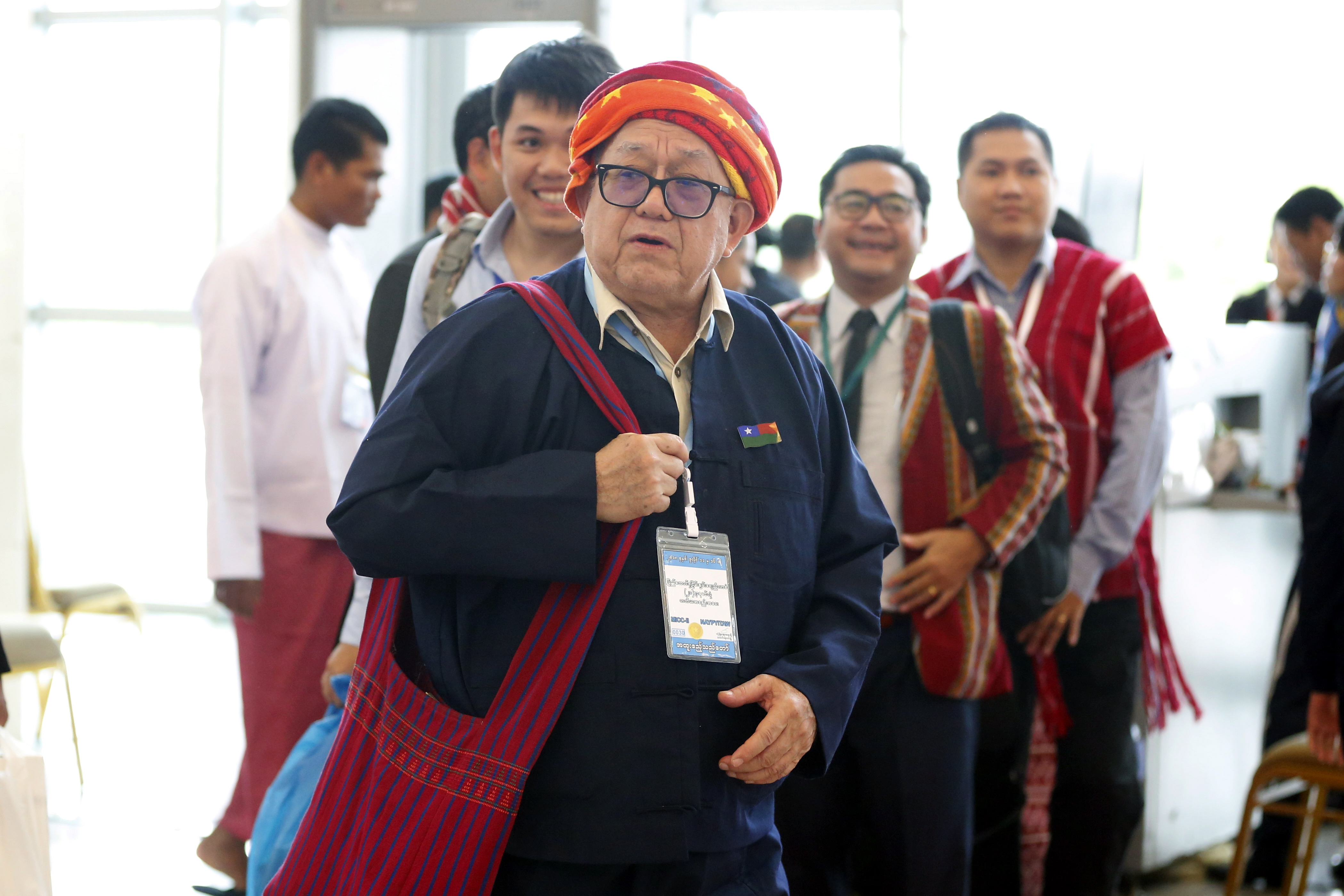
Democracy should not only be spoken about in a mobilizing and persuasive manner, but also practiced in reality, said Colonel Khun Okkar, Chairman of the Pa-O National Liberation Organization that signed the NCA (PNLO-NCA/S), in an interview with CNI News.
He stated: “During President U Thein Sein’s five-year term, we saw that matters were managed and maintained to a certain extent. Later, during Daw Suu’s five-year term, we also saw that things were conducted with some balance and restraint. But these things only lasted ten years. After ten years, the essence of democracy faded away. Now the current leaders are loudly proclaiming that they will revive and re-cultivate multi-party democracy. However, the true essence of democracy, the essence of a multi-party system, and what is called civilian supremacy—the fundamental value of democratic nations—must be meaningfully realized. So rather than giving speeches that merely sound good and focus on persuasion, it is necessary to put democracy into practice. That is what I believe,” he said.
On December 10, 2025, Senior General Min Aung Hlaing said during the graduation parade of Defense Services Officer Training Course No. 26 that the survival of a multi-party democratic system is crucial for the emergence of a Union based on democracy and federalism.
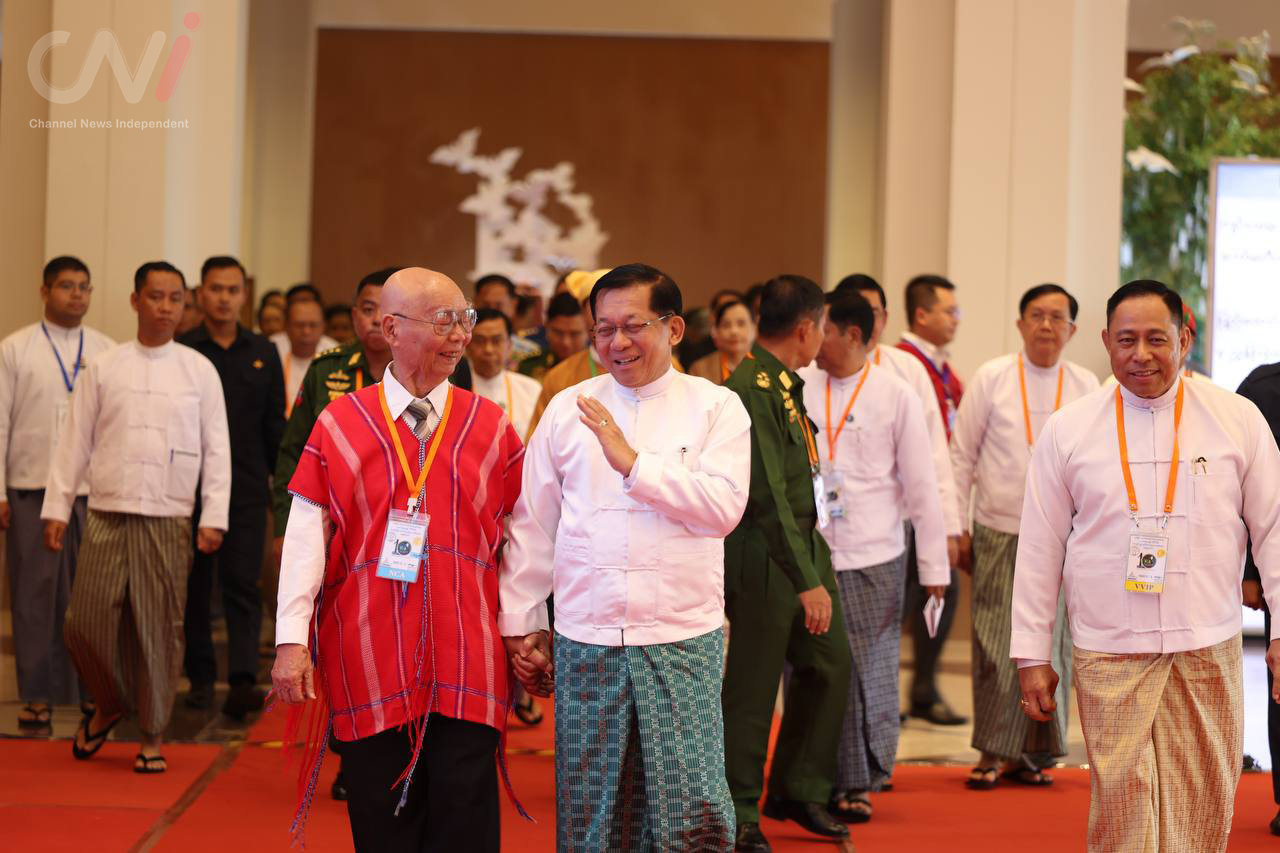
He stated that in building a Union grounded in democracy and federalism, Myanmar should not simply copy and apply the systems of other countries, but develop a democratic and federal system that is suitable for the country itself.
Although the current leaders who govern Myanmar have said they will build a Union based on democracy and federalism, U Khin Yi, Chairman of the Union Solidarity and Development Party (USDP), said during a campaign rally that any new government unable to closely cooperate with the Tatmadaw would fall from power soon after taking office.
Colonel Khun Okkar, Chairman of the PNLO-NCA/S, told CNI News that such a statement contradicts the true nature of democracy and that Myanmar’s political system has been flawed since the time of Prime Minister U Nu.
He stated: “Myanmar's political system has been wrong since U Nu’s time—since after the Panglong Agreement was signed. The Agreement was signed, but its terms were not implemented. After General Aung San passed away, a unitary system was established under the name of the Union. Within that system, U Nu proclaimed that the Anti-Fascist People’s Freedom League (AFPFL) would rule for 40 years, but cracks appeared within about 14 years. Sides emerged—those who cooperated with the military and those who did not. From then on, political leaders who lacked sincerity did not establish the true essence of democracy, but instead created a unitary system under which one group ruled over all ethnicities. As a result, beginning from General Ne Win, the military entered into politics and gained political power—something that has continued for more than 50 years up to the present day. Some individuals still want to maintain this historical background, while others think it is no longer necessary. But those two sides have not yet met openly and genuinely discuss solutions. Because that has not yet happened, we remain trapped in this stalemate. From what I hear in U Khin Yi’s speech, it implies that regardless of who forms the government, the military will retain control. Under those circumstances, I don’t think we will see any major positive change. But ultimately, it depends on the sincerity, vision, and mindset of the leaders. That is what will determine the final outcome in the future,” he said.
Senior General Min Aung Hlaing also said that since the implementation of elections is essential for the survival of the multi-party democratic system, the eagerly anticipated nationwide general election will begin on December 28.
In Myanmar, Election Phase (1) will be held on December 28, 2025, followed by Phase (2) on January 11, 2026, and Phase (3) in the final week of January 2026.
He stated that power will be transferred to the political party that wins the election and that the military will only continue to carry out national defense duties.