
CNI News
15 December 2025
Political and military analysts are debating whether Myanmar’s 2025 general election could lead to a political transformation similar to the one that emerged after the 2010 general election.
In Myanmar, Phase (1) of the election will be held on December 28, 2025; Phase (2) on January 11, 2026; and Phase (3) in the final week of January 2026.
Political observers point out that public interest in the election remains low, as the majority of the public believes that no real change will occur because the post-election government is likely to be formed and led mainly by the Tatmadaw and the Union Solidarity and Development Party (USDP).
Dr. Aye Maung, Chairman of the Arakan Front Party (AFP), told CNI News that the 2010 general election marked the first opening of the multi-party democratic electoral arena, and that the parliament and government that emerged afterward were able to bring about national changes through negotiation and consultation.
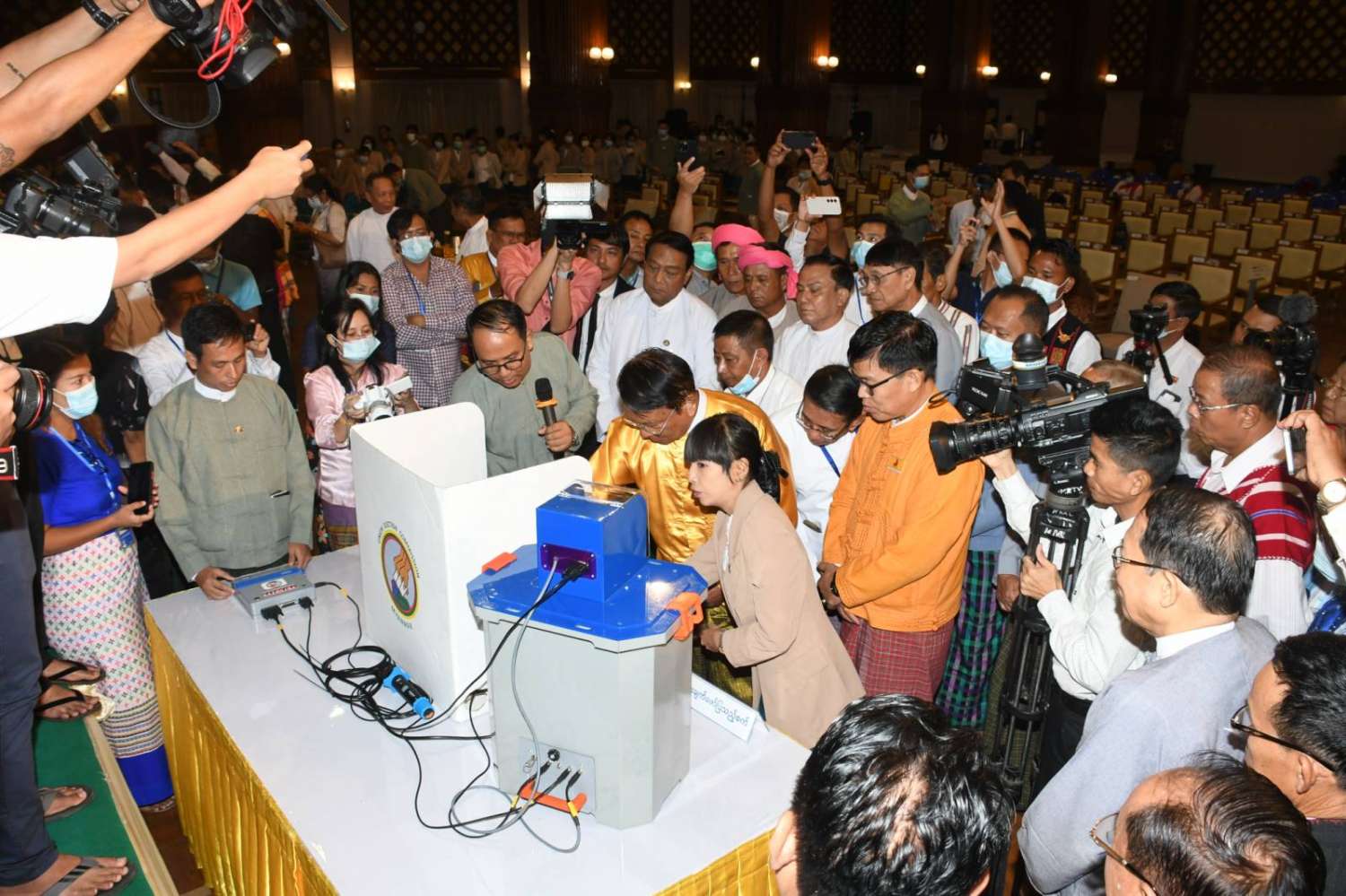
Demonstration of voting procedures
He said:“It could be a step toward the future with a clearer vision than the 2010 political landscape. In other words, it would include reforms along with transformation.We analyze the post-2025 election landscape as being even more advanced than before. Rather than moving forward under a single dominant party, it would emphasize national unity and national reconciliation, working seriously to break free from more than 70 years of internal armed conflict.It would aim toward a peaceful new state capable of ending the civil war, and, in other words, toward correctly building a federal democratic Union. That is what we expect from 2025, and we believe it is possible.”
Political analyst U Htet Aung Kyaw told CNI News that, compared with the 2010, 2015, and 2020 general elections, the upcoming election appears relatively calm. He added that if a large number of citizens turn out to vote, it may be possible to expect an outcome even more favorable than the 2010 political landscape.
He said:“As the election approaches, changes may still occur. If the public turns out in large numbers to vote, opposition forces could win a reasonable share.If that happens, we could hope for a political landscape that is even better than in 2010. Back then, we truly did not know what lay ahead. We only had the vague idea that some form of change might occur.This time, however, we already know quite clearly what is possible and what is not. How far we can push what is possible depends on how much success the opposition forces achieve in the election.Therefore, if voter turnout is high, we can expect to see a situation that surpasses the 2010 political landscape.”
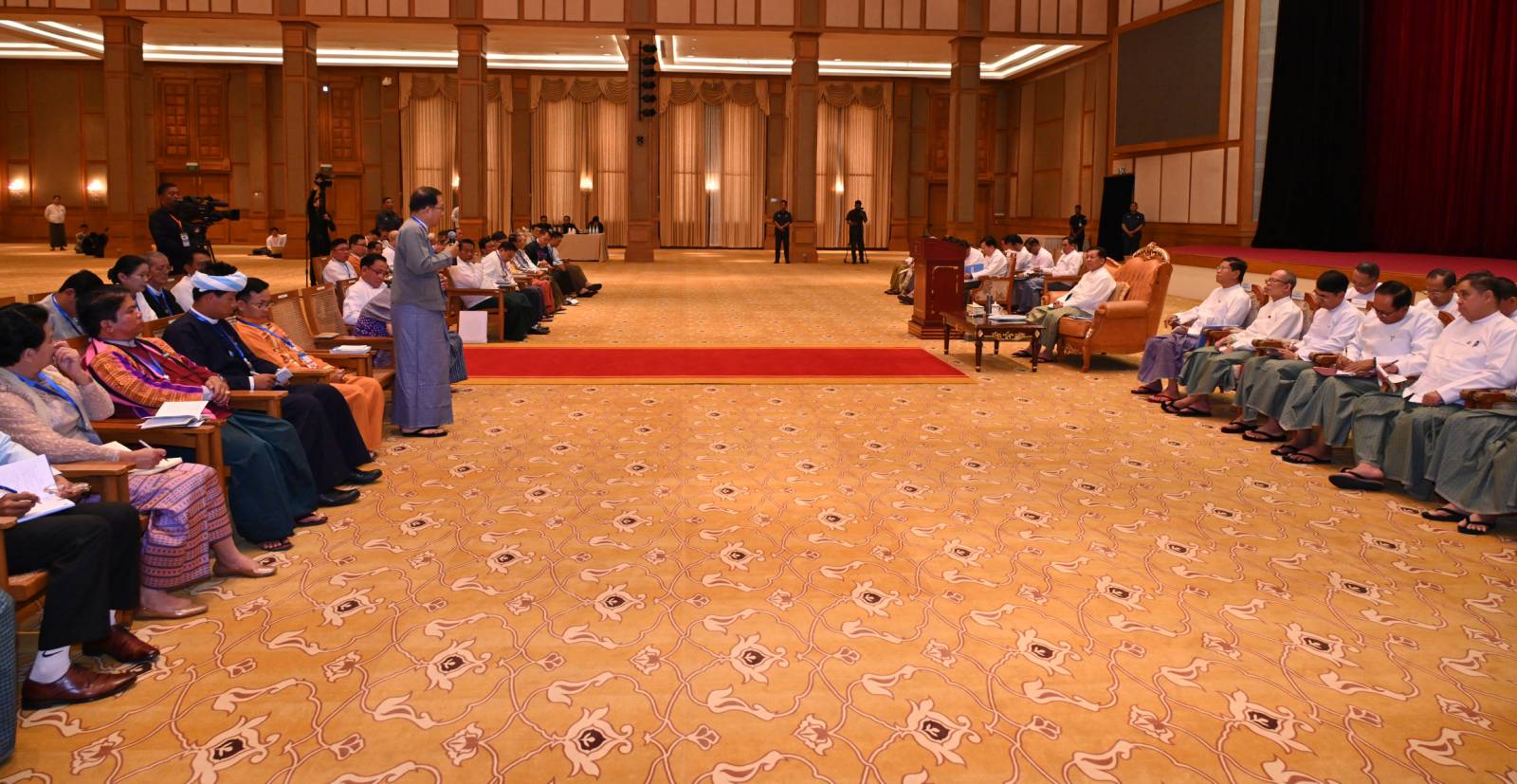
Senior General Min Aung Hlaing meeting with political parties
Senior General Min Aung Hlaing, Chairman of the State Security and Peace Commission, has stated that the 2025 general election will bring about a turning point for the country.
Meanwhile, members of the public have expressed the view that even if the post-election government is led by the Tatmadaw and the USDP, they would like to see it take the form of a national unity government.
On the other hand, political analysts warn that if the civilian government that emerges after the election is unable to effectively operate the administrative mechanism amid widespread and intense armed conflict, the country could once again find itself in a situation where it has to rely on the Tatmadaw.