
CNI News
10 December 2025
In Myanmar, politicians increasingly fail to listen to the voices of the majority of citizens and instead make people listen only to what they themselves want to say or do. As a result, public trust and confidence in them have been declining, according to political observers.
Analysts point out that politicians and political parties only meet with the public and listen a little to public opinion when elections draw near. However, whether they win a parliamentary seat or not, they no longer listen to the voices of the people after the election.
They add that Myanmar’s political journey is a long-term process that must move step by step beyond polarization, division, and antagonistic politics, towards the flourishing of a diverse range of ideas and choices.
Dr. Nyo Nyo Thin, founder of the Yangon Watch Organization, told CNI News that the decline in politicians’ ability to listen stems from Myanmar’s long history of isolationist policies.

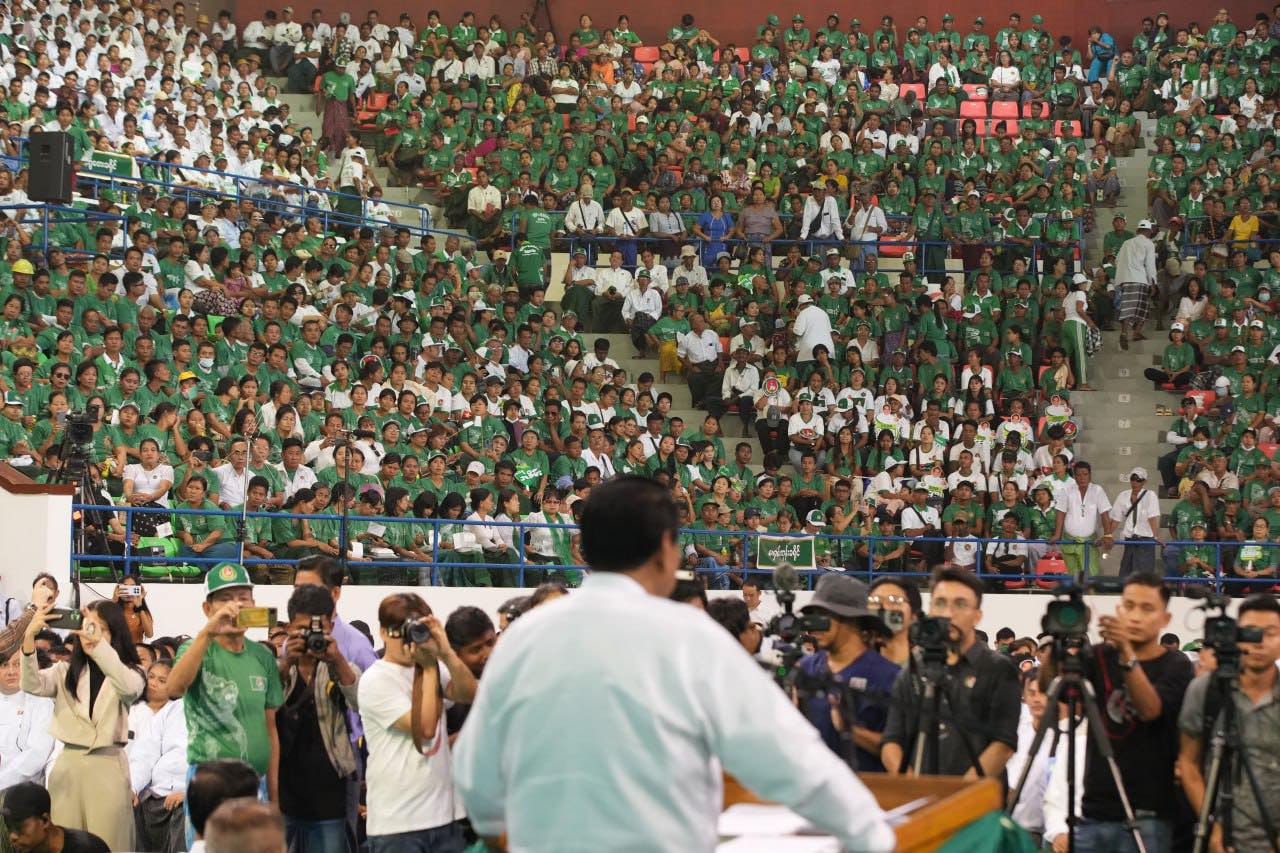
PP Party campaign
She said,“Generally, in our country, political culture was not properly taught in schools from a young age. We never had schools that effectively trained students in the fundamental qualities needed to build a positive political culture. Especially in politics, personality cults became widespread. Because the political system was based on these cults, the issue of intolerance among politicians was never clearly visible in the past. But since the start of the democratic period, we began to see that politicians’ ability to listen to the people was very limited.For nearly three centuries, our country practiced an isolationist policy. As a consequence, just like the politicians, those who govern the country also lack the ability to listen to the majority of citizens.When elections are near, these patterns become more evident during campaign periods.”
Regarding the need for public political awareness, observers note that the public themselves must make an effort to supplement their political knowledge.
By doing so, the public not only benefits their own interests but also contributes to the national interest, national development, and the emergence of a healthy political system.
Dr. Aung Myo, an independent candidate from Zabuthiri Township, told CNI News that politicians act based on personal ambition, refuse to give space to others, and behave as if anyone who disagrees with them is an enemy—a form of “liberalism in name only.”
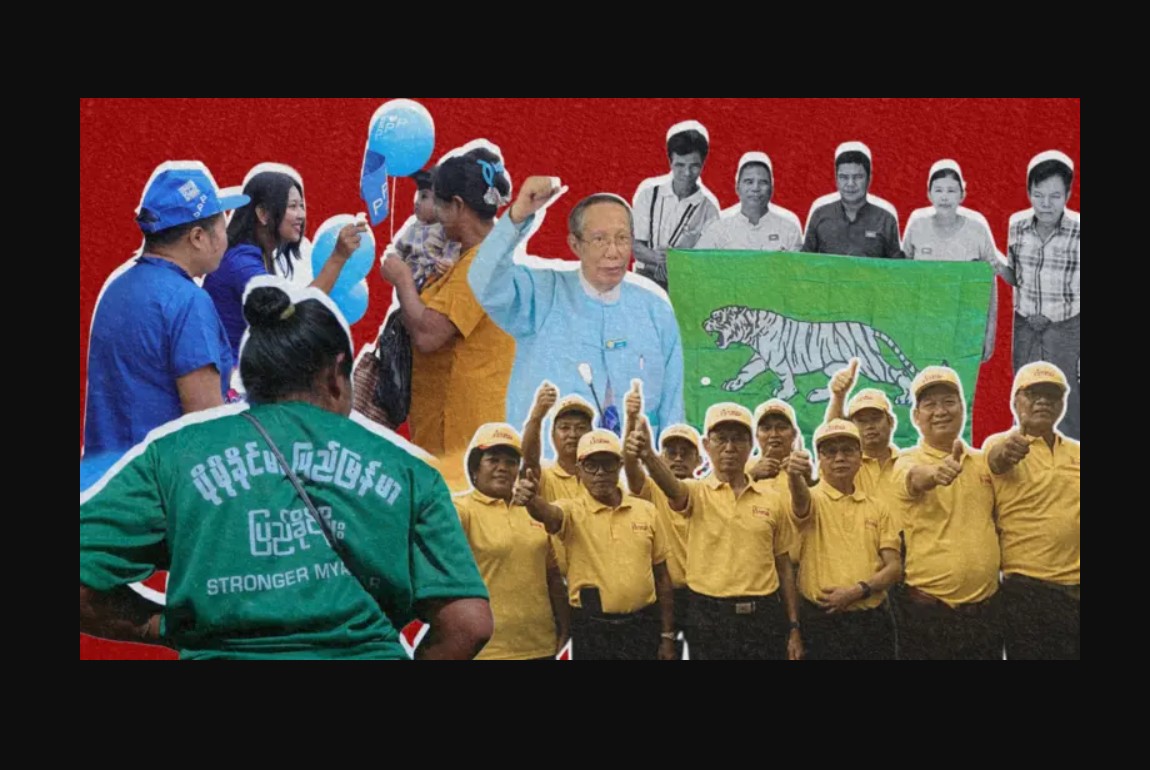
Political parties campaigning
He said,“The weakness in listening comes mainly from politicians only doing what they themselves want, without giving others a chance or showing respect.We see this in the NUG and PDFs as well—they only see people as friends or foes, and they don’t listen to those in between.Frankly, liberals are not thriving. What they call ‘liberal’ isn’t real liberalism. These people are just wearing a liberal mask—if they think ‘you’re not like me, so you’re my enemy,’ how can they be true liberals?They insist only their view should be heard, and they reject others’ views. This has turned into a kind of exaggerated national character.It mainly happens because they prioritize personal ego. And because they can’t tolerate criticism, they turn into fake liberals.”
Observers warn the public to be cautious of politicians who, in this multi-party democratic era, frequently use terms like “national politics” to portray themselves as selflessly working for Myanmar’s benefit, while in reality serving their own interests.
In Myanmar, Election Phase (1) will be held on December 28, 2025, Phase (2) on January 1, 2026, and Phase (3) in the last week of January 2026.
During the campaign period, politicians and political parties are actively conducting voter outreach activities. But after the election, political parties and politicians tend to distance themselves from the public.