
CNI News
8 December 2025
Political analyst U Htet Aung Kyaw told CNI News that the public in Myanmar does not appear to be showing much excitement or movement regarding the upcoming election.
In Myanmar, Election Part (1) will be held on December 28, 2025; Election Part (2) will be held on January 11, 2026; and Election Part (3) will be held in the last week of January.
He said that, up to now, public interest in the upcoming election remains low, and that he has not yet seen any significant public enthusiasm.
He continued:“Whatever the case may be, compared with the 2010, 2015, and 2020 general elections, we can say that public interest in the 2025 general election has dropped significantly. Up to this moment, the only thing that can be called active or vibrant is the fact that the Election Commission has issued an excessive number of rules and regulations.They have made the rules and regulations extremely strict. Also, in some townships certain matters are tightly controlled, while in other townships they are not strictly controlled at all. When such inconsistencies exist, politicians and parties face some constraints in their activities.Compared with the previous three elections, this one is noticeably calm and quiet.”
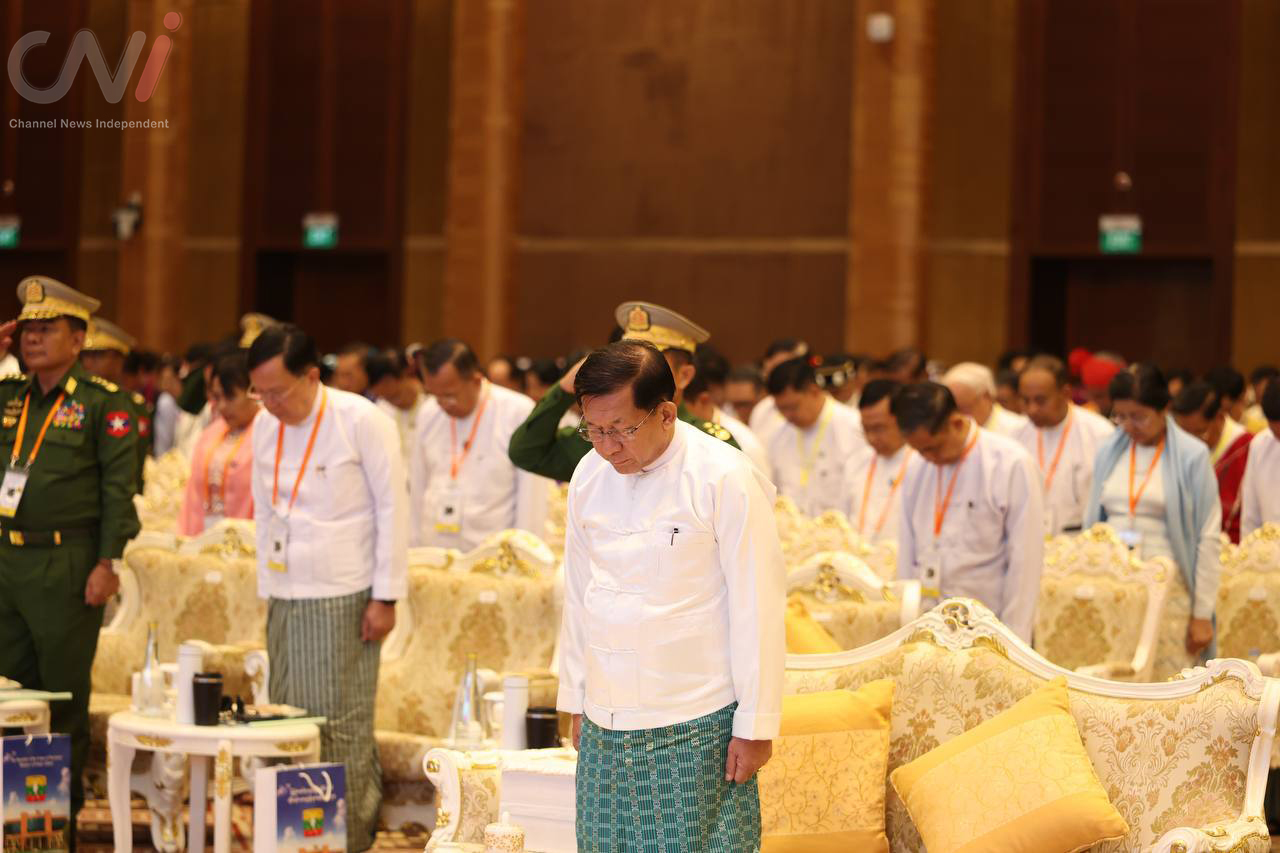
Government led by Senior General Min Aung Hlaing
He also pointed out that political parties need to make strong efforts to help the public understand that the election is an important starting point for the country.
U Thein Tun Oo, Director of the Strategic Studies Group, also told CNI News that when there is a misunderstanding about elections, various opinions and comments tend to arise, and it is important to understand election practices.
He said:“First of all, to return to the electoral path, we must hold an election. When an election is held, we must try to conduct it as best and as effectively as possible. Earlier I mentioned Free and Fair Elections. While such standards are based on normal elections, in situations like the current one—where an election is being held amidst many difficulties—we cannot proclaim Free and Fair everywhere.That is a challenge. If we cannot declare it Free and Fair, does that mean it is not Free and Fair? That is also not correct. What it means is that we must try our best to make it as Free and Fair as possible.We cannot insist on holding onto the fixed idea that unless it is truly Free and Fair everywhere, we will not accept it. This is an election held as part of a transition, so there will naturally be needs and limitations. But it is important to overcome these challenges and to understand all the usual practices of elections in order for elections to be held regularly.When there is a lack of understanding, various comments and views will arise. That’s why there is nothing particularly surprising. These situations occur because there is a misunderstanding of the nature of elections.”
Revolutionary forces have announced that people should not vote or take part in the election, and that those who cooperate with the election organized by the military will be effectively punished.
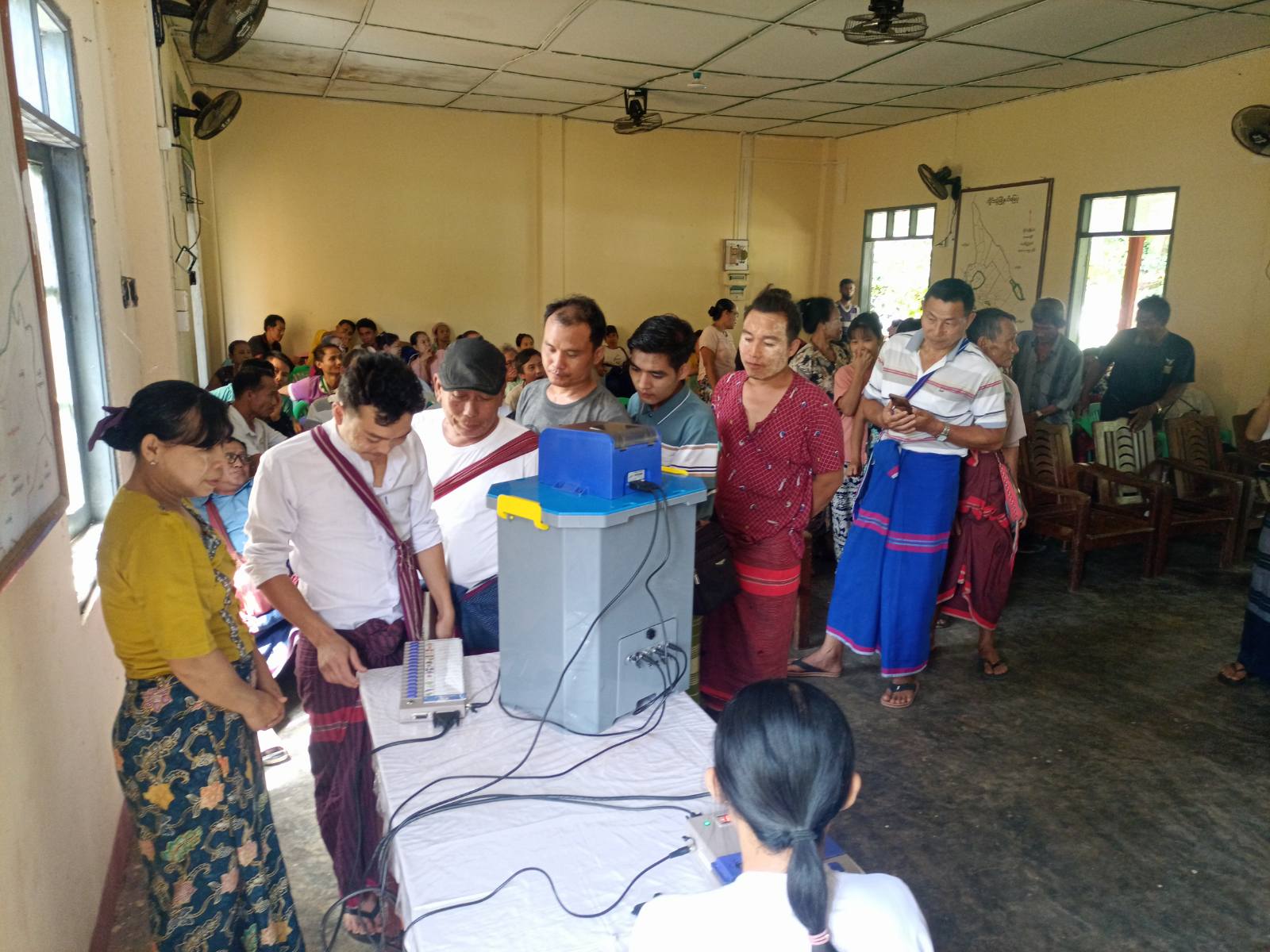
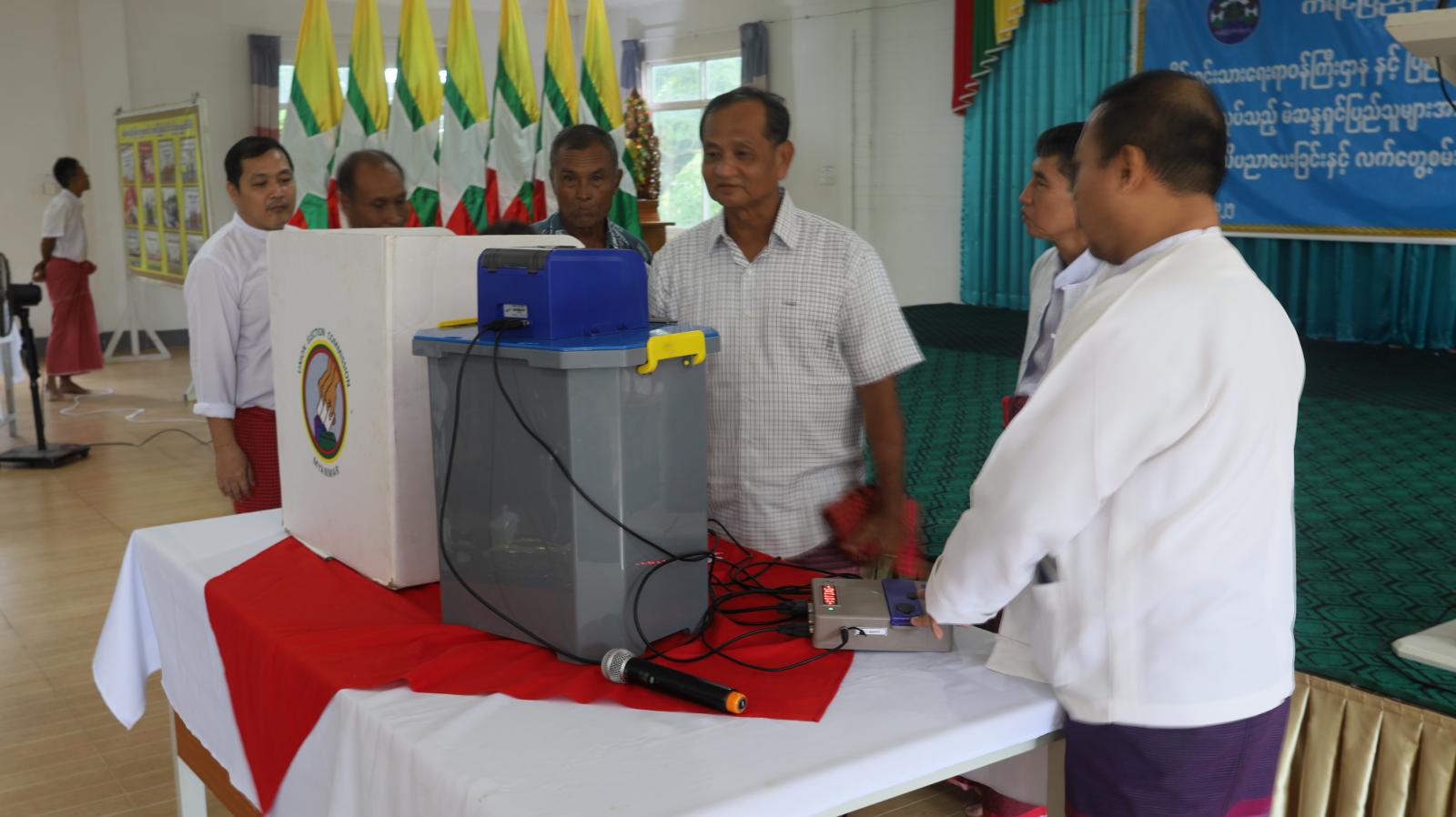
Citizens observing an election voting machine
As a result, many people are facing difficulties voting due to security concerns. Some citizens fear that although their names appear on the voter list, if they do not go to vote, ward administrators—who possess their household information—may use that against them. Therefore, some people remain hesitant about whether to vote or not.
Observers also note that public interest in the election has weakened because many people believe that even after the election, no significant change will occur, as the new government could once again be led by the military and the USDP.
However, if the post-election government is formed in a style similar to the government under U Thein Sein, some changes could be possible.
If Senior General Min Aung Hlaing appoints someone he trusts as president and forms a government, there may be some degree of change. But if Min Aung Hlaing himself assumes the presidency and the government continues with current policies, then meaningful change is unlikely, analysts say.